
Local Legends: The presidential alumnus
"The grandson of U.S. President William Henry Harrison and great grandson of Judge John Cleves Symmes of Symmes Purchase fame, Harrison was born on Aug. 20, 1833 in North Bend, just west of Cincinnati."
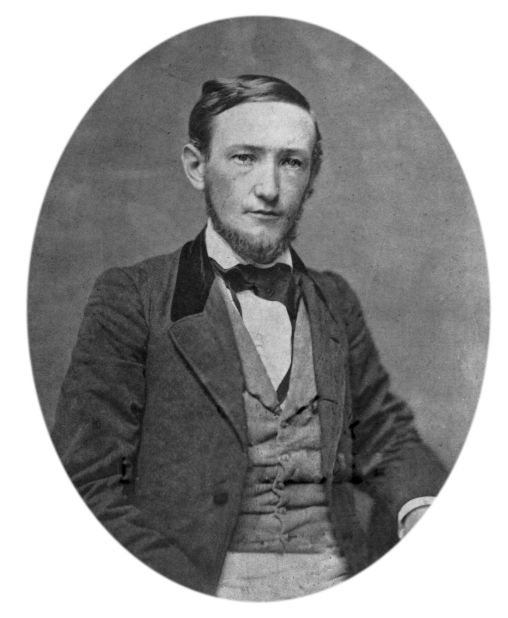
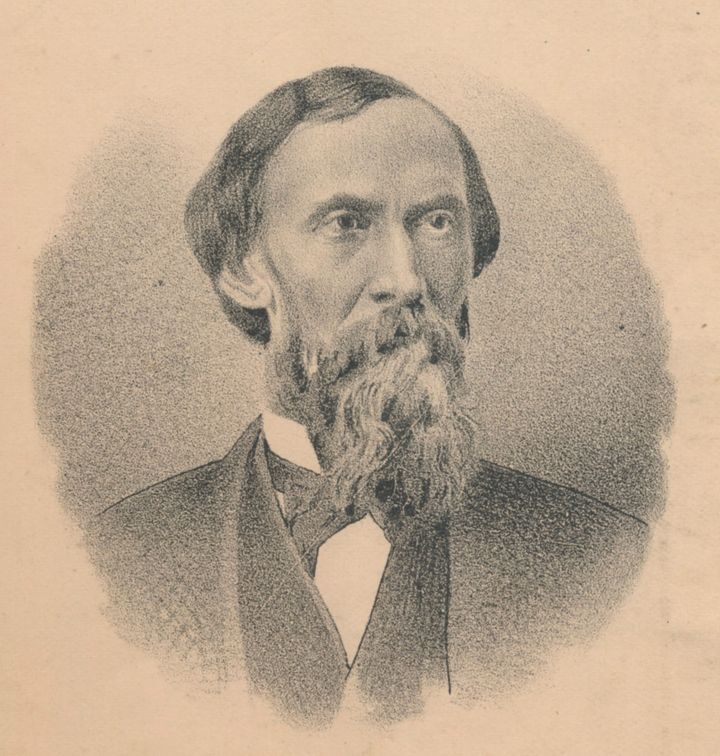
23rd President of the United States Benjamin Harrison may not have spent many of his 67 years in Oxford, but they were among the most formative of his life.
The grandson of U.S. President William Henry Harrison and great grandson of Judge John Cleves Symmes of Symmes Purchase fame, Harrison was born on Aug. 20, 1833 in North Bend, just west of Cincinnati. Growing up on his father’s farm, he was first educated in a log schoolhouse.
At 14 years old, he was sent to Farmer’s College in College Hill, which had originally been opened in 1833 by 1831 Miami University graduate Freeman G. Cary. With the falling out between the old school and new school Presbyterians at Miami in 1845, university professor Dr. Robert Hamilton Bishop was ousted and relocated to College Hill to teach at Farmer’s College.
With Bishop as his teacher, Harrison grew to admire him, appreciating his style of teaching and worldview. In an Aug. 28, 1850 letter to him Harrison wrote, “thanks for the lively interest you have ever manifested in my welfare and advancement in religious as well as scientific knowledge.” The expression was part of Harrison’s goodbye letter written upon his leaving Farmer’s College. Over the summer, Harrison had cared for his ailing mother, Elizabeth Ramsey (Irwin) Harrison, who died on Aug. 15, 1850. While the exact reason for Harrison’s departure from Farmer’s College remains unknown, there’s a strong theory.
When Bishop left Miami, his most ardent follower, Dr. John Witherspoon Scott had followed him to Farmer’s College. Scott, Harrison’s science teacher, helped found a new college for women back in Oxford in 1849, the Oxford Female Institute, and relocated his family there.
While Scott’s pupil, Harrison had visited and dined with the Scotts many times, and during these visits, a mutual attraction between he and Scott’s daughter, Caroline Lavinia “Carrie” Scott, had grown. In Fall 1850, Harrison followed Scott, or more accurately Carrie, to Oxford, enrolling at Miami.
While Harrison only remained in Oxford for two school years, his junior and senior years, the period would prove to be a pivotal time in his life. While in Oxford, he supposedly boarded, for at least part of the time, at 101 West Church Street, according to a 1909 Miami Student article, and grew friendships that would outlast his college days.
Among his good friends, in a class of just 15 students, were future nationally known theologian David Swing, future congressman Milton Sayler and John Alexander Anderson, son of university president William Caldwell Anderson, future congressman and later Harrison’s ambassador to Egypt.
Harrison became a member of the Union Literary Society and presided over the organization’s debates. He was also a leading voice in persuading the majority of the membership of Phi Delta Theta fraternity, one of the Miami Triad fraternities founded in Oxford a year and a half earlier, to vote in opposition to alcohol consumption. Although some fraternity members were unsuccessful in their efforts to support the temperance vow, Harrison remained a resolute teetotaler throughout his life, though he was still known to enjoy an occasional cigar.
His Miami days came to a close with the Class of 1852 commencement, during which Harrison delivered an address, “The Poor of England.” Seeking to pass the bar, Harrison left Oxford for Cincinnati, where he worked in the law office of Bellamy Storer.
However, there was still a draw in Oxford for Harrison and he returned there in 1853 to wed Carrie on Oct. 20 in the parlor of the Scott House. Now a lawyer, the Harrisons lived for a time at the Harrison home in North Bend before relocating to Indianapolis. There Carrie gave birth to Russell Harrison, Mary Scott “Mamie” (Harrison) McKee and another child who died in infancy.
With the outbreak of the American Civil War, Harrison was commissioned as the colonel of the 70th Indiana Infantry. He gained a reputation as a taskmaster who instilled discipline in his men. During the Atlanta campaign, Harrison was promoted to brigadier general, commanding his brigade in action at Resaca, Cassville, New Hope Church, Kennesaw Mountain, Peachtree Creek and Atlanta, receiving praise from General William Tecumseh Sherman for his leadership along the way.
He would end up being one of 13 Miami University graduates to serve as either generals or admirals in the Federal forces, along with three others who were generals in the Confederate Army, including Joseph Davis, nephew of Jefferson Davis, president of the Confederacy.
Postwar, Harrison, an ardent Republican, experienced a monumental career, arguing five cases in front of the U.S. Supreme Court, more than any other president, and serving in the U.S. Senate for six years. Oxonians stayed up all night awaiting the election results of the 1888 presidential election, a contest ultimately won by Harrison through electoral votes, though he lost the popular vote.
With his election, Harrison’s late father, John Scott Harrison, became the only person in history to be both a son and father of a president of the United States. During his presidency, Harrison oversaw the creation of six new states, more than any other president, created the U.S. Coast Guard Academy, preserved 13 million acres of forests, initiated the Pan American Union and enforced voting rights granted by the 15th Amendment.
In his bid for reelection in 1892, Harrison’s vice presidential running mate was also a Miami graduate, Whitelaw Reid of the Class of 1855. However, mostly due to a faltering economy that would soon lead to the Panic of 1893, Harrison lost to Grover Cleveland, who had also been his presidential predecessor as part of a referendum on the Republican Party.
Two weeks before this loss, Harrison had experienced an even greater loss. Carrie had died at the White House on Oct. 25, 1892 after a fight with tuberculosis. She was buried in Crown Hill Cemetery in Indianapolis.
On April 6, 1896, Harrison married Carrie’s niece, Mary Scott (Lord) Dimmick whom he had grown close with after she had helped care for Carrie during her fatal illness and then frequently corresponded with Harrison. Mary, who was a widow 25 years his junior, gave birth to their only child, Elizabeth (Harrison) Walker, a year later in 1897.
Harrison wrote and toured the country in support of the Republican Party in his later years while also serving as a trustee of Purdue University. He also helped mediate international disputes and attended The Hague’s first peace conference.
He died of pneumonia at his Indianapolis home on March 13, 1901 and was buried next to Carrie. Mary would also be buried beside him following her death on Jan. 5, 1948. Old Main on Miami’s campus was renamed Harrison Hall in memory of Harrison in 1931 and replaced by a building of the same name in 1958-1959.
Brad Spurlock is the manager of the Smith Library of Regional History and Cummins Local History Room, Lane Libraries. A certified archivist, Brad has over a decade of experience working with local history, maintaining archival collections and collaborating on community history projects. He also serves as a board member for Historic Hamilton Inc. and the Butler County Historical Society.