
Mariupol and the truth of war
"What has transpired in the Black Sea city of Mariupol since 2022 is a story worth telling. As a scholar of propaganda, war and historical memory, Mariupol’s experiences since the full-scale invasion began speak to the horrific nature of this war."
This column was written by Stephen Norris.
On Feb. 24, 2022, Russian forces invaded Ukraine. The full-scale invasion may have started four years ago, but the current war began in 2014, when the Russian state seized the Crimean Peninsula and subsequently occupied parts of Eastern Ukraine.
Russia’s attacks have intensified over the past year. Last year was the deadliest for Ukrainian civilians. Russia launched more attacks on Ukraine’s oil and gas facilities in 2025 than the previous three years combined. These attacks also formed part of a larger campaign to target Ukraine’s energy infrastructure. This winter has been one where Ukrainian civilians have experienced blackouts and lack of electricity.
The story of the Russo-Ukrainian war also involves a battle over the truth. This conflict has been fought by brave journalists and ordinary citizens who report on the war’s horrors: they have brought us the stories about Bucha, Irpin, Borodianka and other massacres. Russian state media, by contrast, continues to deny these atrocities and insist that its soldiers are fighting a just war.
What has transpired in the Black Sea city of Mariupol since 2022 is a story worth telling. As a scholar of propaganda, war and historical memory, Mariupol’s experiences since the full-scale invasion began speak to the horrific nature of this war. It’s also a story about the ways Russian occupying forces have tried to rewrite the truth of what transpired.
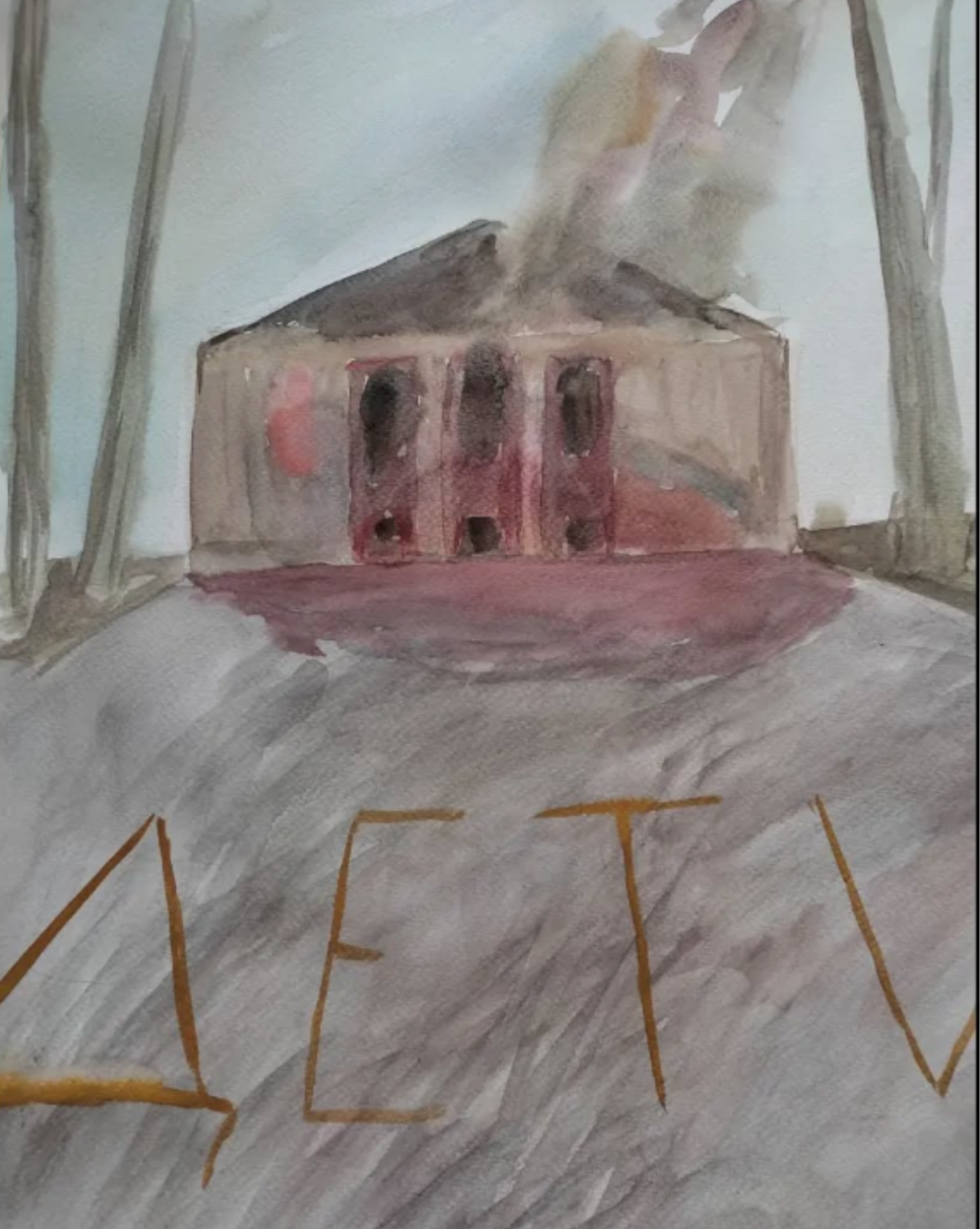
Soon after launching the full-scale invasion, Russian forces surrounded Mariupol and began to lay siege to it. As the Russian shelling intensified, many residents fled from ruined apartments and took shelter in the centrally located Donetsk Regional Drama Theater. They painted the word “CHILDREN [DETI]” outside to let Russian pilots know who was inside.
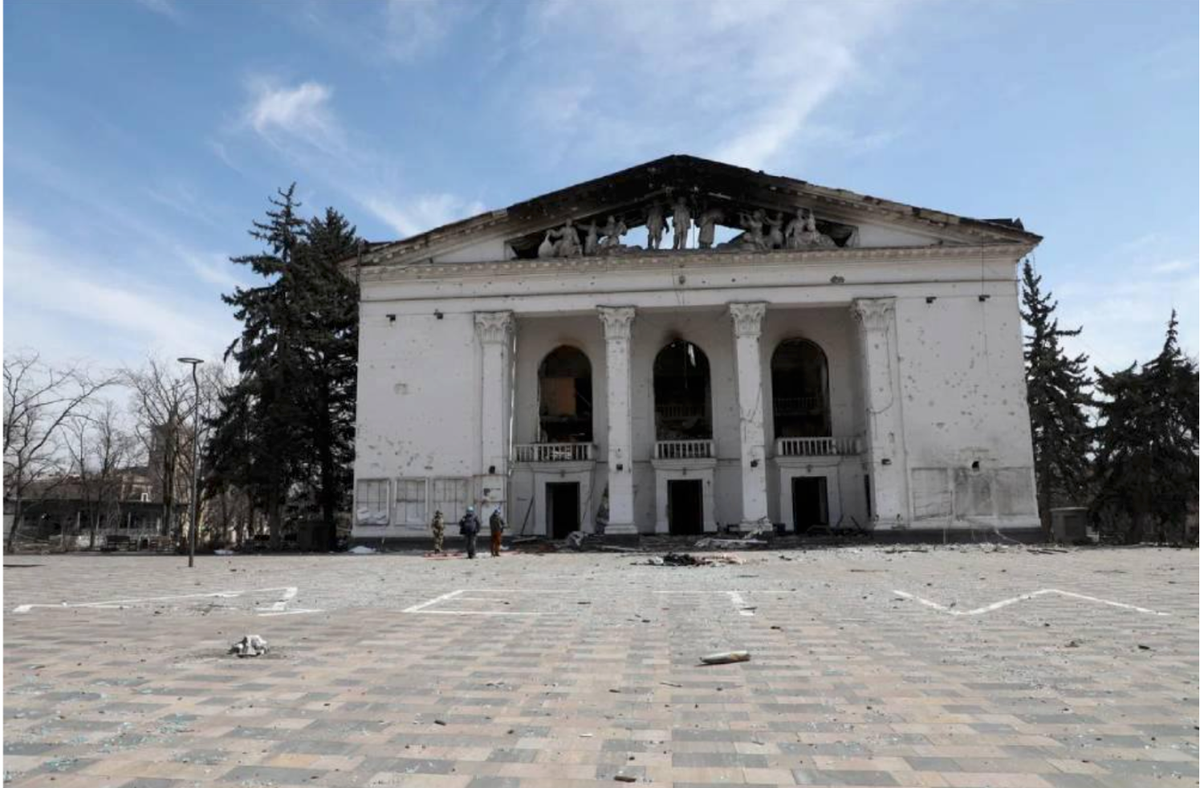
On March 16, 2022, Russian airstrikes hit the theater, reducing it to rubble. Approximately 600 Ukrainian civilians died in the attack. An extensive Amnesty International report published in June 2022 declared that the Mariupol Theater attack was “a clear war crime.”
In May 2023, the Ukrainian artist Kateryna Lysovenko posted a haunting cycle of works dedicated to the Mariupol bombing on her Instagram page. She wrote that “Those who survived talk about the noise from the planes nearby, the explosion, the collapse of the theater and the flames,” adding that “They talk about crying and screaming, how they searched for relatives and survivors, how they fled from there because of shelling and because the flames were burning.”
Lysovenko’s artworks about Mariupol depict the innocent victims as naked, scared and vulnerable. Her color palette is almost exclusively made up of browns, greys and black, powerfully conveying the terror of March 2022. In one image, we see young children with red hearts – the only break from the grim tone – standing alone. A second contains two faceless adults cowering in fear, perhaps wounded, on the ground. Smoke rises in the distance. In a third image, a group of three civilians tries to drink from a black pool. The fourth sees two adults holding on to one another as they try to walk away from the initial experience of the invasion. A black cloud looms over them.
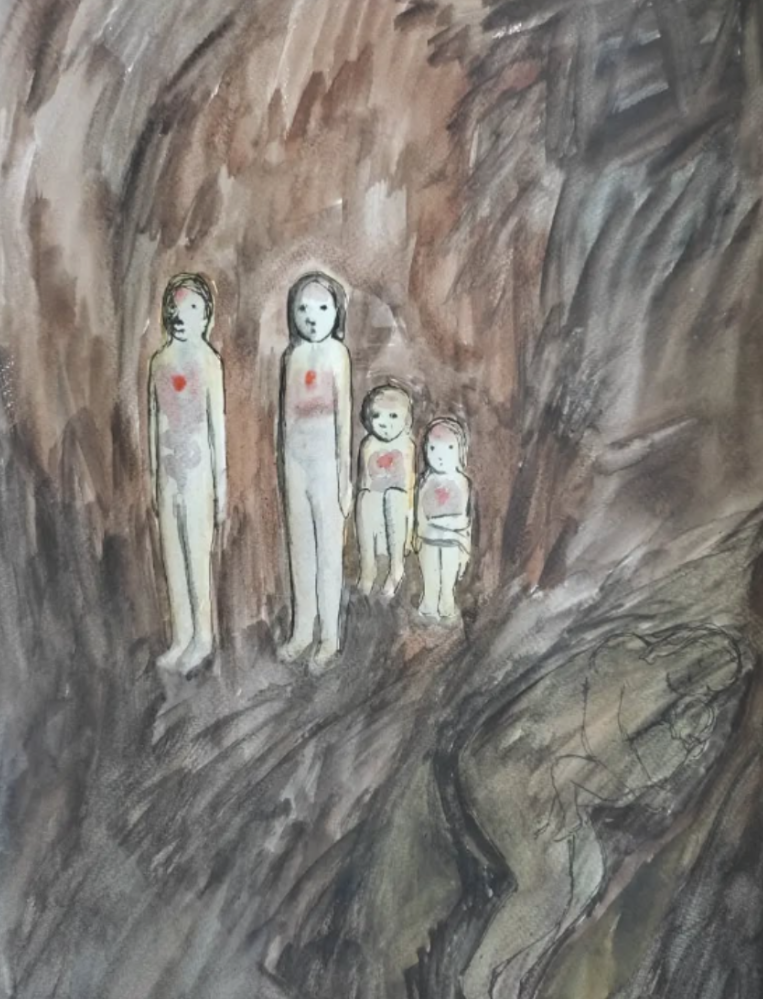
Lysovenko’s Mariupol artwork conveys essential truths about the war. She focuses on the corporeality of its victims, on how Russian attacks damage the body as well as the soul. They are the innocent victims of this war, their vulnerability laid bare in Lysovenko’s art.
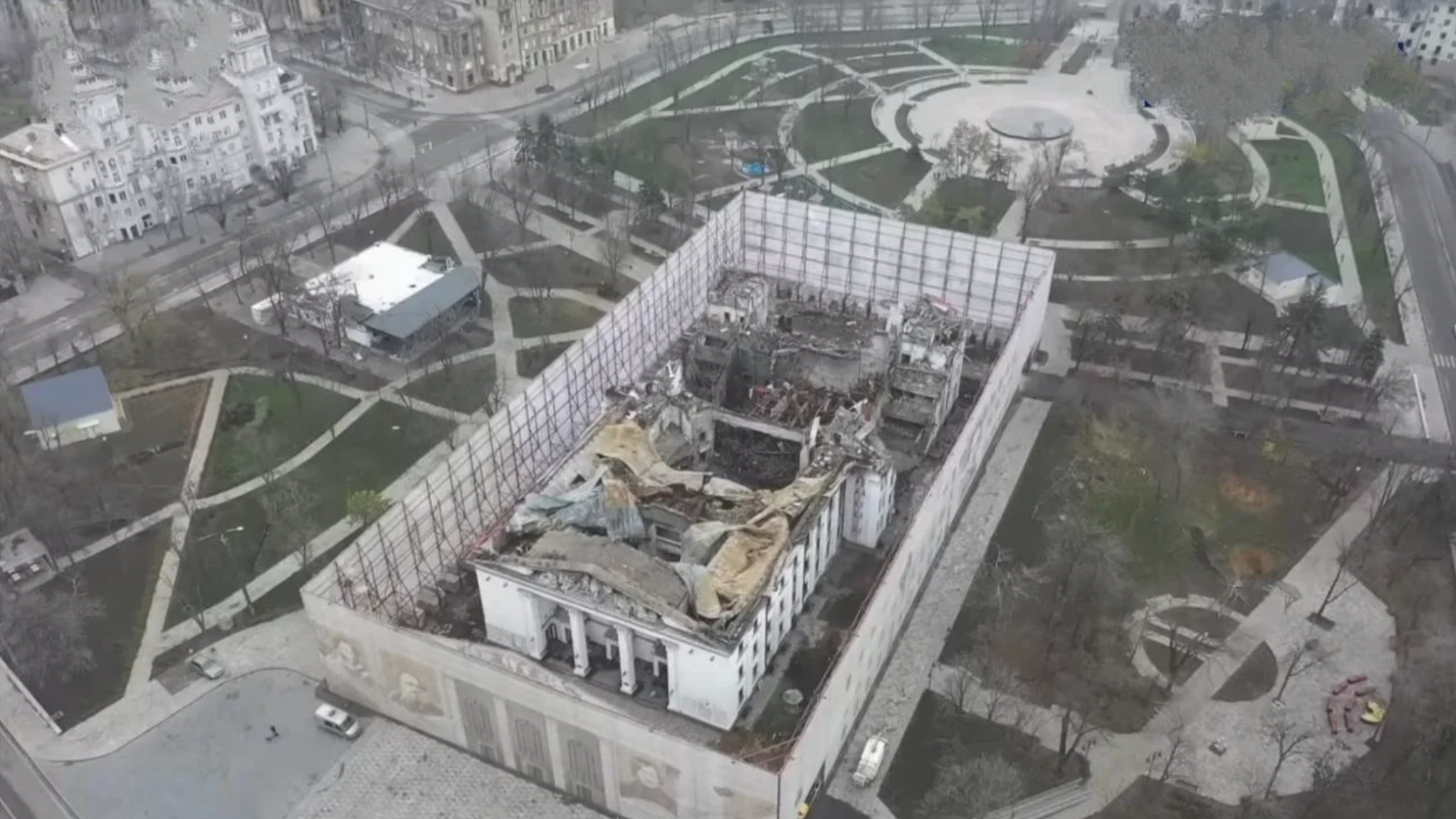
Russian occupying forces and officials denied that the attack on the Mariupol Theater killed civilians. They also literally covered the traces of the crime, placing an enormous facade around the destroyed building that contained portraits of great Russian cultural figures, including Alexander Pushkin, Leo Tolstoy and Nikolai Gogol. Perversely, the Potemkin screen also features the great Ukrainian national poet, Taras Shevchenko.
After covering up the evidence, the Russian occupation authorities announced they would rebuild the theater. They also tore down monuments dedicated to Ukrainian history and built new monuments to Russians. Mariupol became a site where the remaking of history under Vladimir Putin could be constructed: billboards proclaimed that it had been “liberated” and a new school curriculum stressed that Mariupol had always been part of Russia.
One year after the strike, Putin traveled to the city. In a carefully staged tour, the Russian President visited the new “Nevsky” neighborhood and its new statue named after the 13th Century Novgorod Prince who defeated the Teutonic Knights: since 2022 the Kremlin has repurposed Nevsky as a symbol of Russia’s allegedly eternal fight against the West. Putin’s visit also served another propaganda function: it came on March 19, 2023, the day after the International Criminal Court declared him a war criminal and issued a warrant for his arrest.
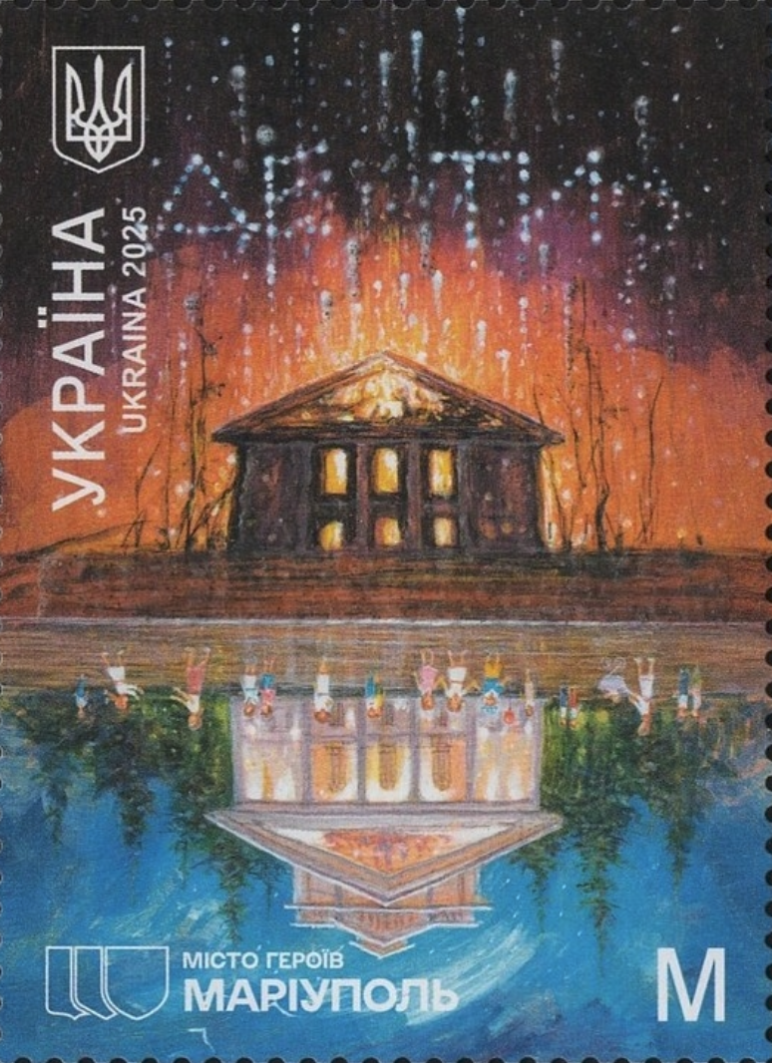
Three years after Russian missiles killed civilians in the Mariupol Theater, Russian occupying authorities reopened it. The cost of reconstruction was reported to be $169 million (or 13 billion rubles). The Russian Governor of the region declared the Dec. 28, 2025 reopening to be “a question of honor.” Festivities included announcements that “Russian and Soviet classics” would now be staged again in the Theater.
Just like the Potemkin facade placed on its ruins in 2022, the reopening was also just for show: Radio Free Europe reported that no shows were scheduled for the foreseeable future and that two-thirds of the theater still needed to be repaired.
Kateryna Lysovenko wrote that her images of Mariupol remind us that “a totalitarian state relies on crimes and the erasure of these crimes.” The Russian state has tried to disguise what happened four years ago in that Ukrainian city. Thanks to the work of journalists, ordinary Ukrainians and artists such as Lysovenko, however, we know the real truth. If any performances do take place in the Mariupol Theater, they will do so on the bones of the children and other civilians who died in it.