
Miami BOT approves bargaining agreement with union librarians
As of July 31, the most recent bargaining update for unionized faculty, there was still not a complete tentative agreement for the rest of the FAM members.
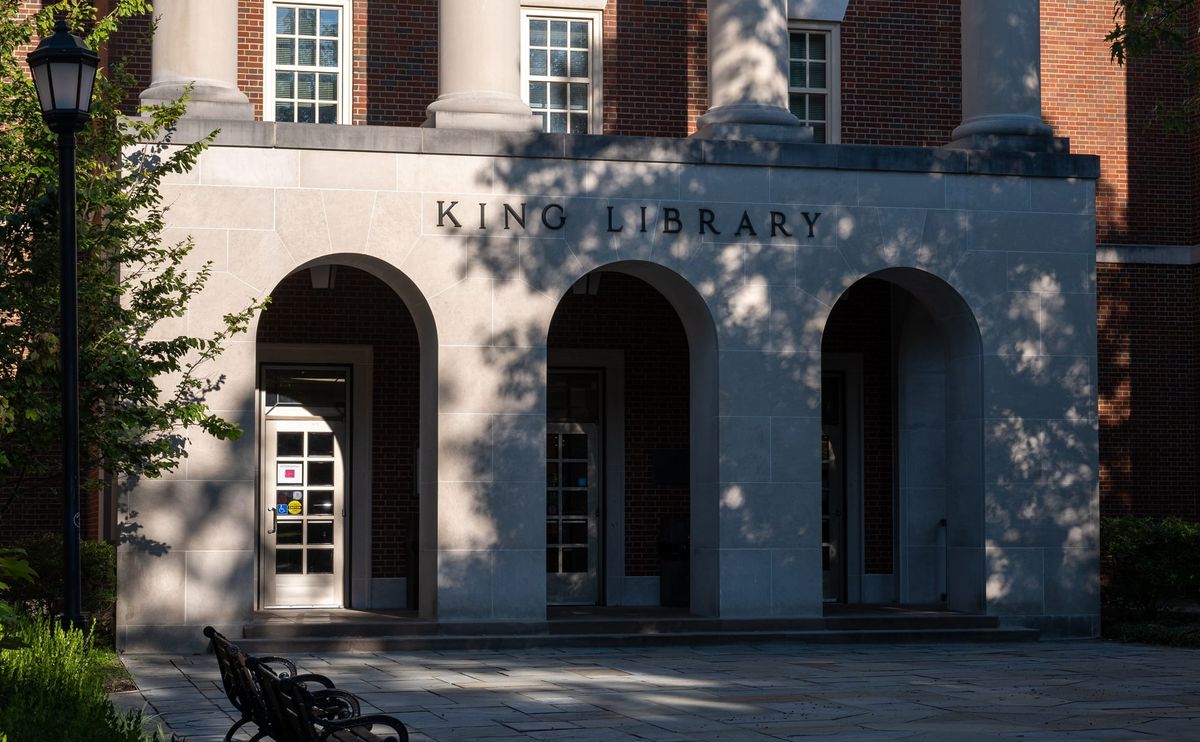
The Miami University Board of Trustees approved a collective bargaining agreement with librarians who are members of the Faculty Alliance of Miami (FAM) union during a special meeting on Aug. 5.
This is the second agreement since librarians unionized through FAM in 2023. FAM now covers all librarians at Miami, according to Rachel Makarowski, a special collections librarian at Miami and vice president of librarians for FAM.
The new collective bargaining agreement will be in place as of Aug. 5 through June 30, 2029.
According to an update posted to the FAM website about a tentative, now concrete, agreement on June 30, librarians were granted better raises, as well as promotional bumps, including a $6,500 raise for promotions to associate and a $9,500 raise for promotions for principal – a $500 increase for both bumps.
“One of the reasons that this is such a big win for us is that those promotional increases have not changed in working memory,” Makarowski said. “Obviously, because of inflation, that raise actually isn’t as high now as it was 10 years ago. So we’re excited that people’s work is going to be rewarded.”
Makarowski said the agreement also included librarian raises that have been the highest in the past 20 years, which is 3%, 2.5% and 2.5% over three years.
The agreement also included an increase in professional development funds available to FAM members, which would “reduce out-of-pocket costs for our members who attend and present at conferences and other PD (professional development) activities,” according to the June 30 update.
Furthermore, librarians will not be barred from attending future contract negotiations, which was an attempted move by university management, according to the online update.
“As a member-led union, FAM is committed to transparent, open bargaining and member participation,” FAM said in the online update.
Makarowski said of the Aug. 5 “victory,” “Librarians are really excited to have a second contract.”
She said the librarians are “excited” to work with management to begin implementing the contract, as they’ve built a “good relationship” over the lifespan of the first contract.
“It’s been such a wild ride getting to this point, but we’re really proud of the work that we’ve managed to accomplish by standing side by side with one another, and we’re excited to fight alongside faculty to help them get their own second contract,” Makarowski said.
According to updates on the FAM website, unionized librarians and faculty at Miami have been in bargaining meetings for their contracts since March. As of July 31, the most recent bargaining update for unionized faculty, there was still not a complete tentative agreement for the rest of the FAM members.
According to an update from July 31 on the FAM website, union and university representatives were still discussing key topics, including compensation; benefits; leave; professional development leave; faculty evaluations; appointment and promotion of tenured and tenure-track faculty; appointment, renewal and promotion of teaching, clinical professors and lecturers; labor-managements meetings; and separability.
FAM and university representatives were also still discussing a memorandum of understanding (MOU) related to artificial intelligence (AI).
Miami will begin integrating teachings about AI into all academic departments’ curricula starting this fall.
Theresa Kulbaga, president of FAM, told the Oxford Free Press in April she had heard mixed reactions from faculty related to the idea of integrating AI into curriculums.
“FAM’s position is that we’re not entirely anti-AI, but we do want the university to honor our academic freedom in both research and teaching as required by the contract, and that means the freedom to choose to use AI in the classroom or not,” Kulbaga said.
Kulbaga said the original points related to AI presented by FAM included that the university should not use faculties’ intellectual property to train or develop AI without permission or use AI in evaluating or monitoring unionized faculty, among other asks.
Makarowski said of the MOU for AI in the librarian contract that was present in the first one as well, “We’re perfectly happy with where the MOU is currently at.”
According to the July 31 update, the current tentative agreement for unionized faculty would include adopting a more flexible health insurance framework designed by Miami in exchange for language protecting members’ out-of-pocket costs.
Still, Miami representatives were proposing raises of 3%, 2.5% and 1.75% over three years at the most recent bargaining meetings, while FAM was proposing raises of 4.75%, 4.5% and 4.25% over three years.
“We are still fighting for better numbers that control our members’ health insurance costs as well,” FAM said in the update, adding FAM and the university are currently aligned on leave, professional development leave and duration.
According to the online update, the groups were still trying to reach an agreement regarding faculty evaluations, AI, performance improvement plans, labor-management meetings, and grievance and arbitration.
“In particular, management is still trying to limit whether, when, and how we can enforce the contract through the grievance and arbitration process,” FAM said in the update.
Kulbaga said in a text message to the Oxford Free Press at press time on Aug. 5, FAM is hoping to close the faculty contract soon.
The next bargaining meeting between FAM and Miami representatives is on Aug. 10.