

On My Plate: Bok Choy
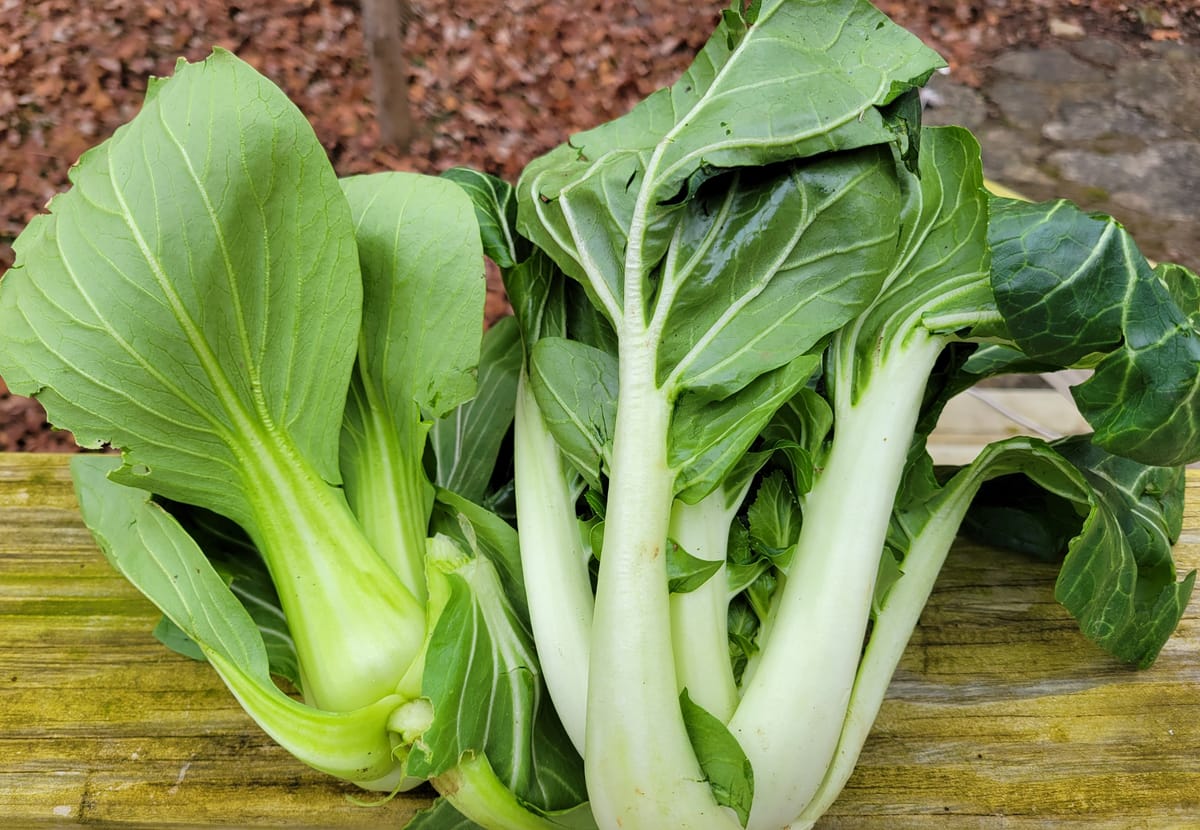
"Grown at 7 Wonders Farm are two varieties of bok choy, one large and one small. The larger variety, known in English as standard bok choy, has firm, broad, thick, white stems that taste sweet and crunchy."
Winter in the Midwest. Every Saturday morning, a few dedicated vendors set up at Oxford Farmers Market before dawn. At 9 a.m., a few hardy locals come to shop, and they are greeted with a sudden burst of bright green color contrasting sharply with our dull colorless winter landscape.
Displayed at Oxford’s winter Farmers Market are the familiar greens of chard, lettuce and spinach, plus several unfamiliar ones, including bok choy, komatsuna, bekana, tatsoi and more. Jennifer Bayne’s 7 Wonders Farm grows these green vegetables in the winter inside greenhouses.
According to the 7 Wonders Farm Facebook page, “(Winter is) the season when Asian greens truly shine – thriving in cold weather, offering exceptional nutrition and bringing fresh flavor to the table when it’s needed most.” Bayne succinctly states the attraction of winter greens: “Winter greens are sweet. I don’t eat these greens when they are grown in the summer. They are too bitter.”
Amid the variety of “Chinese” greens, the most familiar is possibly bok choy, which translates from Cantonese as “white vegetable.” Bok choy is a variety of Chinese cabbage, though it forms long, thin stalks instead of a head. Like other crucifers, bok choy is nutrient dense, especially with cancer-fighting glucosinolates. It contains more Vitamin A and C than spinach though less Vitamin K.
Grown at 7 Wonders Farm are two varieties of bok choy, one large and one small. The larger variety, known in English as standard bok choy, has firm, broad, thick, white stems that taste sweet and crunchy. The standard variety has some dark green leaves, but stems predominate. In China, the standard variety is cultivated primarily in the South, around Guangzhou, a city formerly known as Canton.
The smaller variety available at 7 Wonders Farm is known in English as Shanghai bok choy, and is cultivated in East China, around the city of Shanghai. Compared with the standard variety, Shanghai bok choy has lighter green leaves with less prominent stalks and tastes sweeter and more tender.
The best choice of variety depends on what you plan to do with the bok choy. More suited for a stir fry is the standard variety. The prominent stalk that can be chopped into bite-sized pieces retains its crispiness when stirred with the other veggies for a few minutes in the wok or frying pan.
The more delicate Shanghai variety is better handled like spinach or chard. These leafy greens are “notorious” for shrinking when cooked from a gigantic mass to a tiny bowlful. The best way to cook these more delicate leafy greens is to boil a small amount of water in as broad a pan as will fit on the burner. Jam the greens into the boiling pot, pushing them down and constantly turning them with tongs so that individual leaves touch the boiling water for only a few seconds. The entire cooking process should take only a minute or two.
Bok choy typically plays a supporting role in Chinese dishes because it is very mild. If serving bok choy alone rather than buried in a multi-ingredient stir fry, ginger or garlic is the best bet for seasoning.
From the 7 Wonders Farm Facebook page: “From a farmer’s perspective, [winter greens] are reliable, resilient, and efficient. From an eater’s perspective, they’re a winter gift.” Now if only our local Chinese restaurants would take advantage of the abundance of local “Chinese” vegetables at Oxford’s Farmers Market and MOON Co-op Grocery.
James Rubenstein is president of the Board of Directors for the Oxford Free Press and professor emeritus of geography at Miami University.

![[clockwise from top] Tatsoi, Tokyo Bekana and Komatsuma.](/content/images/size/w720/2026/02/01-5.jpg)