
On My Plate: Cantaloupe
I didn’t learn why the town – as well as the melon – was named for two common Italian words, “canta,” which translates to singing, and “lupo,” which translates to wolf, that have nothing to do with agriculture.
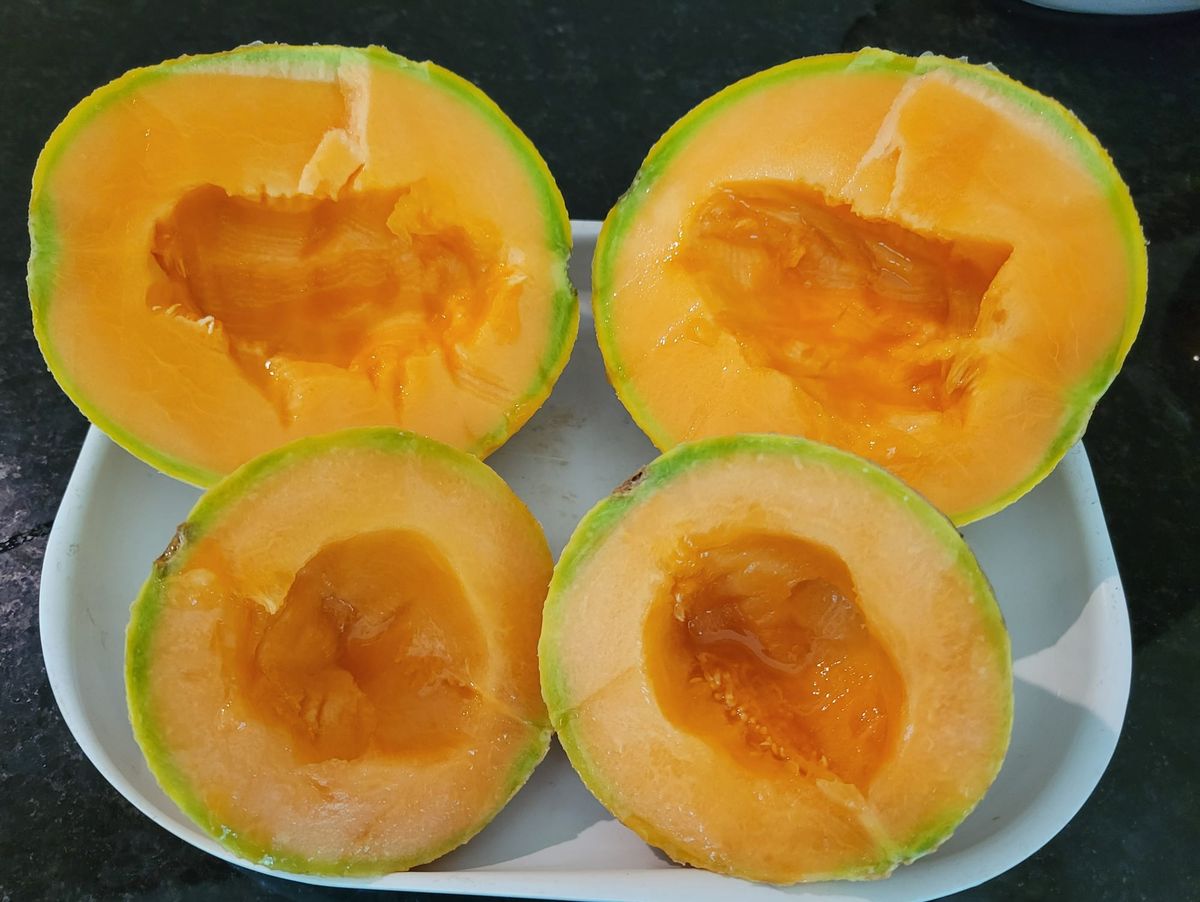
This time of year, the choice of local produce to profile in this column is at its most extensive. This week’s choice – cantaloupe – was selected because it has been five years since it was last discussed in this series.
Cantaloupe is named after Cantalupo di Sabina, a town of around 1,600 inhabitants, located 40 miles north of Rome. Melon seeds carried by missionaries returning from Armenia were planted in the garden of a Papal estate in Cantalupo di Sabina in the sixteenth century, according to the town’s website. I didn’t learn why the town – as well as the melon – was named for two common Italian words, “canta,” which translates to singing, and “lupo,” which translates to wolf, that have nothing to do with agriculture.
How cantaloupe reached the United States is unclear. Foodreference.com states that Christopher Columbus brought the seeds on his second voyage in 1493 and “shared them with the native population who received the new fruit with enthusiasm.” PennStateExtension.com claims that Indigenous people were growing cantaloupes near the site of present-day Montreal in 1535, and that commercial production of cantaloupes began in the 1870s in Maryland, Delaware and New Jersey. Californiacantaloupes.com suggests that cantaloupes arrived in the United States from Central America.
Sources agree that the first English-language use of the word cantaloupe is Philip Miller’s Gardener’s Dictionary, published in 1739. Oddly, the Italians and French, from which the word is derived, refer to cantaloupe as melon, and Oxford English Dictionary writes that cantaloupe is “chiefly U.S.” Food experts agree that what Americans call a cantaloupe should more properly be called a muskmelon.
We consume cantaloupe as a fruit, but in reality, it is a type of squash. The U.S. Department of Agriculture (USDA) annual summary of production includes cantaloupe in its vegetable report, not in its fruit report. The latest USDA summary reports that during the last decade, U.S. cantaloupe production declined by around one-half. High labor costs, disease and foreign competition are cited for the decline.
Cantaloupe is often served at the end of a meal, as a light low-calorie dessert. However, dieticians suggest that this may not be a good idea. Because it is 90 percent liquid, melon passes quickly through the stomach and into the small intestine. But this rapid passage occurs only if the stomach is empty.
If melon is consumed immediately after foods that require complex digestion in the stomach, its passage to the small intestine could be blocked. The melon may need to wait in the stomach until the digestion of other foods is complete. As it sits in the stomach, the melon may start to ferment and decompose and generate gastric distress.
Instead of serving melon at the end of the meal, why not have it first? What might seem decadent to your guests and family would actually be a digestive aid. I have been served wonderful melon as a first course in Italy. Full disclosure – the first time I ordered it in Italy, I asked for cantaloupe and was sternly corrected by my Italian-speaking dinner companion for using the American word instead of the Italian “melone.”
If you don’t want to serve cantaloupe as a first course, use it as a snack between meals, as it is much healthier than candies and cookies. Cut cantaloupe into bite-sized pieces and place them in a large bowl. Store the bowl overnight in the fridge and in the morning put it on the kitchen counter. The melon bowl sits out all day in a prominent location, enticing us away from high-calorie temptations.
James Rubenstein is president of the Board of Directors for the Oxford Free Press and professor emeritus of geography at Miami University.