
On My Plate: Chili
"San Antonio claims credit for first making chili as we know it. Beginning in the 1880s, women known at the time as Chili Queens sold what they named “bowls o’red” in San Antonio’s market."
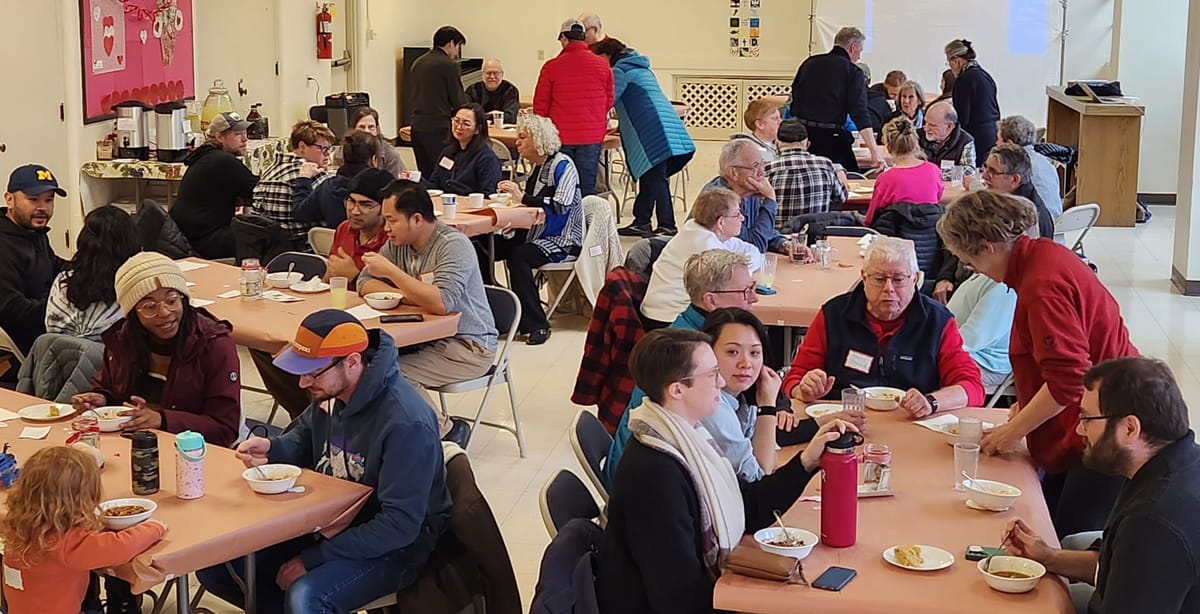
It’s chili time in our chilly winter (sorry for the lame play on words). MOON Co-op’s annual chili lunch is Saturday Feb. 7, 11:30 a.m. to 2 p.m., at Oxford’s Holy Trinity Episcopal Church. Kiwanis Club of Oxford hosts its annual chili supper at Talawanda High School, 5 p.m. to 7 p.m. Thursday Feb. 26, which is also National Chili Day.
San Antonio claims credit for first making chili as we know it. Beginning in the 1880s, women known at the time as Chili Queens sold what they named “bowls o’red” in San Antonio’s market. The Chili Queens prepared chili at home and carried it in large containers to Military Plaza, where they sold individual portions, until the 1930s when the health department put them out of business. Chili was designated the official State Dish of Texas in 1977.
Chili history prior to the Chili Queens is obscure and disputed. Nineteenth century cattle trail drivers consumed shredded beef heavily seasoned with pepper to hide the questionable quality of the meat.
My sentimental vote for the originator of chili is Sister Mary of Agreda (1602-1665), who played an important role in the establishment of missions in New Spain (now Texas). Sister Mary never left her convent in Spain, but her spirit was frequently transported by angels to New Spain, where she appeared as a mystical apparition preaching Christianity. On one of Sister Mary’s spirit’s return trips back to Spain, her spirit is believed to have brought back a recipe comprising chili peppers, venison, onions and tomatoes.
Most of the chili pots brought by volunteers to the MOON Co-op and Oxford Kiwanis chili meals will contain beans. My nephew, who has found himself transplanted to Texas, writes that a well-known expression there is “if you know beans about chili, you know that chili has no beans.” My sister found that the sentence was coined by a Dallas newspaper reporter Wick Fowler and picked up as the title and refrain in a 1976 song by Ken Finlay, a San Marcos Music Hall owner.
Most guests at the MOON Co-op and Oxford Kiwanis meals aren’t Texans, so by all means include beans in your chili. Rather than canned beans, I prefer cooking organic dried kidney beans procured from MOON Co-op’s bulk food section. Dried beans have more flavor and a pleasing crunchy texture compared with those out of a can.
To prepare dried beans, boil 3 cups of water, pour into a pot containing 1 cup dried beans, let sit for an hour, and drain. Refill the pot of beans with 3 cups of water, bring to a boil, reduce the heat to simmer, cover and cool for about 1 hour until the beans are tender but not mushy.
Aside from beans, the array of options for the chili pot is bewildering: Beef, pork, poultry or vegetarian? Ground or diced meat? Tomato or no tomato? Mild or incendiary? And so on.
As the crockpots of chili arrive at Holy Trinity’s kitchen for MOON Co-op’s lunch, I organize them logically, so that I can find the best match for folks. The pots are sorted between meat, poultry, vegetarian and level of heat. To better serve our guests, my buddy John Hofmann and I will taste each one and rank them from mild to spicy. A tough job but someone has to do it.
Volunteers to cook chili for the MOON Co-op lunch or Oxford Kiwanis dinner are still happily accepted.
James Rubenstein is president of the Board of Directors for the Oxford Free Press and professor emeritus of geography at Miami University.