
On My Plate: Corn on the cob
“Less than 1 percent of that corn is destined to be consumed directly by humans in the form of fresh corn on the cob.”
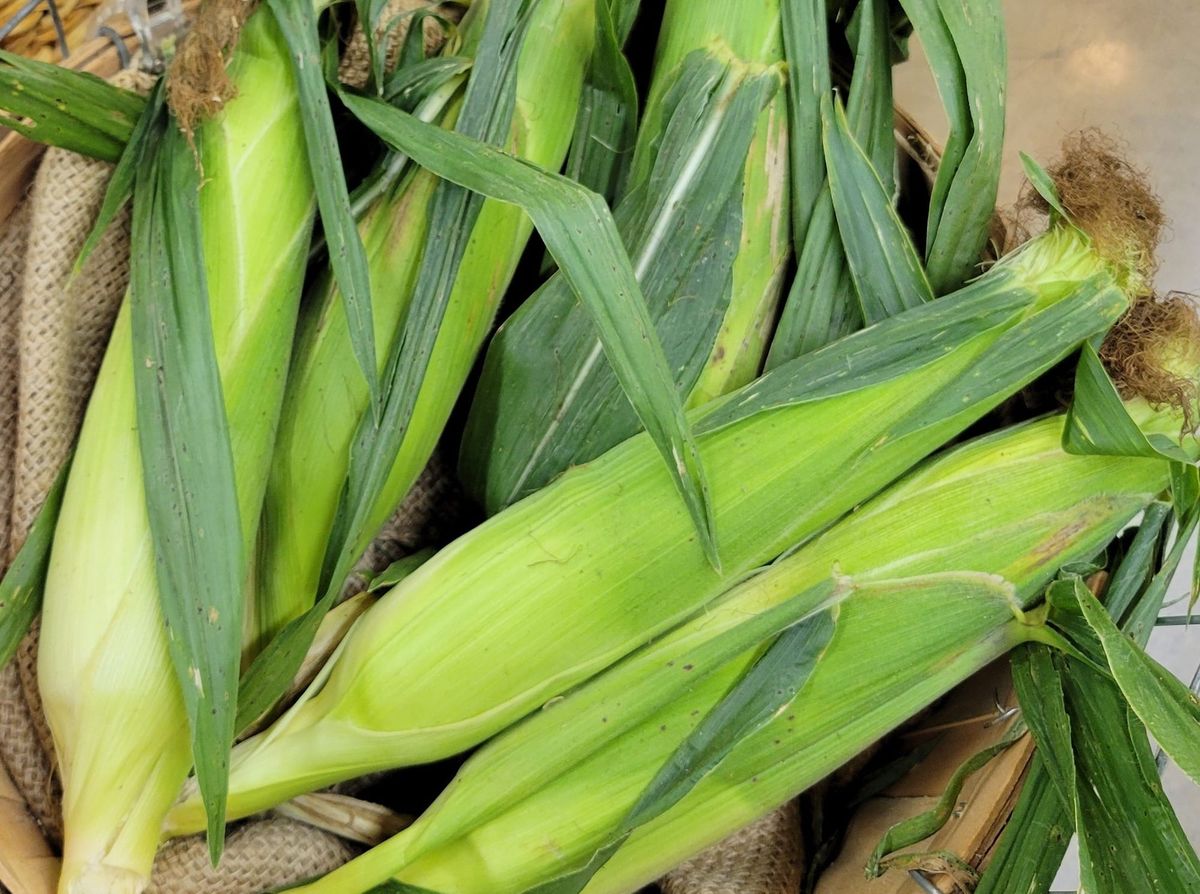
Driving home from Chicago recently, the fields of corn were especially handsome along the back roads after exiting I-70. The tassels stood tall and straight, towering over the soybeans.
Less than 1 percent of that corn is destined to be consumed directly by humans in the form of fresh corn on the cob. According to the U.S. Department of Agriculture, around 45 percent of the corn grown in the United States is fed to animals, another 45 percent is converted to ethanol fuel and 10 percent is used as an ingredient in food consumed by humans. Corn production has doubled in the United States since 1990, but the growth has been used entirely to generate more fuel.
When asked why Europeans don’t eat corn on the cob, the internet’s answer is unsatisfactory.
“Europeans eat less corn on the cob than Americans because corn was historically grown primarily as livestock feed rather than a human staple.” The statistics in the previous paragraph disprove the internet explanation.
My vintage “Joy of Cooking” offers this explanation: “Some years ago a Frenchman wrote to the Paris Herald to ask: ‘Why do Americans put their elbows on the table?’ The answer, published the following days, was conclusive: “It comes from eating corn.” Europeans visiting us enjoy corn on the cob, though they are not adept at eating with their fingers.
Offering an intriguing explanation is “Fabuleux Maїs: Histoire et Avenir d’Une Plante,” a book written in French by an agricultural historian Jean-Pierre Gay. Disclosure: I am still trying to obtain the book, which Amazon doesn’t have, so I am relying on a book review by a Canadian corn researcher Terry Daynard.
According to “Fabuleux Maїs,” the principal reason French people have not been interested in consuming corn is because of the Catholic Church. Until abolished by the Revolution in 1789, a tithe, known as a “dîme,” the source of the word for our 10-cent coin, had to be paid to the church by French farmers. The church accepted payment in cash or in most crops, including wheat and barley, but not in corn, which according to “Fabuleux Maїs” was regarded by church officials as unhealthy to consume and associated with living in poverty.
People have strong opinions on how to cook corn. Cooks fall into three camps: stovetop, grilling and microwaving. The “best” answer was a surprise to me. In the past, most Americans threw corn in boiling water. “This brutality has got to stop,” Jo Robinson has written in “Eating on the Wild Side.” “The less contact corn has with water, the more nutrients stay in the kernels.” I’ve tried grilling corn on the cob without much success.
Much to my surprise, Jo Robinson (who has impeccable eco-credentials) recommends microwaving corn on the cob. One of Oxford’s most respected and important environmentalists, Dr. Gene Willeke, longtime Director of Miami’s Institute for the Environment and Sustainability, was also a passionate advocate for microwaving corn as the most energy-efficient and nutritious method. My yearly corn column is my annual remembrance of Gene as a friend, mentor and microwave cook.
To prepare corn on the cob for the microwave, peel away most of the husks, leaving only a thin film of them to protect the ears. Don’t expose the kernels. Microwave one ear for three minutes, two ears for five minutes, and two more minutes for each additional ear. When cool enough to handle, slit the end where the husks are still attached. The husks and silk will pull away easily.
James Rubenstein is president of the Board of Directors for the Oxford Free Press and professor emeritus of geography at Miami University.