
On My Plate: Fruitcake
Everybody loves fruitcake. Rather, everyone loves making fun of fruitcake this time of year. It typically ranks in surveys among Americans as their least favorite Christmas food.
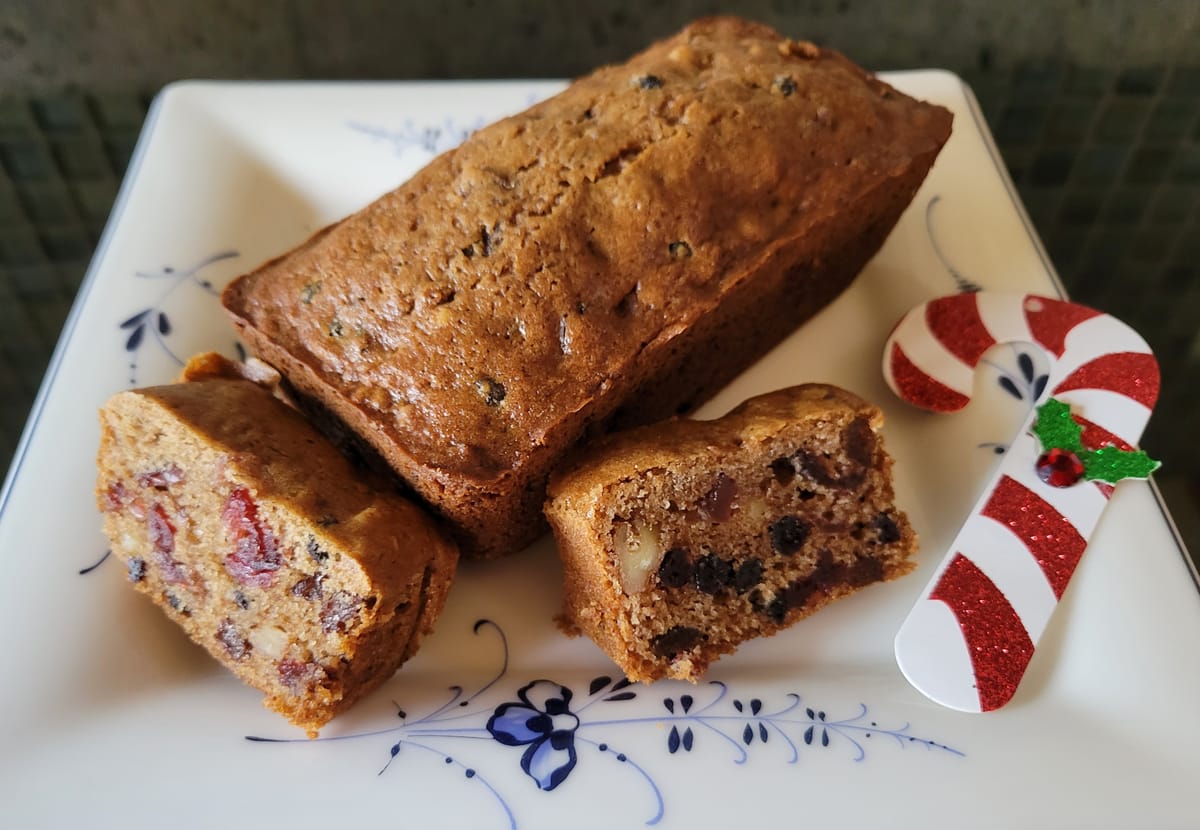
Everybody loves fruitcake. Rather, everyone loves making fun of fruitcake this time of year. It typically ranks in surveys among Americans as their least favorite Christmas food. The poor reputation may stem from the mass production of fruitcakes that are filled with unnatural colors and overly sweet chewy chunks and are overbaked to extend shelf life.
“Everybody hates me,” Katelyn Aluise, Oxford Free Press’s wonderful reporter, told me a few days ago. She was not referring to her reception here in Oxford – we are grateful that she and Editor-in-Chief Aidan Cornue came to us in 2025. Rather, she was quoting the line she had to deliver in an elementary school holiday play around 15 years ago. Each actor was dressed as a different holiday item, and her costume was a fruitcake, hence the phrase she was required to deliver.
Making fun of fruitcake is part of my family’s lore. My grandfather’s birthday was Dec. 25, and my grandmother served a fruitcake sent each year by a client. My grandmother opened the recently arrived box, poured a bottle of alcohol over the fruitcake (my parents thought it was brandy or rum), placed it on the top shelf of a rarely used closet, and pulled down from the shelf the one sent a year earlier, which she then served amid much jeering.
Our household defies the nation’s dislike of fruitcake by baking some for MOON Co-op employees. By using only organic and Earth-friendly ingredients available at MOON Co-op, we have at least overcome the cloying sweetness of the mass-produced version.
We soaked a large bowl of dried fruit for several days with local wine from Hanover Winery. The choice of dried fruit varies each year, depending on availability at the co-op. This year, we used organic apricots, cherries, cranberries and raisins.
On baking day, we mixed a box of organic non-GMO cake mix from MOON Co-op called Namaste Spice Cake Mix with apple cider, eggs and oil, in amounts according to the recipe on the box, plus some ground allspice, cinnamon and nutmeg. We then folded in four cups of the dried fruit, plus one cup of chopped pecans harvested and shelled by the Miami Nation in Oklahoma and available for a limited time at MOON Co-op.
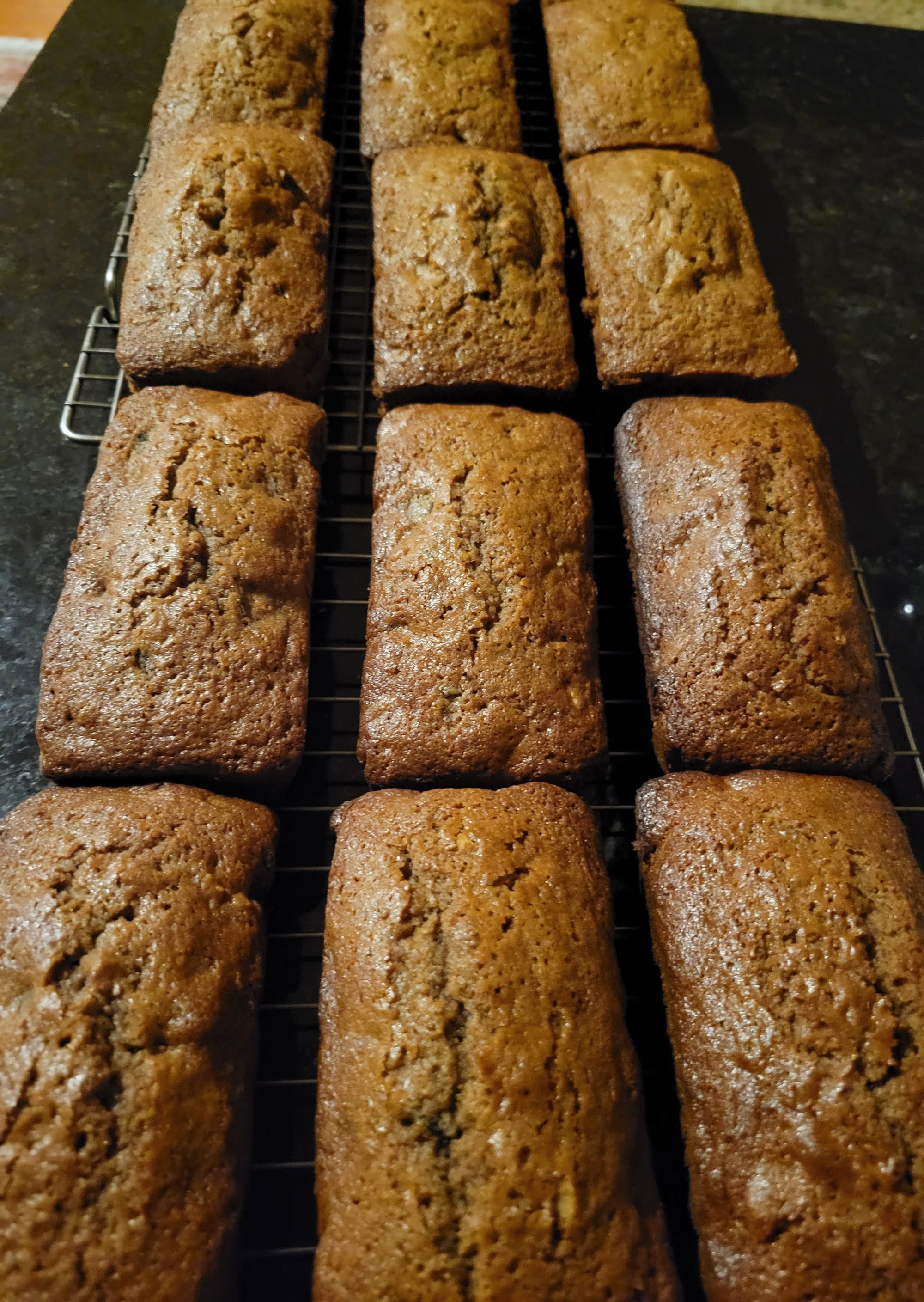
We buttered the surfaces of eight small loaf pans and covered the bottom of the pans with parchment paper. The cakes went in the oven at 350 degrees for 30 minutes. They came out a bit overdone. Baking at 300 degrees for 45 minutes last year was more successful. The cakes need to cool on wire racks for one hour before removing them from the pans.
After last year’s bake-a-thon, we ended up with one extra fruitcake, which I stored in the pantry and promptly forgot about it amid the abundance of seasonal pastries in our kitchen. There the fruitcake lived in peace and quiet.
A year later, with two dozen fruitcakes newly baked, I pulled out the year-old specimen. No mold or significant discoloration could be detected. It was hard but could be cut with a knife. However, we were too scared to eat it. So unless I find a friend bold enough to sample it, I fear that last year’s fruitcake is destined for a green food compost bin at the TRI.
Store fruitcakes in a tin at room temperature, but definitely not in the fridge or freezer. Serve on National Fruitcake Day, Dec. 27. And hide one for next year.
James Rubenstein is president of the Board of Directors for the Oxford Free Press and professor emeritus of geography at Miami University.