
Oxford Charter Review Commission lays initial recommendations for November ballot items
Oxford is considering multiple updates to the city’s charter – including revisions to housing density, utility payments and city manager hiring flexibility – as part of the once-a-decade review process.

Editor's note: This story has been updated.
Oxford is considering multiple updates to the city’s charter – including revisions to housing density, utility payments and city manager hiring flexibility – as part of the once-a-decade review process.
The Oxford Charter Review Commission is responsible for updating and monitoring the city’s charter, which acts as a set of rules for a city’s operations.
Oxford’s charter can be viewed on the city’s website.
Jessica Greene, assistant city manager for the City of Oxford, said that Oxford’s charter is reviewed every decade.
After recommendations are discussed by the commission, public input will be heard, Greene said. Following any changes, these recommendations will be submitted to the city council, where the recommendations, if approved, will be adopted as an ordinance proposed to the Butler County Board of Elections. Here, language will be refined before being placed on the November ballot.
“This goes to our residents for our vote,” Greene said. “During that time, we’ll do a fair amount of education about what a charter (is and) what the proposed changes (are).”
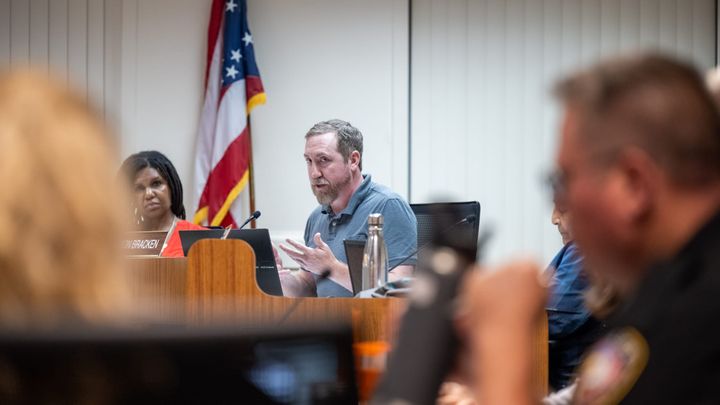
The commission discussed several suggested changes to the city’s charter at its April 9 meeting, based on recommendations from city staff.
Mile Square density
The first change would affect Section 2.11 of the charter and allow more than three dwelling units in the Mile Square area, increasing housing density.
Chris Conrad, law director for the City of Oxford, said the change would create more flexibility for homeowners and residents in the Mile Square.
Members of the commission requested more information about his recommendation.
Renters utilities
The second recommendation would apply to Section 2.12 of the charter. This change would make landlords in Oxford responsible for paying utilities instead of having the renter choose whether to charge rentees utilities or pay them as part of rent.
“If students leave without paying their utility bills, we really have very limited recourse to get that money back,” Greene said. “We would like to go after the property owner for utilities not (being) paid.”
Displaying ordinances
The third change would affect Section 3.04 and modernize the city’s ordinance publication system.
The proposed language, which is still subject to change, states:
“The title of all ordinances passed by the Council shall be posted in the municipal building and on the City’s website for a period of not less than ten days and to take such other actions as provided by Council. Failure to publish as required by this Section shall not invalidate any ordinance.”
This change would update the current text and require the city to publish a digital and physical option to display ordinances. Instead of publishing a physical ordinance in three locations, the change would require a physical ordinance to be published in one physical place.
City manager residency
The fourth recommendation would alter Section 4.01 and allow for a city manager to live outside city limits, with approval of the city council.
“This allows some flexibility with the recruitment of city managers,” Greene said. “(It) gives the current (city) council a bit of flexibility in who they may want to hire.”
New policy
The final recommendation comes to Section 10.01 of the city’s charter, which would adopt an “employee dishonesty and faithful performance of duty policy,” to protect the city from theft of funds, of a specific amount, by an employee.
This recommendation would make the finance director and assistant finance director both no longer personally liable. Greene said this new policy would replace the city’s current bond, which does not protect both the finance and assistant finance directors.
Situations where this insurance is needed do sometimes happen, Conrad said. While these situations might not be directly theft related, they can include negligence, which can happen “a couple times a year.”
Conrad added that incidents like this tend to happen in smaller communities with less oversight.
The commission will meet April 29 at 4:30 p.m. at the Oxford Courthouse at 118 W. High St.