
Oxford Winter House celebrated after doors close for season
The temporary shelter was open for the months of December 2025, January and February.
The Oxford Winter House officially closed for the season on Feb. 28.
The temporary shelter officially opened on Dec. 21, 2025, after a brief delay, during which guests were housed at a local hotel. The shelter was originally slated to be open for three months, from Dec. 1, 2025, through Feb. 28.
For the past couple of winters, the Talawanda Oxford Pantry and Social Services (TOPSS) partnered with local hotels to assist people experiencing homelessness, but it announced in July 2025 it would no longer be able to continue the service. The local faith community was then approached by the assistant city manager to see if a solution could be quickly pulled together.
Alisha Bond, a night coordinator at the Winter House, said the staff had actually planned to keep the shelter open for one more night, but all remaining guests were gone by Feb. 28, having either found another shelter solution, applied for housing vouchers or left on their own terms.
“It was a success,” Bond said of the project led by the Oxford Area Solutions for Housing (OASH) group and local faith community. “We were all working together to accomplish the same goal.”
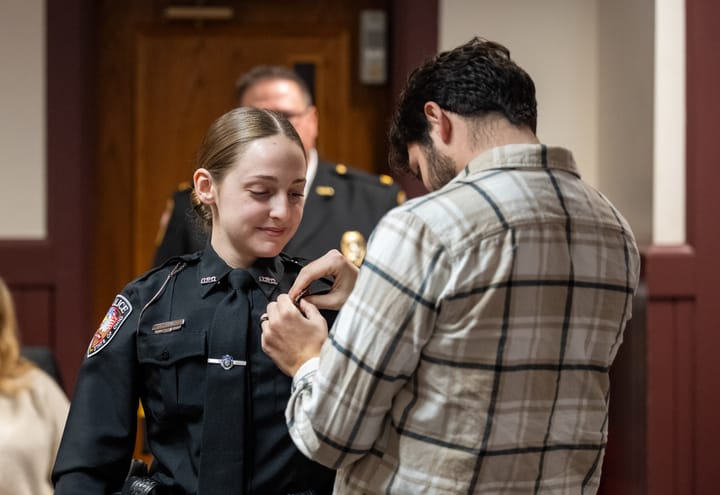
Staff of the Oxford Winter House, former guests, OASH members and others who contributed to the shelter attended a dinner the evening of March 2 to celebrate the groups’ accomplishments.
According to preliminary data gathered by John Bailer, a volunteer and member of the Winter House planning committee, 33 guests were provided shelter between December 2025 and February, with their median age being 52.
Most of the guests had been unhoused for longer than a year prior to entering the Winter House, with the majority reporting they were either staying in a place not meant for habitation or at an emergency shelter.
Teko Johnson, lead coordinator of the Winter House staff, said for guests, living in an “uninhabitable” place could have meant a structure without electricity, running water or heat, sleeping in a tent or in a place causing them additional trauma.
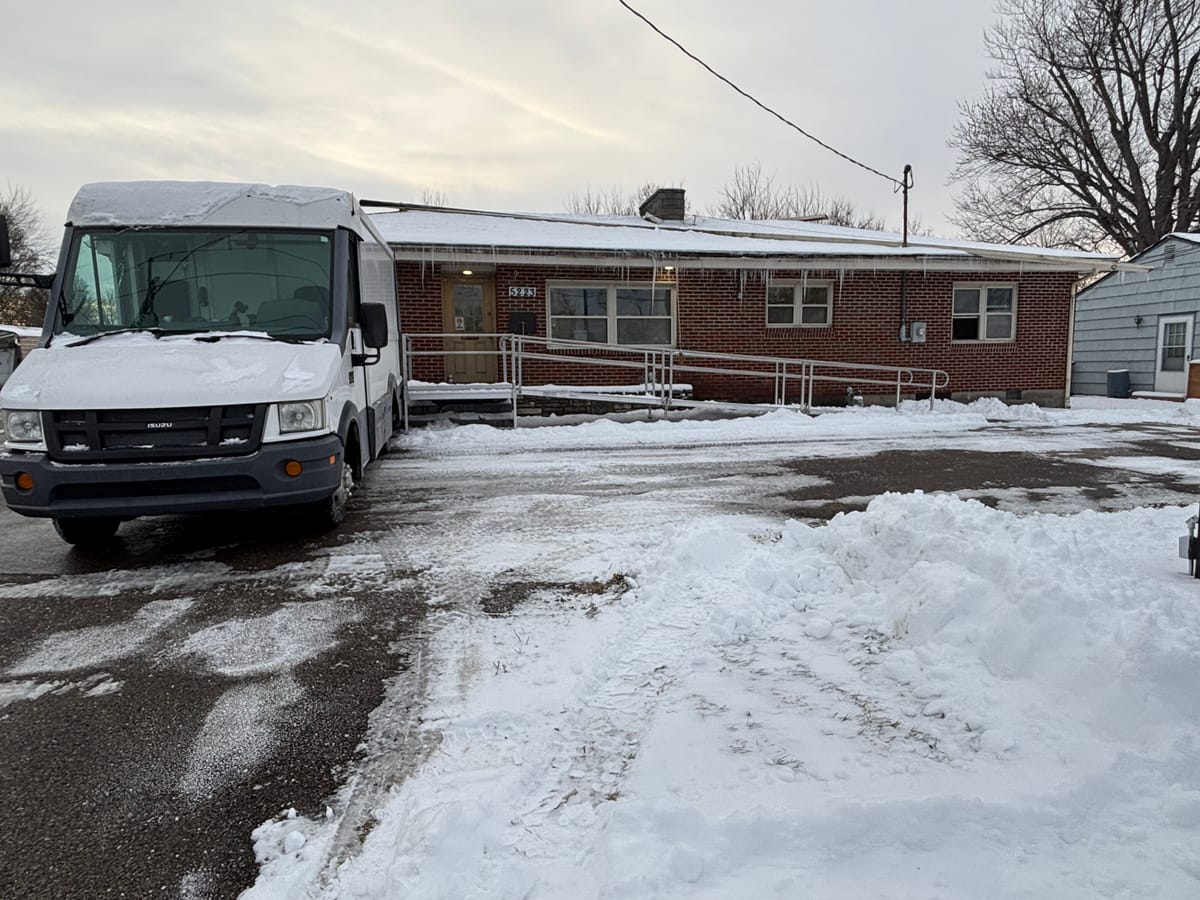
The Winter House, located at 5223 College Corner Pike, had enough beds to accommodate 13 people at any given time. According to Bailer’s preliminary data, the median stay for guests was around 21 days.
Overall, the preliminary data showed at least 18 guests found a place to stay upon leaving the Winter House, and many were able to be connected with needed services, including assistance with applying for housing vouchers.
Mary Franklin, a 19-year-old who has been unhoused for the past two years, was a guest at the Winter House and attended the celebratory dinner to give thanks.
Franklin told the Oxford Free Press, through the Winter House, she was given a voucher to shop for clothes at Uptown Threads, bedding and other essential items to keep once she left. She said staff encouraged her to apply for the undergraduate social work program at Miami University, and they helped her find a nearby apartment.

Before she arrived at the Winter House, Franklin said she had been couch-hopping and briefly stayed in another shelter.
“The Winter House is definitely like a family house,” Franklin said of her experience. She said the staff members were “so sweet and kind,” adding she felt encouraged.
“With the Winter House, I felt free,” Franklin said. “I felt like, ‘I can actually do something.’”
Bailer shared a couple of other “success” stories, including one guest who had been unhoused for more than 20 years, for whom staff was able to assist in securing an apartment during his stay at the Winter House. Another guest was connected with much needed long-term care at a healthcare facility.
He said guests at the Winter House were able to secure state IDs, birth certificates and other essential documents to apply for other resources or Medicare. Guests also had access to transportation to attend interviews or obtain documents through Fedora Transportation, owned by Brian Urell, who donated the larger portion of his building to the Winter House for the three months it was open.
Volunteers brought in dinner each night, donated supplies, helped to clean, did laundry and spent time talking with guests.
Johnson said of the work the staff at the Winter House did to help connect guests with resources, “A lot of people who experience homelessness, they feel defeated. But when they have someone that’s in their corner to help them through the process, to show them that we do care, it made a huge difference with everybody that came through.”
Johnson previously worked at a men’s shelter in Lexington, Kentucky, with over 200 beds. He said, as someone who has done the type of work needed at the Winter House on a larger scale, he was impressed by how the project was pulled together.
“I’ve never seen something like that before,” Johnson said. “The way that the community came together is remarkable, from the support that we had from everyone. … The guests truly appreciated everything that (the volunteers) did for them, and they felt love from everyone that walked in the door. They felt like a person.”
Kimberly Ross, who was a program coordinator at the Winter House, has worked in recovery services for around 14 years, but said working at the Winter House was “a brand new experience that brought a whole new table of skills and ideas and (was) just a humbling experience.”
Ross said success looked different for each individual who stayed at the Winter House. For some, that meant just staying out of the cold, receiving help in locating medical care or applying for housing vouchers, while for others it meant finding long-term housing.
“I think it’s amazing,” she said of the Winter House. “I’ve never seen anything come together so quickly and a community joining together like they did and give so graciously to make sure that these people had the best outcome they could have, and I thought it was miraculous what was done.”
Nathalie Nichols, a day shelter coordinator, was one of the staff members who said they had some prior experience being unhoused. She said of the group who organized the Winter House, “The community amazed me how they came together. (It) completely restored my faith in humanity.”
Although it is yet unclear if the Winter House will be able to reopen next winter or if another long-term shelter will take its place, Ann Fuehrer, an OASH and Housing Advisory Committee (HAC) member, said HAC will be discussing an affordable housing trust fund during its upcoming meeting on March 5 and will likely make a recommendation to the Oxford City Council at a future meeting with another sheltering idea.