
Reenacting on the frontier: A day with Zachariah DeWitt
Zachariah DeWitt took advantage of this newly available property and moved with his wife Elizabeth DeWitt and their four children from Kentucky to what would become Oxford Township after Ohio gained statehood in 1803.
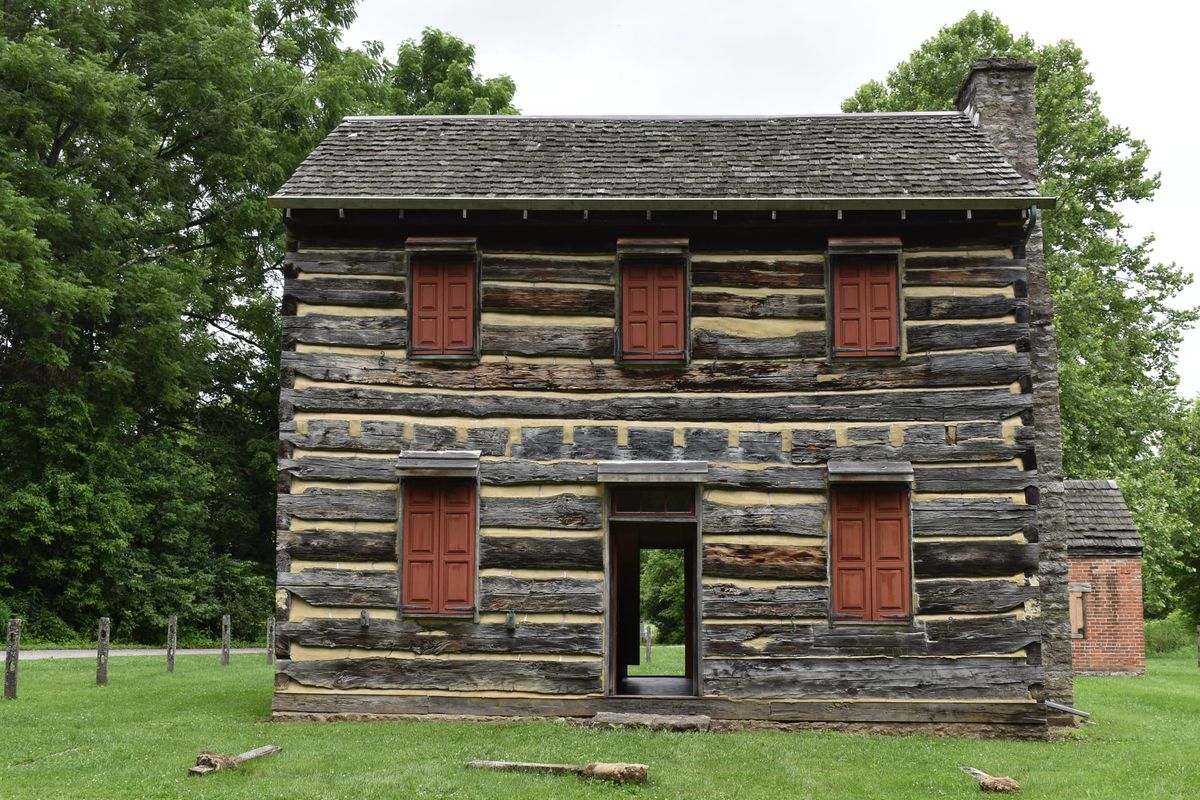
When Zachariah DeWitt raised a company of mounted riflemen in Oxford for the War of 1812, he didn’t know he would take part in a “200 mile horse race” in Canada behind British lines roughly two years later as part of the war.
“We beat them (the British) by 7 miles,” Zachariah DeWitt reflected with a grin while relaying his life story to those visiting his log cabin.
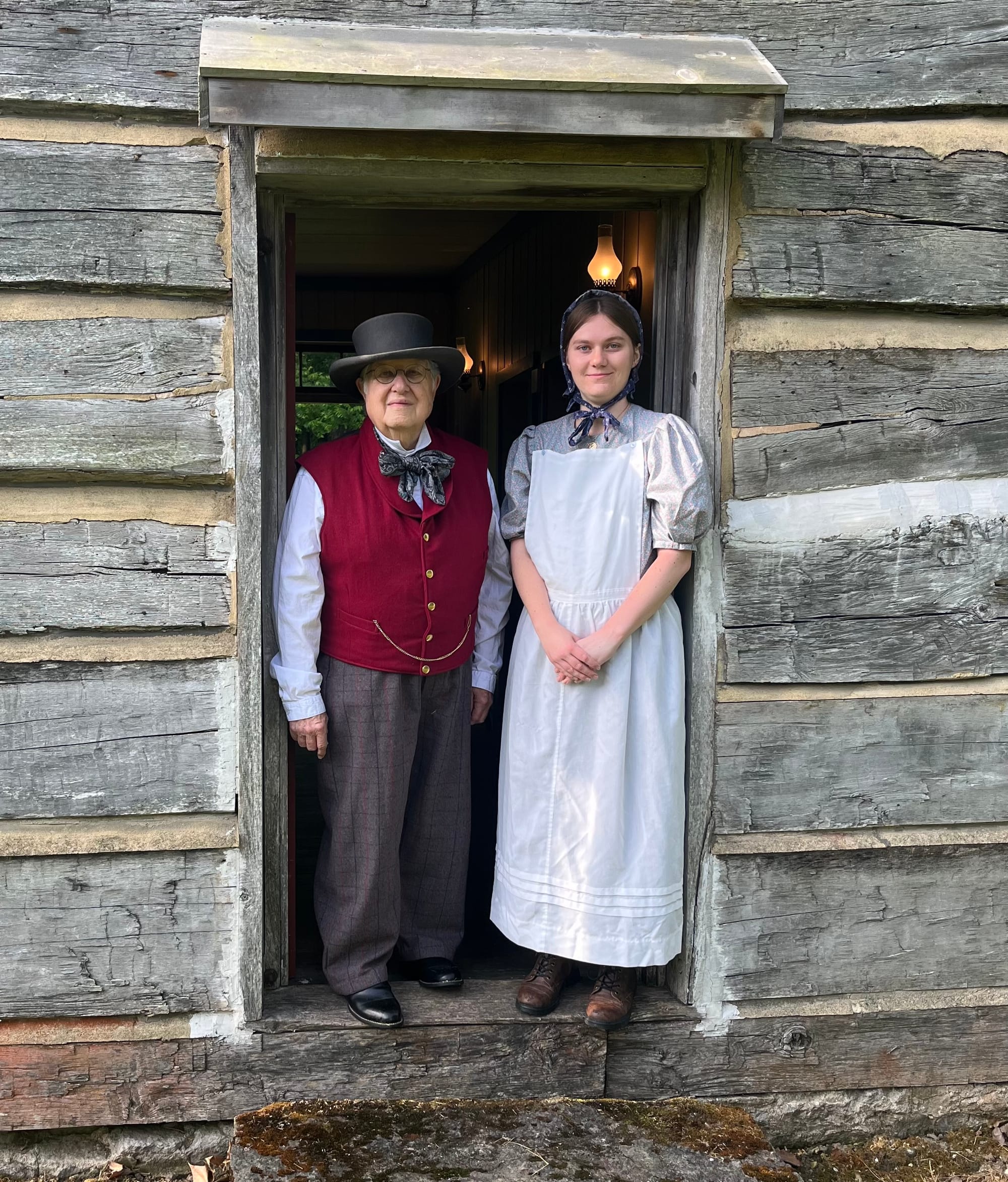
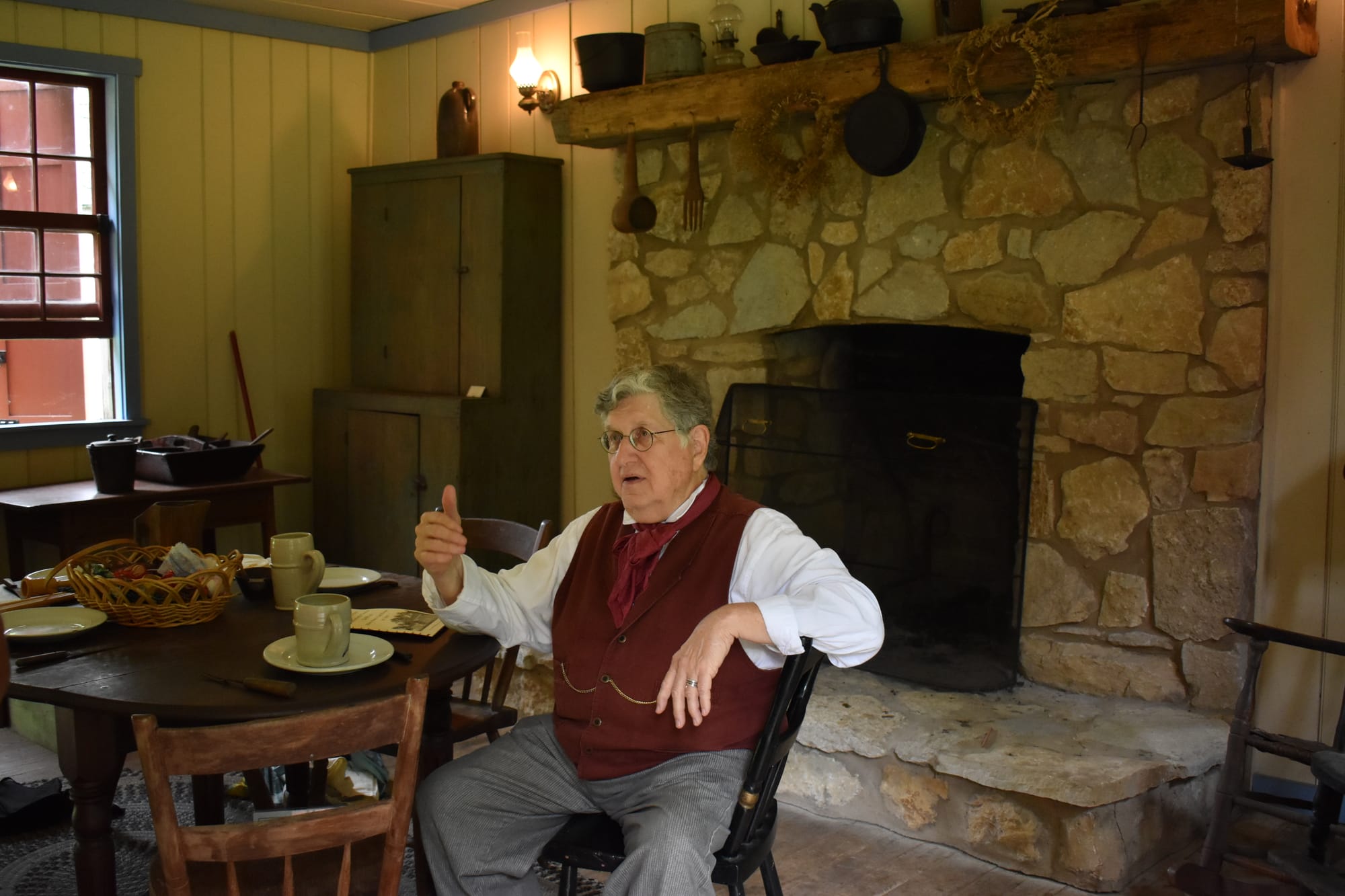
At least that’s how retired pastor Fred Shaw phrased the ordeal while posing as Zachariah DeWitt for the Oxford Museum Association’s Freedom on the Frontier event on June 28 at the DeWitt Log Homestead.
Zachariah DeWitt and the war
Zachariah DeWitt was already a war veteran by the time 1812 rolled around, as he served with Major General Anthony Wayne during the Northwest Indian War. Zachariah DeWitt also witnessed the signing of the Treaty of Greenville in 1795, which forced Native American tribal leaders, including those of Myaamia, to surrender their land, according to Teach Myaamia History's website. This effectively opened up additional land and natural resources for white settlement.
Zachariah DeWitt took advantage of this newly available property and moved with his wife Elizabeth DeWitt and their four children from Kentucky to what would become Oxford Township after Ohio gained statehood in 1803.
Between then and his time serving in his second war, Zachariah DeWitt and the six neighbors of the area began to clear land and build houses. He worked as a surveyor throughout the region, helped three men from out of town plot out the space for Miami University in 1809 and later assisted in establishing Oxford.
He and Elizabeth DeWitt would eventually have a total of nine children, the youngest of which was born while Zachariah DeWitt was away at war.
In 1812, war was declared with Great Britain. According to the USS Constitution Museum’s website, the conflict emerged from Britain’s limitation of American trade with Europe and the nation’s treatment of American merchants. By 1812, Britain was in the midst of the Napoleonic Wars, and to fill in warships, the Royal Navy forcibly conscripted men from American merchant vessels. Between 1807 and 1812 alone, roughly 400 American ships had been seized.
However, America did not have the firepower to directly battle the Royal Navy. “Instead,” according to the USS Constitution Museum’s website, “the new nation targeted Canada, hoping to use the conquest of British territory as a bargaining chip to win concessions on the maritime issues.”
This is where Zachariah DeWitt ended up. He and his men “took ourselves up to Fort Detroit,” said Shaw as Zachariah DeWitt, “and we joined up with 700 other men, and commenced a ride of 200 miles behind British lines.”
The group believed they had success at first. They took supplies, burned bridges and mills and encountered one skirmish that resulted in one casualty on their side. But then they learned another group had discovered them, and more men were coming – around 1,100 Canadian and British militiamen – so the Americans hightailed it back to the border.
Zachariah DeWitt and his men were honorably discharged, and Zachariah DeWitt went back to Oxford, where he stayed until his death in 1851.
Reenacting and reinterpreting
Despite Zachariah DeWitt’s time at war and his involvement in the Oxford community, including building a sawmill, starting a bricklaying company, co-owning the Mansion House Hotel, helping to found Oxford’s Masonic Lodge and campaigning for William Henry Harrison to be elected president, his personal documentations are nonexistent.
“Unfortunately,” Shaw said, “there is nothing that we can find that he wrote himself, and you know that it seems so strange that you wouldn’t, considering all the businesses that he was in. But he is referenced in other people’s writings.”
Shaw, who has been involved with historical reenactments since 1971, said this was the first time he portrayed Zachariah DeWitt.
After months of research, Shaw said he began to have “a picture of who Zach and Elizabeth (DeWitt) were, and then it was simply a matter of … [making] them real, … add[ing] some of the emotion.”
So when Elizabeth DeWitt died, and Zachariah DeWitt kept the black bonnet she wore every day to hide a scalping scar, Shaw could not just simply tell the facts of the story. He added emotion.
“The tragedy of my life happened: Lizzie died. … I put that bonnet behind the wall so that wherever I am in this house, I feel her presence,” said Shaw as Zachariah DeWitt.
And such emotion sticks, as visitor Jake Stephens said that Zachariah DeWitt’s keeping of the bonnet “speak[s] a lot more than just words can really explain.”
Mannerisms and surmises of a character get added on as well. Claire Hanna, an intern with the Oxford Museum Association and a first-time reenactor as a DeWitt daughter, said mere birth, marriage and death records are “not much to go off ... by character anyway.”
Reenacting becomes more complicated when the reenactor doesn’t share the same identity as the character they are playing. This is the case for Shaw, as he is a Shawnee descendant.
“For some events, I portray a white man. For others, I am Shawnee,” Shaw said.
In the case of Zachariah DeWitt, who was reputed to be an “Indian fighter,” according to the Oxford Museum Association’s website, Shaw chose to portray him because “ you get to tell all (of) the story.”
“If you get people who are interested enough to ask the questions,” Shaw added, “you can tell both sides.”