
Talawanda’s state report card improves from last year
Theroux says student debt cut down ‘tremendously,’ none explicitly turned away from homecoming
The Talawanda School District’s overall state report card improved from four to 4.5 stars over last year.
According to the overall district results, comprising ratings in achievement, progress, gap-closing, graduation rates, early literacy and college, career, workforce and military readiness over the 2025-26 academic year, the district “exceeds state standards.”
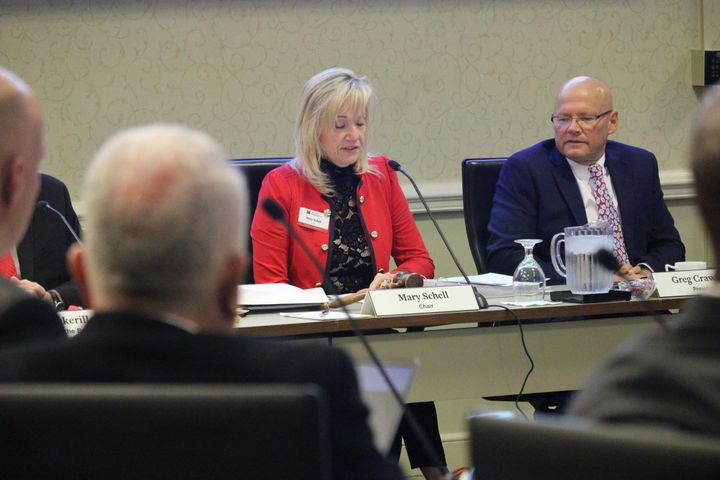
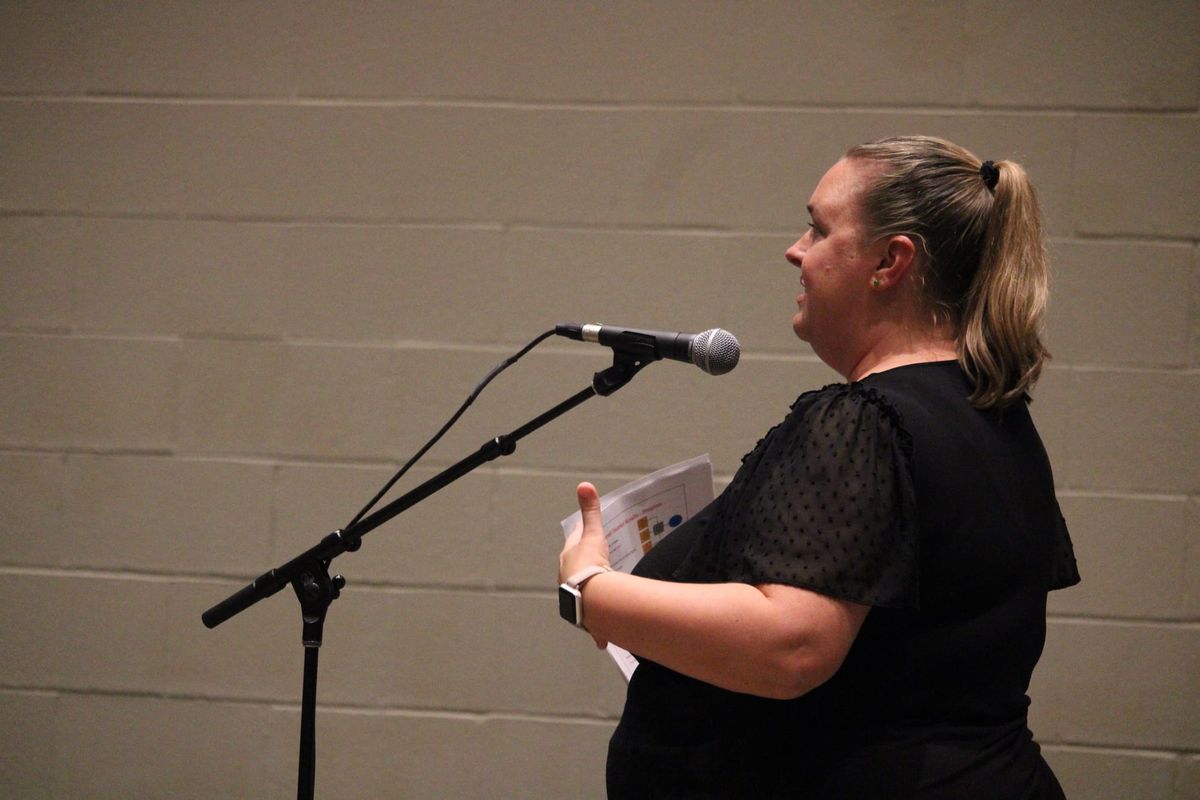
Stephanie Aerni, director of teaching and learning, presented the scores to the Talawanda Board of Education during a meeting on Sept. 17.
Talawanda received an achievement score of four stars with a performance index of 80.4%, which measures how well students performed on state testing.
Aerni said more students scored at advanced and advanced plus levels on testing during the 2025-26 academic year compared to last year. Still, Aerni said the district needs to continue to increase proficiency levels for all students.
Talawanda received a progress score of five stars, up from four stars during the 2024-25 academic year. This component measures students’ growth based on past performance on standardized tests given beginning in the fourth grade.
The district also received a gap-closing rating of five stars, up from four stars during the 2024-25 academic year. This component measures the reduction in educational gaps for student groups, using chronic absenteeism, English Language Learners programs, achievement and progress for subgroups, gap-closing for graduation subgroups and gifted student indicators as metrics.
“(This gap-closing category) is the perfect example of how, as a school district, we cannot measure ourselves just on a graduation rate or an ELA (English language arts) score,” Aerni told the board. “We really look at the whole child. … We’ve seen this huge improvement. While we are celebrating that, we know we need to maintain it and continue to keep growing that and making this improvement.”
Last year, Talawanda received two stars in early literacy, which measures reading improvement and proficiency for students in kindergarten through third grade.
This year, Talawanda increased its score to three stars, which Aerni said can be attributed to the work intervention teachers, support staff and families have engaged in since last year. Kramer Elementary currently has the lowest score at two stars of the three elementary schools in this category.
Moving forward, Aerni said, while the district’s third grade ELA proficiency total (72%) is above the state average, it will continue to work toward the goal of 80% by spring.
Statewide, the office of Governor Mike DeWine has announced an ELA proficiency increase following the release of school district report cards, in which schools in Ohio are reaching a five-year high of 62% proficiency.
As for Talawanda high schoolers, the district has a four-year graduation rate of 99.6%, at five stars, which has remained consistently high, and it meets state standards at three stars for career, college, workforce and military readiness. Aerni said the district is working to expand the variety of opportunities at Talawanda High School.
“(The district) is looking at an expansion this year with some pre-apprenticeship programming that will hopefully boost us in this area, as well,” Aerni said. “Right now, most of our success has been coming from students with honors diplomas and high enrollment in CTP (career tech prep) classes. We’re looking to expand our programming here in high school, so that we can capture more students with some element of this readiness.”
Overall, Talawanda ranks similarly to comparable school districts statewide.
The complete presentation and breakdown of scores for each school in the district can be found at talawanda.org under “Board of Education,” “Agendas.” The presentation also includes the district’s updated reading improvement plan.
Aerni said value-added data regarding report cards will be released for schools statewide in October.
Superintendent Edward Theroux said of gauging the district’s progress, “Even though that I’ve always talked about (how) the report card has some great measurements … you cannot put all your eggs in one basket and rely on the report card.”
“(The report card) does not look at the whole child. We have many other metrics and measures, including achievement, including socio-economic status of the subgroups, as well as social and emotional (health),” Theroux said. “I want to caution, while (the results are) great news, and we need to celebrate, our staff are doing so many other (things).”
Student debt updates
During a board meeting on June 18, Theroux told board members Talawanda High School students owed more than $85,000 worth of fees at the end of the 2025-26 academic year, which could include accumulated lunch, Chromebook, library, science lab and other dues since kindergarten.
He told board members if the debt is not paid or a payment plan is not set up with the school, penalties would be put in place, including preventing students from attending homecoming dances and other activities.
During the Sept. 17 meeting, two days before the dance, Theroux told the board there were fewer than 20 students with payment plans in place, and the district had collected about $50,000 toward the high school debt, “so that has gone down tremendously.”
Board member Dawn King made a motion to eliminate the rest of the high school debt by moving money from the general fund to cover it one time, a suggestion Theroux gave in June which was previously rejected by board members.
“I don’t want anyone not to be able to attend,” King said of the homecoming dance, adding the penalties were a new procedure this year that may have taken families by surprise. “I also don’t want any students not to be able to receive a parking pass, to get to school or potentially go to prom in the spring.”
No one seconded the motion, and it failed.
Board President Rebecca Howard said Treasurer Shaunna Tafelski checked on procedures surrounding student debt at other school districts which have “way more draconian kind of policies in place for students.”
“I hate to see students miss things because of fees,” Howard said. “There’s a harsh reality that we have to face.”
King said, while she agrees something must be done to solve the issue, putting the penalties in place “this quick” may have left families unprepared. She suggested pushing the first penalty back to prom instead of homecoming as it’s “so early in the school year.”
Board Vice President Pat Meade said he would agree with King, but since the message about payment plans being available was already sent out, he felt like the district gave families another avenue to relieve themselves of the debt and should “stick by that.”
Tafelski told the board she doesn’t feel the board should be moving general funds for prior debt, although they could look at implementing a one-year waiver for all fees next year. She pointed out the district spent $142,000 on consumable supplies last year.
“Let’s benefit all students, all families, not just the ones who happen to have a little bit of outstanding fees,” Tafelski said.
Theroux later told the Oxford Free Press in an email all students who wanted to purchase a ticket to the homecoming dance either paid their fees or entered a payment plan. While no students were explicitly turned away for unpaid fees, he said he wasn’t sure if there were students who did not attempt to purchase a ticket because they owed fees.
The board will host its next regular meeting on Oct. 15 at 7 p.m. at the Talawanda High School auditorium.