
Wild Ones 101: Bumping up biodiversity with soft landings
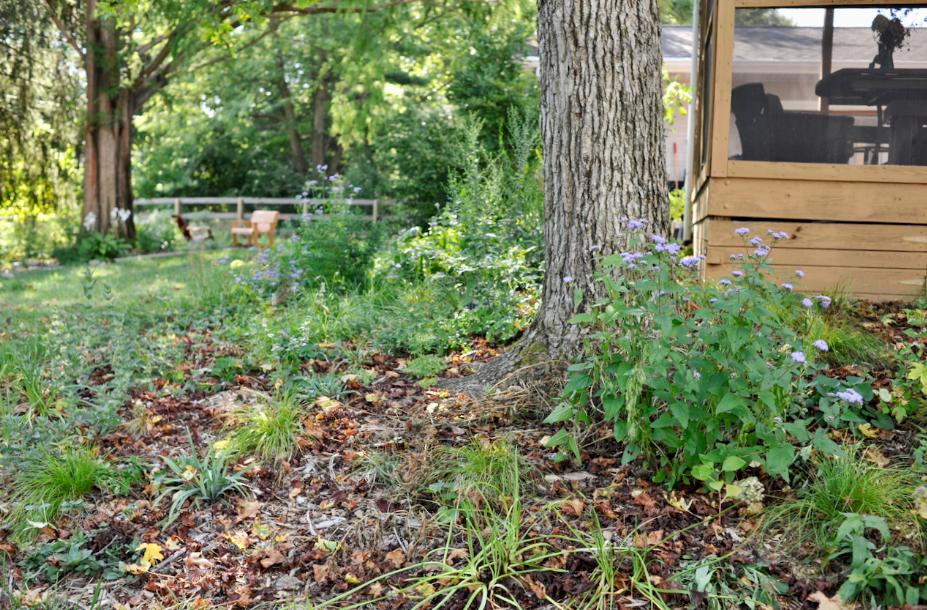
There are layers of plants and last year’s leaves. These elements work together to insulate tree roots, protect and feed the soil and create a landing pad for invertebrates that come down from the branches above.
Editor's note: A variation of this article was previously published on the City of Oxford’s website as part of the “Biodiversity in Your Yard and Beyond” column.
Native trees are biodiversity powerhouses in our midst. Think of each one as an apartment complex, grocery store and nursery all in one for caterpillars, birds, mammals and other animals that depend on them for survival.
Fall is a great time for tree planting. Some of the best native trees for biodiversity in our area include oak, willow, cherry, maple and hickory species. Before widespread European settlement, the Miami Valley was largely forested, and biodiversity in the region evolved around native trees. Growing native trees and leaving a “soft landing” area beneath them, where invertebrates can complete their life cycles, is one of the most powerful ways to support a biodiverse ecosystem in your yard.
But what is a soft landing? When we look at a natural landscape with mature trees, we don’t see mowed turf beneath them. There are layers of plants and last year’s leaves. These elements work together to insulate tree roots, protect and feed the soil and create a landing pad for invertebrates that come down from the branches above.
Native caterpillars that have been feeding on leaves (in other words, next year’s moths and butterflies) are looking for a safe space below the tree to pupate and spend the winter. Other species attach themselves to leaves and fall to the ground in autumn. However they get down there, they are expecting to stay put or be eaten by a hungry songbird during the winter. Okay, maybe they aren’t expecting the second part. Either way, the animals living in the trees have evolved with something other than turf grass or concrete below them to survive the winter and complete their life cycles.
Without a soft landing, native trees become a bit of a death trap for these invertebrates. Some species of fireflies require as much as two years in the leaf litter before they emerge as adults. So, if you’re wondering why there aren’t more fireflies and butterflies in your neighborhood, it’s time to bring some habitat back for them to grow and thrive.
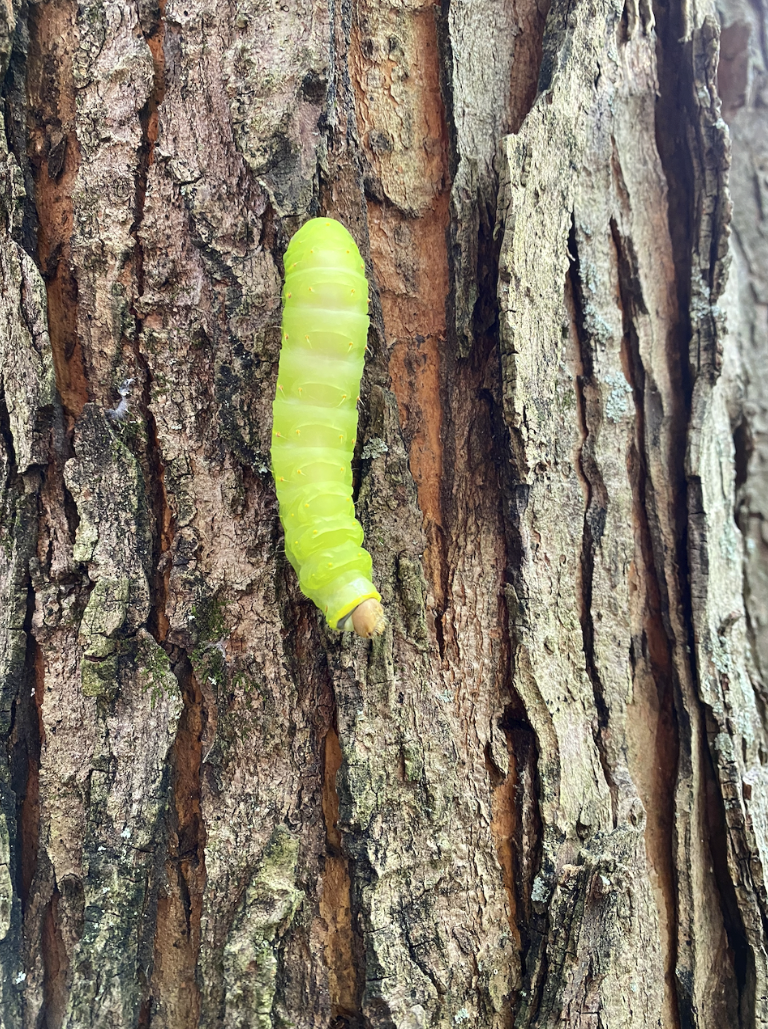
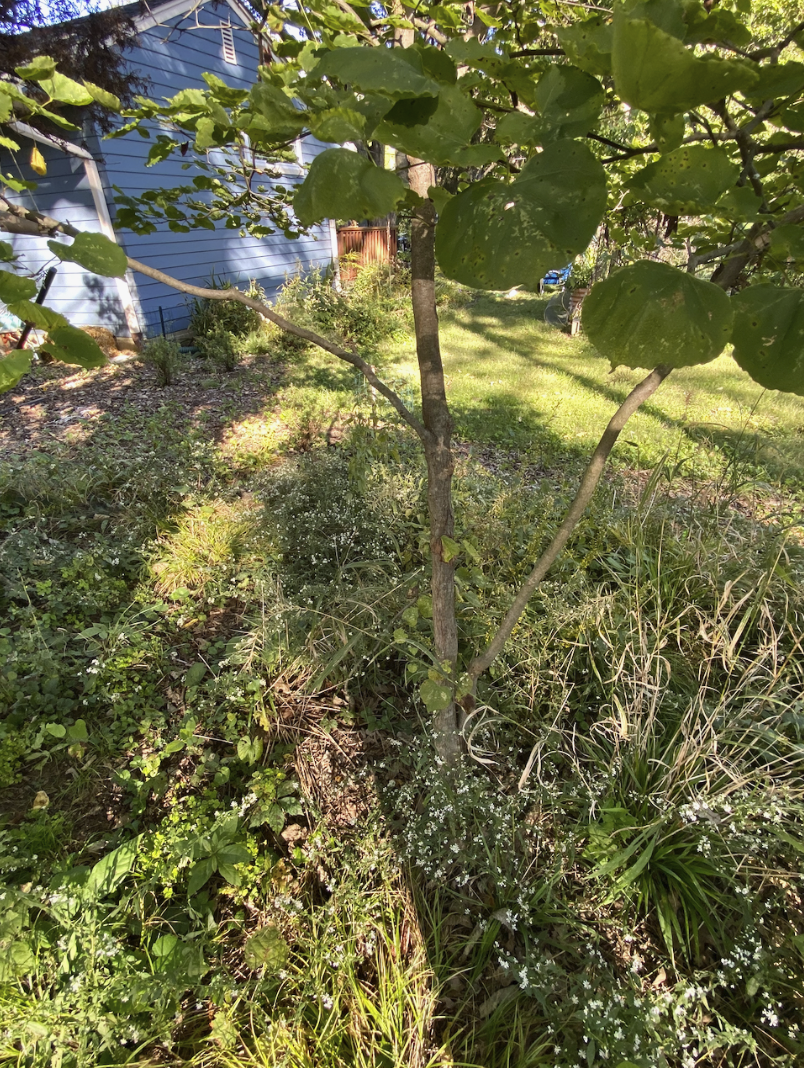
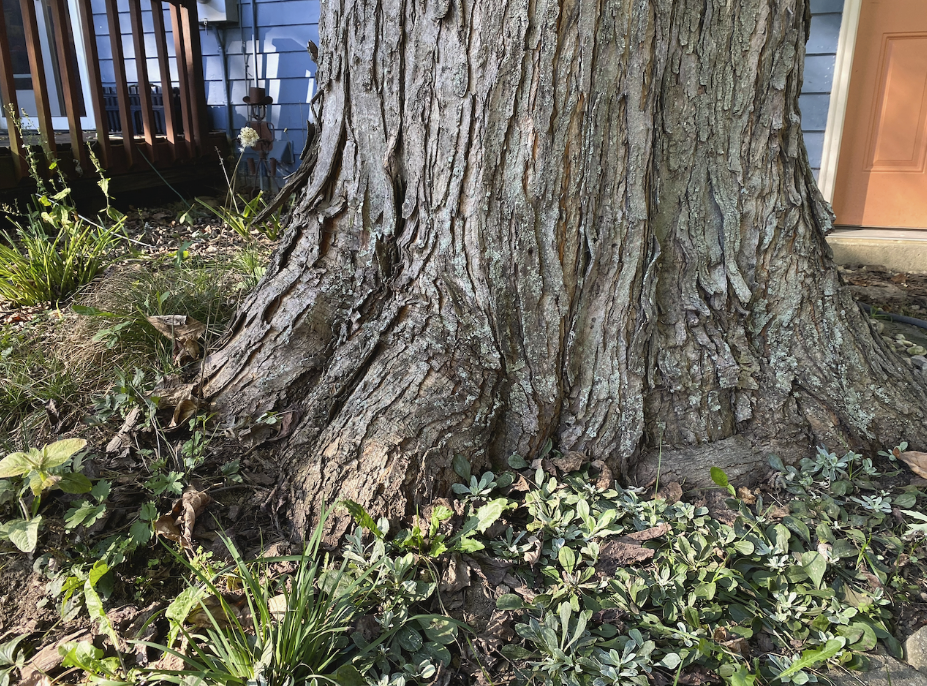
A polyphemus moth caterpillar descending a silver maple in early fall. Native flowers, grasses and sedges grow at the base of a young redbud tree. Pussy toes, blue eyed grass and sedges cover the ground around this silver maple. Photos by Kelsey Vance.
Many Oxford yards already have stately native trees. Fall is also a great time to prepare a bed for a soft landing under one of your native trees. Instead of pushing your leaves to the curb, use them to smother the turf grass at the base of your chosen native tree. Cut the grass as short as possible and layer the leaves on thick, but not on top of a tree’s bark. In the spring, you will be able to plant directly into those leaves; they are free mulch. Leaving the leaves in your yard is the first step in supporting biodiversity. Also, start small if that’s more comfortable for your workload and budget. Even small spaces can have a big impact.
Some great native plants for your soft landing may already be trying to grow in your yard. Plants like common violets, calico aster, sedges (they look like grass, but are not), blue mistflower, black-eyed Susan and so much more thrive in suburban yards but are treated as weeds. All of them are beautiful when they are allowed to grow and bloom. Use Google Lens or iNaturalist to help you identify plants already growing in your yard. There are many spring ephemerals like trilliums and wild geranium that thrive underneath native hardwood trees. They deserve to be reintroduced to suburban landscapes as well.
As your new native trees grow, areas of leaf litter establish and more native plants take root, you will be building the base of the food chain. Oxford is proud of our Tree City USA designation. It is up to all of us to keep planting, protecting and caring for the trees and habitat that make our community a better place for wildlife and for future generations.
Reach out to Wild Ones Miami Valley for help with tree selection, native plant nurseries, seed swaps and general support with native plant projects, big or small.
Amanda Bentley Brymer is assistant director of the Institute for the Environment and Sustainability at Miami University. She currently serves as curator for Silvoor Biological Sanctuary, part of Miami University’s Natural Areas.
Carla Blackmar Rice is graphics lab manager for the Hefner Museum of Natural History at Miami University and serves in several leadership roles with Wild Ones Miami Valley. Carla produced the “Grow a Soft Landing Ecosystem” ArcGIS StoryMap, which can be found here.
Kelsey Vance is a Wild Ones Miami Valley board member and owner of Wild Edges Landscaping LLC, a landscape design company focused on creating beautiful and ecologically mindful landscapes.