

Media Matters: Objectivity and news – a history lesson
“My job is to spend half the time repeating what one side says, and half the time repeating the other. Little thing called 'objectivity' – might want to look it up….” – ‘Senior Media Correspondent’ Rob Corddry to Jon Stewart on The Daily Show (2004)
When I taught journalism, I sometimes started class by writing on the board David Brinkley’s succinct definition of news: “News is what I say it is.”
Brinkley anchored network news programs on NBC for more than 40 years, from the 1950s to the 1990s. At first glance, his laconic definition may sound arbitrary and egocentric, but it actually captures the subjective nature of all journalism – that reporters and editors make judgments when they choose to cover one event and not another. They make choices and judgments when they compose a sentence on their laptops, snap particular photos with their phones (and decide which to use), edit footage for a video story, or choose one quote over another.
Yet, the public still generally believes news should be objective – an impossible feat for reporters, since we inevitably bring our histories and biases to every event we cover, every meeting we attend, every interview we do and every document we read. As my late mentor David Eason taught me, “Reporters have no special method to determine the truth of a situation nor a special language for reporting their findings. They make sense of events by telling stories about them.”
So where did the expectation that journalism could be and should be objective come from?
When Adolph Ochs bought the New York Times in 1898, it had a circulation of about 25,000. He needed a marketing strategy to counter William Randolph Hearst’s New York Journal and Joseph Pulitzer’s New York World – both with circulations around 400,000. Ochs transformed the New York Times by offering an elitist “informational” paper that sought a smaller but more influential audience among wealthy businessmen, politicians, and intellectuals. In countering the more dramatic narrative journalism of Hearst and Pulitzer, Ochs began positioning the New York Times as the “paper of record” – filled with texts of treaties, court reports, congressional hearings and government documents – an alternative to the more sensational reporting of the Journal and the World.
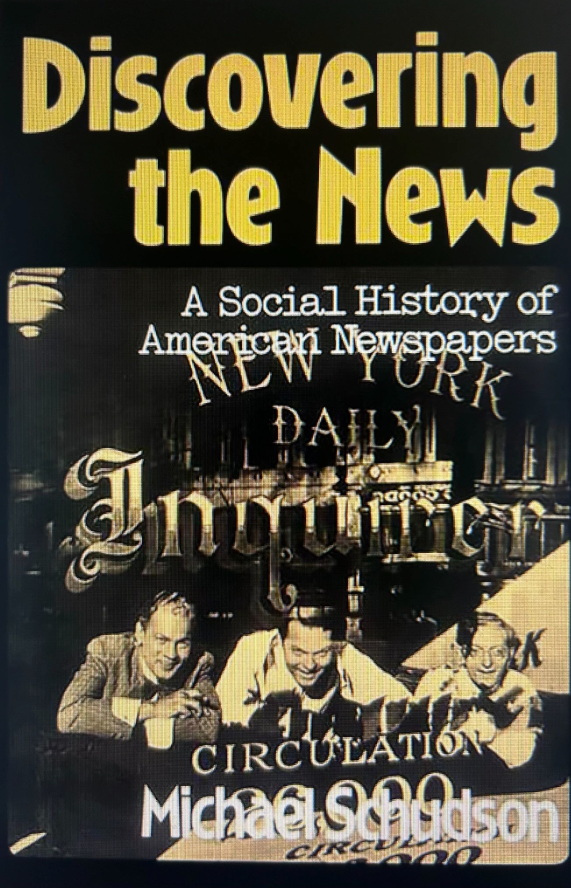
Ochs’ strategy seemed more “objective” since it muted the narrative voices of reporters. This strategy mimicked the trappings of science but it was as much a marketing tactic as it was an attempt at journalistic neutrality. As the social historian Michael Schudson noted in his landmark 1978 book “Discovering the News,” reporters in the early 1900s “saw themselves, in part, as scientists uncovering the economic and political facts of industrial life more boldly, more clearly, and more ‘realistically’ than anyone had before.”
Schudson also pointed out that objectivity was actually a “peculiar demand” made of journalism. Why? First, newspaper publishers were dedicated to economic success and survival. They needed to market the news as a desirable commodity, not as some detached scientific document. Second, the news industry lacked the professional apparatus and training that served law, medicine and science at the time. Third, objectivity, as a term of science, is associated with eliminating bias and judgments on the part of the researchers.
But deciding whether something is newsworthy is not science. There are no tests for replication, validity or reliability. Journalism has always been full of judgments. At its core, it is reporting and storytelling. To tell the best stories, reporters need to talk to a lot of people, research multiple topics and understand documents and data. Then, they try to engage readers and viewers in a narrative. While news can’t be objective, the best journalists aim for fairness. This is not about telling “both sides of a story,” because there are usually more than two … and sometimes only one.
Two other favorite definitions of news come from other academics. The sociologist Gaye Tuchman, who in 1978 published “Making News: A Study in the Construction of Reality,” viewed news as “a narrative that is constructed by journalists based on their own biases and values.” This is why it’s important to try and read multiple versions of major stories from a variety of news outlets. Tuchman reminds us that news is storytelling. Thus, news is often biased in favor of experiences that offer drama and conflict – the heart of any good story. So much news, of course, is negative because that produces stories with high levels of drama and conflict.
James Carey, author of “Communication as Culture,” defined news as “a symbolic form that conveys information about events in a timely manner.” This definition signals that most news is new. Thus, the expression – “That’s news to me.” So daily news, in general, is biased against historical analysis and in favor of events or experiences that just happened. Carey also notes that the words and images in news reports are symbols, not the experiences themselves. In conveying information and making choices, journalists bring their perspectives and values. They try to check these at the door but acknowledge that they exist. Good reporters don’t claim to be objective. They are self-aware, knowing it’s difficult work managing personal biases and judgments.
So with that background, here is what I worry about. A recent Pew study reports that 65% of adults get local news from TV stations – a 5% decline from 2018. The places that demonstrated the highest increases in terms of where adults say they “often or sometimes get local news and information” include “online forums or discussion groups” (e.g., community Facebook groups) – a 14% increase since 2018; “local government agencies and officials” – a 10% increase; and “other online-only sources” – a 42% surge since 2018.
With the rise of “news” coming from social media, online forums, government agencies and “online-only sources,” I suspect that few of these information sources have the self-awareness of reporters who work hard to contain personal biases in the day-to-day work of producing news stories.
The job of a journalist is not easy. Every day is different. Every story is different. Good journalists are often underpaid and certainly underappreciated. Throughout our lifetimes, most of us will learn about what’s going on in our towns, state, nation and world through the hard work of reporters. Although social media are a lot like the old "telephone game,” where a message – or a news story – is whispered around a table and comes out the other end as misinformation.
Richard Campbell is a professor emeritus and founding chair of the Department of Media, Journalism & Film at Miami University. He is also a co-founder of the Oxford Free Press.