
On My Plate: Okra
“Okra is spiritual, and that’s why it’s not for everyone.”
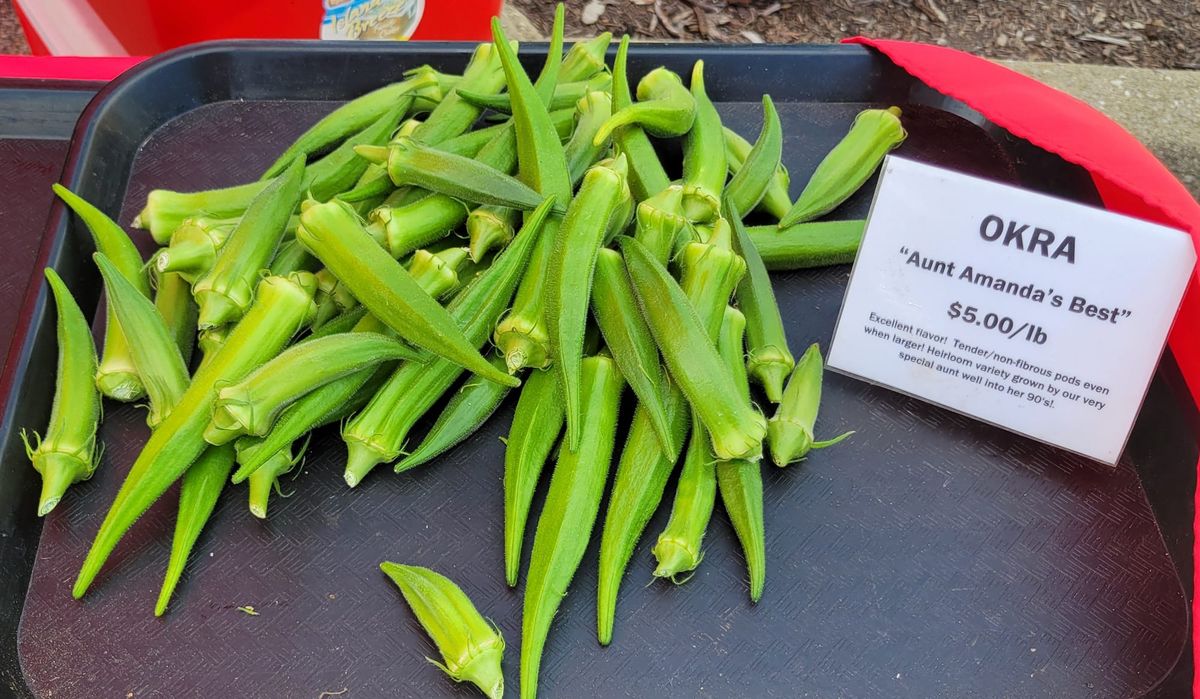
Okra, currently available from several growers at the Oxford Farmers Market, carries a complex message. Is it a shameful reminder of enslavement that once flourished in the U.S. South? Or is it a proud symbol of cultural identity for the descendants of enslaved people?
Apparently, okra arrived in the Western Hemisphere on the ships that brought captured West Africans between the seventeenth and nineteenth centuries, and it became one of the few crops that they, as enslaved people, were permitted to grow in personal gardens. The first Western Hemisphere reference to okra was in 1658 in Brazil, rather than in the colonies of the future United States.
Okra grows wild in the highlands of Ethiopia. However, the word “okra” derives from languages spoken on the western side of Africa – more than 2,000 miles west of Ethiopia. Linguists disagree if okra is derived from Akan, spoken by nine million people, mostly in Ghana, or from Igbo, spoken by 34 million people, mostly in Nigeria.
In the United States, okra is used primarily as a key ingredient in gumbo, which is the official state cuisine of Louisiana. Okra pods contain tiny white seeds that are mucilaginous (in plain English, gooey, slimy and sticky). The goo is an important thickener in gumbo, but the goo can be off-putting for many cooks.
Okra also diffused from Ethiopia eastward towards India, although some food historians claim that its journey was westward from India to Ethiopia. “(Okra’s) origins are a bit murky,” according to University of Arkansas horticulturist Gerald Klingaman. In any event, India now produces two-thirds of the world’s okra, in very different culinary uses than in the United States.
Oxford’s premier Indian chef Sarla Waikar explained to me a few years ago that bhindi, the Hindu word for okra, is one of her husband Vansant’s favorite dishes. To cook okra, Sarla first places black mustard seeds in hot peanut oil. She reduces the heat, adds sesame seeds, reduces the heat further, then adds cayenne peppers, turmeric, curry leaves and asafetida. She then puts cut-up okra in the oil, increases the heat to medium-high, cooks for five minutes and adds sugar. She covers the pan, reduces the heat to medium for 4-5 minutes, adds dried mango powder or fresh lime juice, sprinkles with chopped cilantro and serves with rice, dal and flatbread.
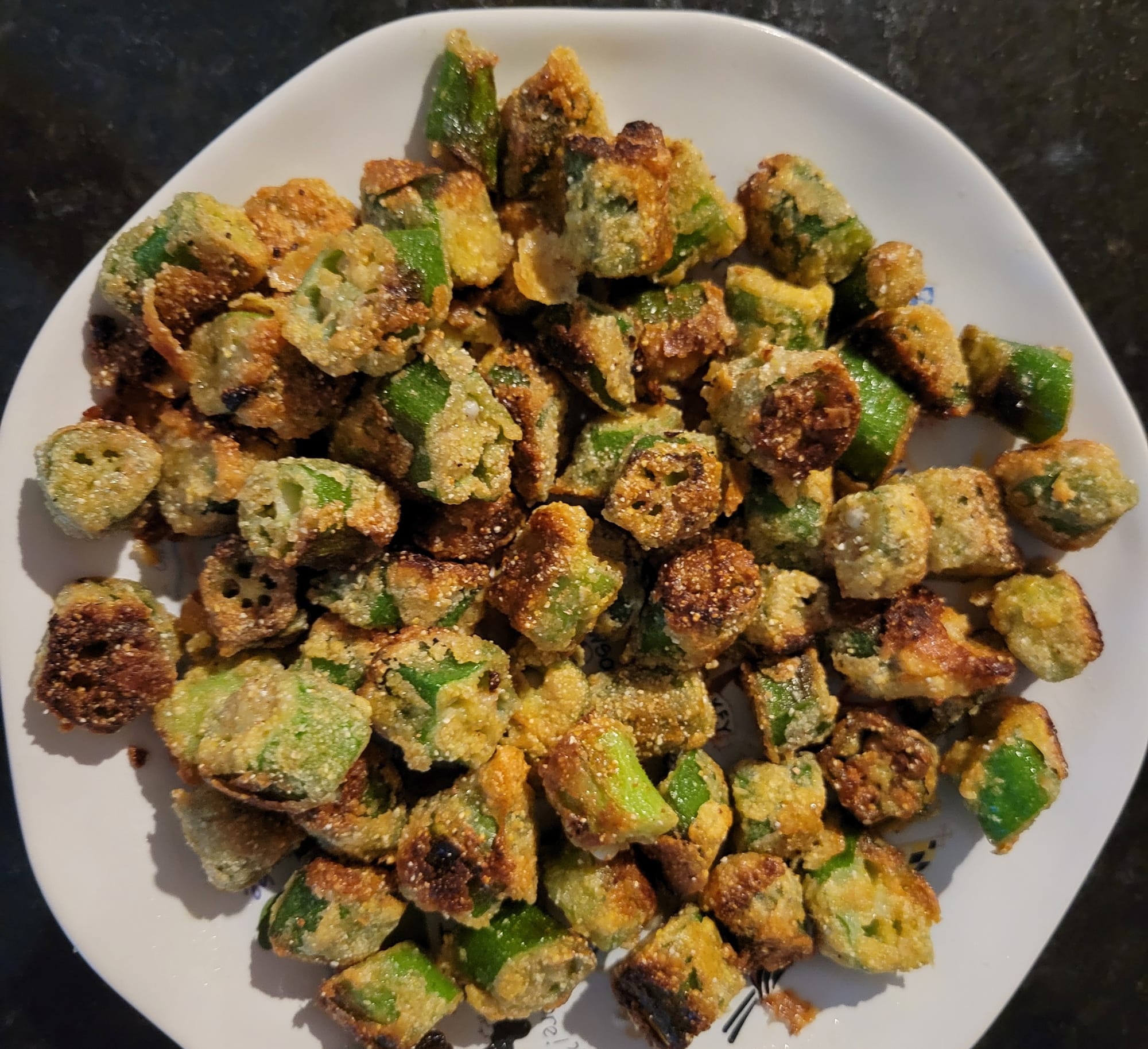
As a less venturesome American, my preferred handling is to fry the okra into crispy morsels, following the advice of Sharon Harkrider of Stoney Hedgerow Farm, one of our principal local okra growers. Trim and discard the stem ends, slice the okra into one-fourth inch rings or lengthwise in half (either shape works) and make sure that the okra is very dry. Prepare three bowls, one each with flour, beaten egg and cornmeal. Dredge the okra pieces in flour, then egg, then cornmeal and fry in grapeseed oil until golden brown. Remove the okra and drain on paper.
Okra varieties are divided between hybrid and heirloom. The Stoney Hedgerow heirloom okra variety is named Aunt Amanda’s Best. Craig Harkrider’s aunt grew this variety until she was in her 90s. When asked by Craig for information about the heritage of her okra, Aunt Amanda responded “I don’t know.”
Okra’s evocative cultural history has generated more than its fair share of poems and songs. For example, Roy Blount Junior’s “Song to Okra:” Oh wow okra, yessiree / Okra is Okay with me. Pierre Thiam a Senegalese chef and author of “Simply West African,” told Food & Wine “Okra is spiritual, and that’s why it’s not for everyone.”
James Rubenstein is president of the Board of Directors for the Oxford Free Press and professor emeritus of geography at Miami University.