
Observations: National Security Policy
A week or so ago, the Trump administration issued a new statement about National Security policy, but it wasn't a routine bureaucratic announcement.
A week or so ago, the Trump administration issued a new statement about National Security policy (NSP). This was not a routine bureaucratic announcement, rather a frightening outline of the course of American foreign policy in the years ahead.
Such statements, which have appeared from time to time, shape the contours of America’s response to the rest of the world and need to be taken seriously. This new policy declared that the United States would back away from the global alliances that had been an integral part of American policy in the 75 years following World War II. It declared that the North Atlantic Treaty Organization (NATO), which has countered Soviet aggression throughout this period, should not be permitted to expand. It dispensed with the idea that the world should be dominated by a rules-based international order and, instead, favored control by a few major powers with their own spheres of influence.
The document went further. It declared that Europe, long America’s friend, faced the “stark prospect of civilizational erasure” as a result of unchecked immigration. It pledged American support for like-minded political parties there who wished to avoid this happening.
These national security documents make a difference. They shape the contours of policy and help determine planning and budget decisions. Nowhere is this clearer than with a predecessor National Security document – NSC-68 in 1950.
This document, top secret at the time, codified what was already going on to stop communism – the Truman Doctrine of 1947 to aid Greece and Turkey, the Marshall Plan of 1948 to reconstruct war-torn Europe and NATO, founded in 1949 to counter the Soviet Union. “The issues that face us are momentous, involving the fulfillment or destruction not only of this Republic, but of civilization itself,” the document declared. It also called for a major expansion of defense spending, which eventually led to a quadrupling of that budget. Every policy stopping Soviet expansion was grounded in the framework of NSC-68, and it shaped policy for the next 40 years.
Ominous as it was, NSC-68 still called for a series of alliances to ensure the survival of a rules-based international order. Having just endured two cataclysmic world wars, the United States was intent on working with allies to defend democracy and ensure the survival of a stable world order.
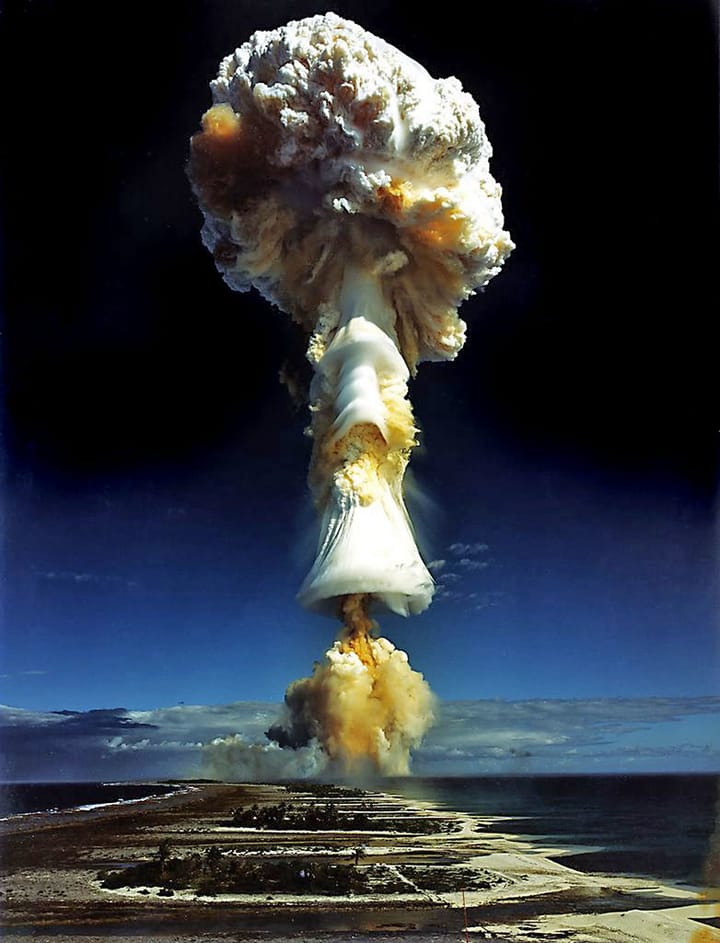
And that effort succeeded. The world, in the decades after World War II, has been more stable and peaceful than ever before. There were, to be sure, skirmishes, but nothing threatening the survival of the human race. In an atomic world, after Hiroshima and Nagasaki, nuclear weapons were never used.
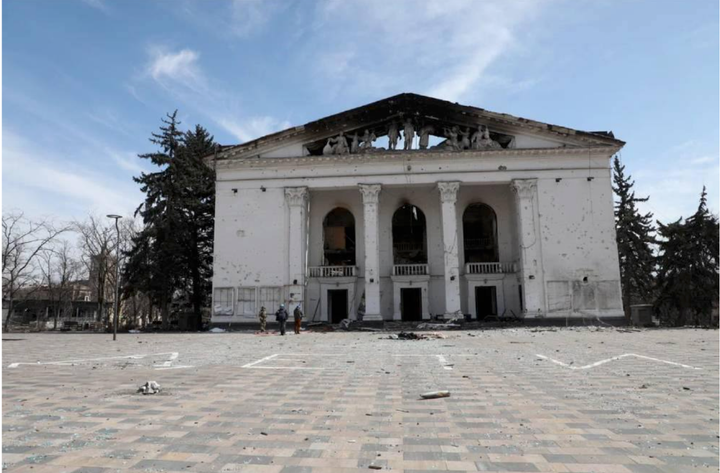
Now the Trump administration is upending that stability. It has decried the “decaying” of European culture. No longer is it supporting a world order in which nations respect one another’s sovereignty – witness what is happening in Ukraine. European nations, allies for decades, are being ignored. Trading partners wonder what is going on, and members of NATO are at a loss about what to do, especially as the document demands that NATO cease expanding. Russia has voiced its pleasure at this new approach.
This new policy makes a difference. It affects not only policy, but the daily lives of us all. We can only hope that as our allies push back, so too will opponents in the United States, to restore sanity to our approach to foreign affairs.
Allan M. Winkler is a University Distinguished Professor of History Emeritus at Miami University, where he taught for three decades. He serves on the Board of Directors for the Oxford Free Press.