
On My Plate: Apples encore
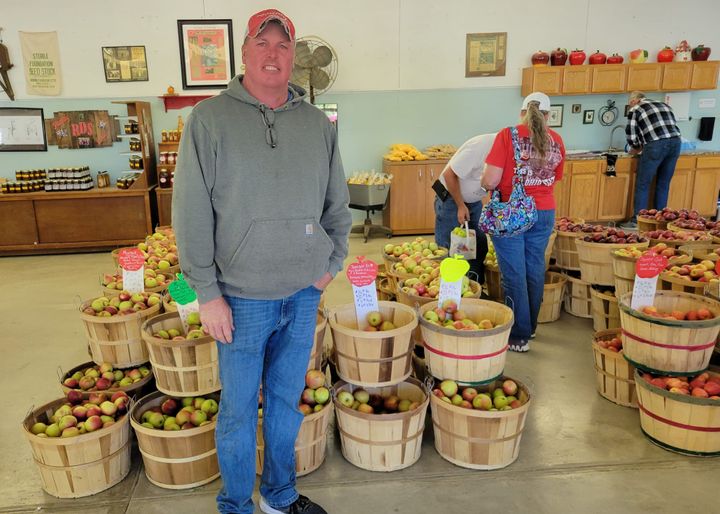
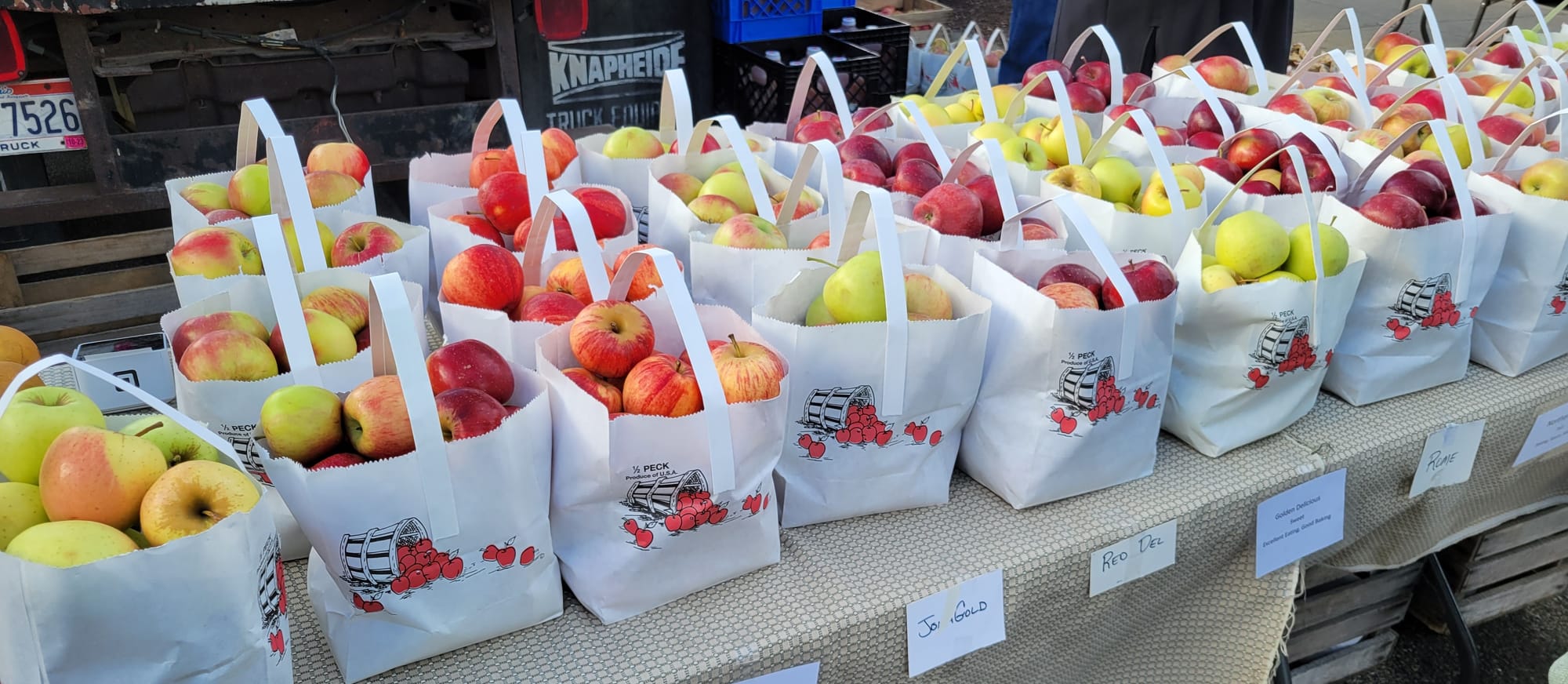
Given the wide variety of apples on display at the Downing Fruit Farm stand, it can be challenging to find your favorite. Selections change weekly, as varieties ripen at different times.
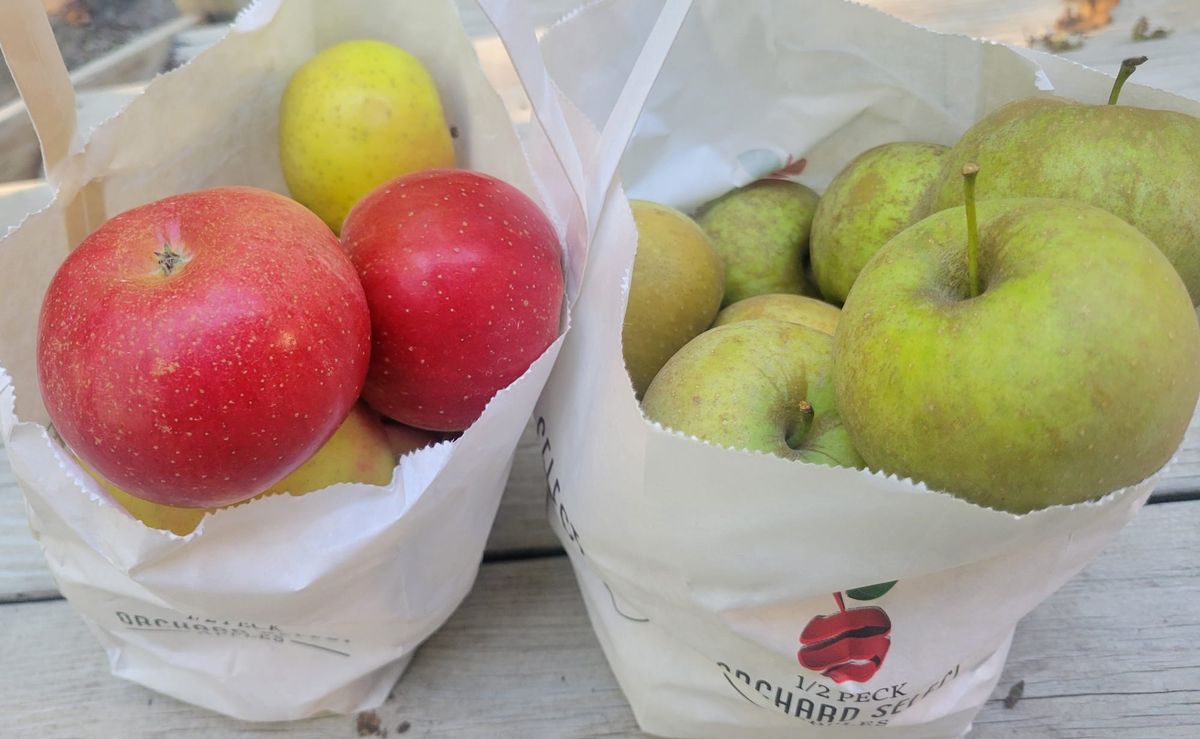
Last week at the Oxford Farmers Market, Golden Russet was an unfamiliar offering among Downing Fruit Farm’s wide variety of apples. Pale in color and rough in texture, Golden Russets were not the sartorial stars of the table. Knowing my preference for crisp and sweet apples, Scott Downing recommended them, and, of course, he was correct, for they are indeed very crisp and sweet, as promised.
“The Apples of New York,” a 1905 book, explained that Golden Russet apples were important for making cider during the 19th century in Upstate New York. The variety had gone out of style by the time “The Apples of New York” was written, because its rough brown-colored skin became less appealing to consumers than the shiny bright red varieties that predominate now.
A couple of years ago, I took 13 varieties of apples, from the 75 varieties at Downing Fruit Farm, to the Community Adult Day Services. The folks there kindly agreed to sample the apples and share their preferences with me. The group had three favorites. Here are the 10 runners-up:
Fuji, a relatively sweet variety, was developed in the 1930 at Tohoku Research Station in Fujisaki, Japan, as a cross between Red Delicious and Ralls Janet.
Gala is a cross between Golden Delicious and Kidd’s Orange Red, planted in New Zealand in the 1930s. A bit crisper than Fuji, Gala is now America’s most popular apple variety.
Red Delicious is a well-known sweet crisp apple. By the 1980s, it accounted for more than half of all U.S. apples, but it was recently overtaken by Gala.
Golden Delicious is relatively sweet, and despite its name, it is not related to Red Delicious. It was discovered in Clay County, West Virginia, in 1912 and is thought to have grown from a chance seedling as a hybrid of Grimes Golden and English Pippin.
Ida Red was developed in 1942 in Idaho, hence its name. It is a cross between Jonathan and Wagener.
Jonagold is a cross between the relatively tart Jonathan and the relatively sweet Golden Delicious, developed in 1953 at the New York Agricultural Experiment Station.
Melrose, a cross between Jonathan and Red Delicious, is the official state apple of Ohio.
Monroe is a cross between Jonathan and Rome developed by Richard Wellington in 1910, and named for Monroe County, New York.
Northern Spy is tart and firm, suitable for pies and tarts if you want the apple to hold its shape.
Red Rome, first grown in the early 19th century in Rome Township, Lawrence County, Ohio, is bright red and unusually firm.
The three favorites at Community Adult Day Services surprised me.
Jonathan is a tart apple, named for Jonathan Zander, who is credited with discovering the apple in 1826 on Philip Rick’s Woodstock, New York, farm.
Stayman Winesap was developed in 1866 by Joseph Stayman in Leavenworth, Kansas.
The third favorite, Big Bronze, isn’t included in an internet list of 1,500 varieties, so I asked Scott Downing about it. Turns out he invented Big Bronze. It’s a cross between Red Delicious and Golden Delicious.
Given the wide variety of apples on display at the Downing Fruit Farm stand, it can be challenging to find your favorite. Selections change weekly, as varieties ripen at different times. If you are a regular customer, Scott Downing knows your preferences, and he will steer you to the most agreeable variety. And it’s more adventurous to walk away with a bag of an unfamiliar variety, such as Golden Russet.
James Rubenstein is president of the Board of Directors for the Oxford Free Press and professor emeritus of geography at Miami University.