
On My Plate: Asparagus
"Asparagus comes in three colors – green, purple and white. Green and purple have been spotted this year at Oxford’s Farmers Market."
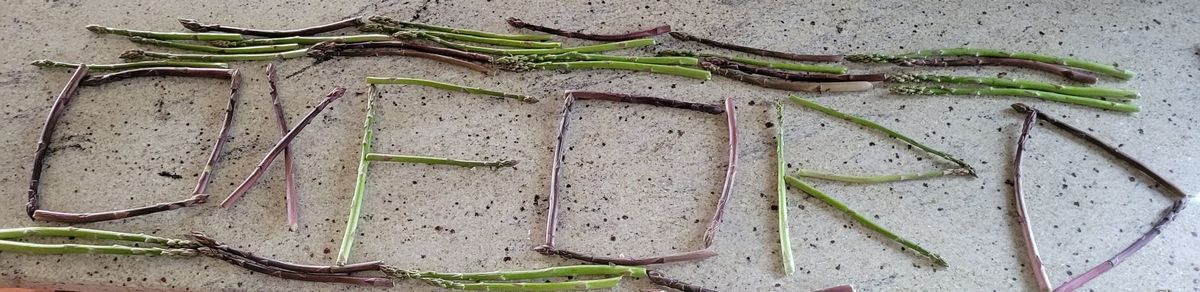
The arrival of local asparagus is the most significant signal of seasonal change in Oxford for local food fans.
Never mind graduations, Mother’s Day and the last frost. In Oxford, asparagus suddenly appeared last week on the tables of several vendors at Oxford’s Farmers Market.
Most folks know that corn on the cob tastes best when it is local and freshly picked. The difference between young and old asparagus is even more striking than with corn. Freshly picked local asparagus is sweet, tender and low in acid, but most of the sugar converts to starch more rapidly than in corn. Supermarket asparagus, nearly all of which is grown in Mexico and Peru, has lost its sweetness and nutritional value. Because of the high cost of labor needed to harvest individual asparagus spears by hand, U.S. asparagus production has declined by nearly 50% during the past decade.
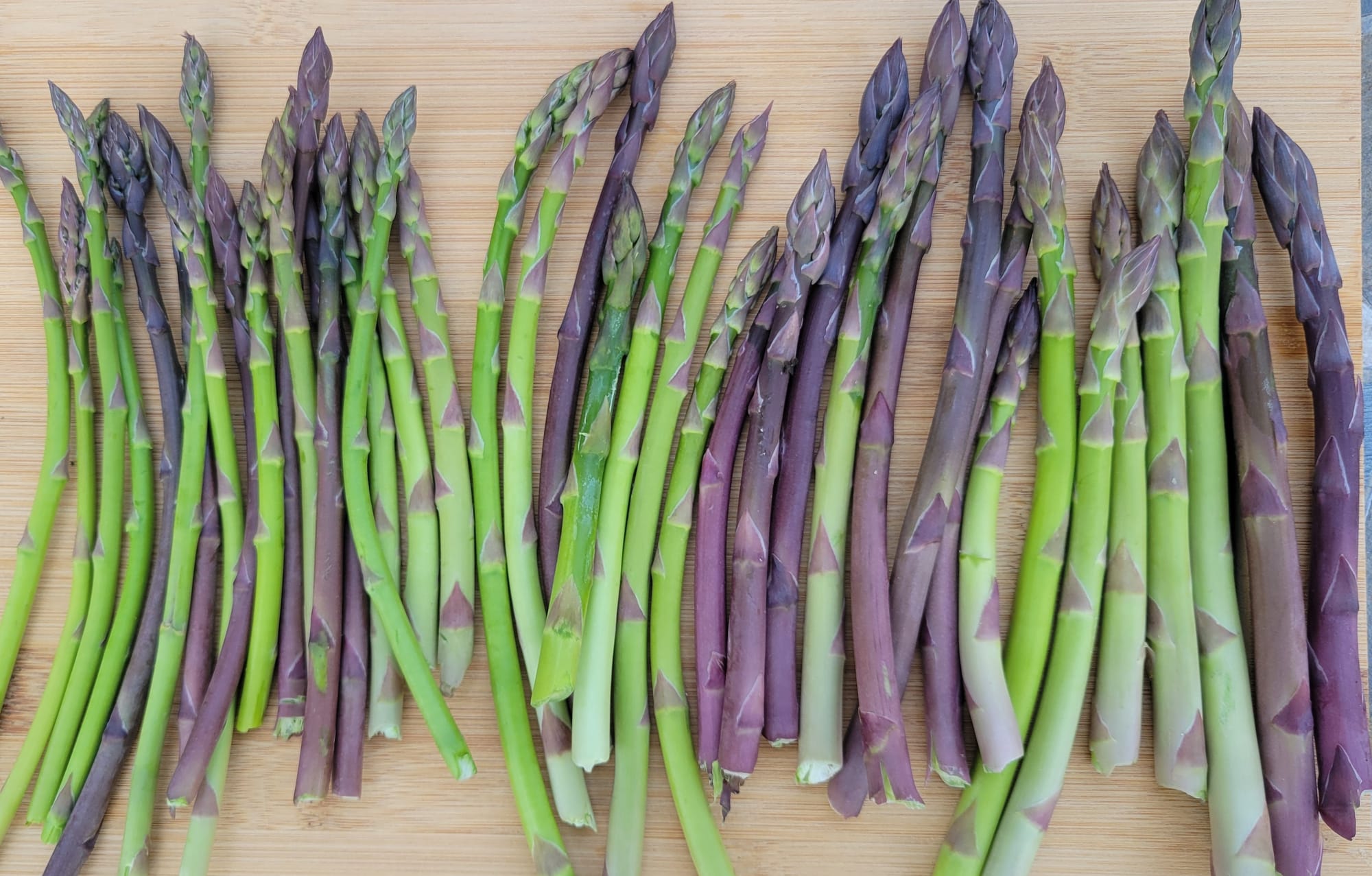
Asparagus comes in three colors – green, purple and white. Green and purple have been spotted this year at Oxford’s Farmers Market. Purple asparagus, developed in northwestern Italy, is genetically different from the familiar green variety. The purple color comes from anthocyanins, which have anti-inflammatory and anti-cancer properties. Purple asparagus is less fibrous than green and therefore slightly more tender. And the purple variety is a bit sweeter because it has about 20 percent more sugar in its stalk than green asparagus.
White asparagus is popular in Europe but rarely grown here. Europeans prefer white asparagus, because they think they are milder, more tender and less bitter than green ones. The difference between white and green asparagus is the growing method. White asparagus is grown underground. By not being exposed to sunlight, white asparagus lacks chlorophyll.
Germans go crazy for asparagus this time of year. Spargel is German for asparagus, and this time of year is known as Spargelsaison, which translates as asparagus season. Germany has a 500-mile long route known as Spargelstrasße, joining together the country’s major asparagus-growing areas. Many roadside stands, festivals and special restaurant menus are featured along the route.
Due to favorable growing conditions, Spargelsaison started in late March this year. However, German farmers have cut back substantially on growing asparagus. As in the United States, German asparagus growers have fewer immigrant farmworkers available in the current political Climate.
A distinctive feature of local asparagus compared with the industrial version in the supermarket is a wide variety of sizes. My most recent batch of Oxford Farmers Market asparagus ranges from 7 to 12 inches in length and from 1/8 inch to 1/2 inch in diameter.
The smaller-sized stalks are especially suitable for grilling or roasting. Place the stalks on foil, sprinkle some olive oil, garlic and herbs, wrap the foil around the stalks and place the package on the grill or in the oven for around five or 10 minutes. The larger spears need to be chopped into bite-sized pieces, especially suitable for stir-fries.
To allow the asparagus buds at least 100 days to recover for the next year, Germany’s Spargelsaison ends precisely on June 24, at the summer solstice and the birth of St. John the Baptist. My notes from 13 years of writing this column suggest that Oxford’s Spargelsaison typically ends in late May. In Oxford, we consume a year’s worth of local corn on the cob in the heat of the summer. Why not do the same with asparagus in the spring before it disappears for another year?
James Rubenstein is president of the Board of Directors for the Oxford Free Press and professor emeritus of geography at Miami University.