
On My Plate: Bell peppers encore
When the recipe was finally tried, the relationship of our household with red bell peppers changed forever.
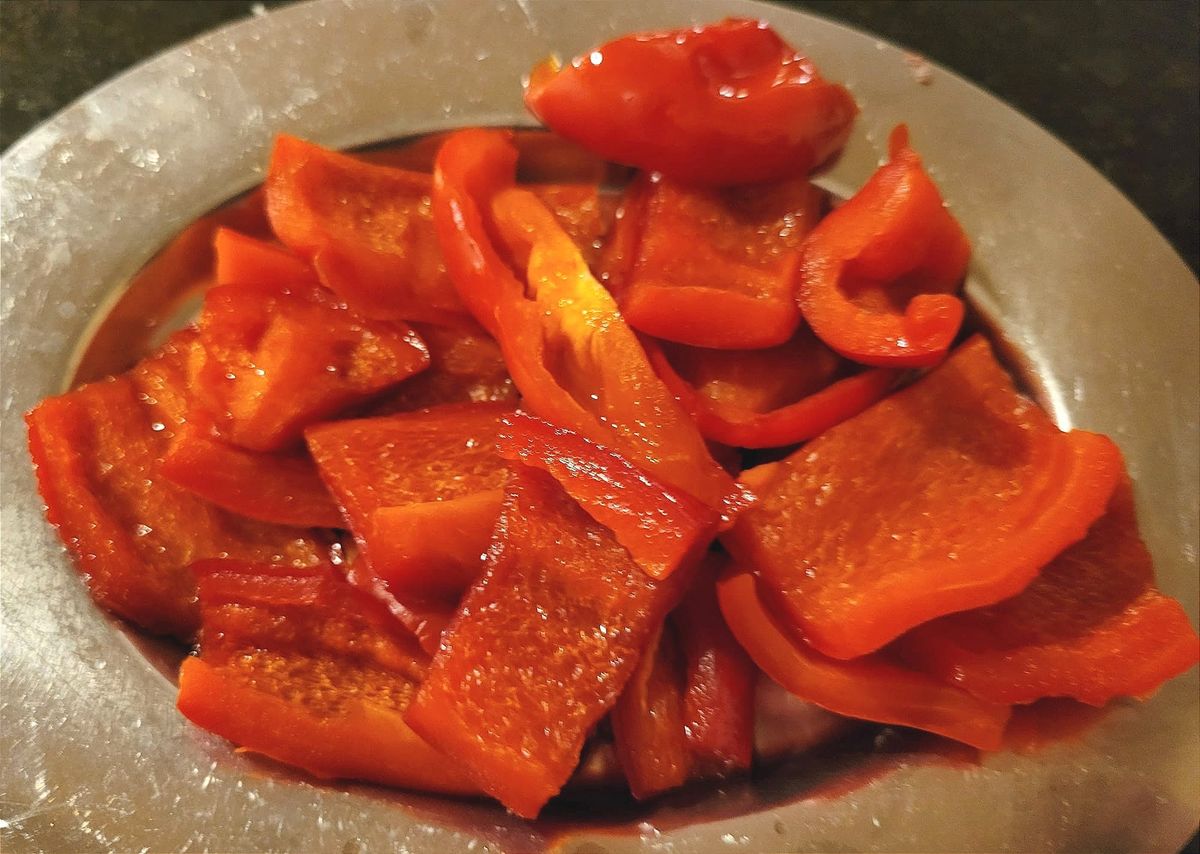
Last week’s column on bell peppers seemed to be sufficient coverage of them for this year. The final paragraph included a recipe for cooking bell peppers that I had not previously encountered. Please don’t look through your recycling bin for last week’s Oxford Free Press issue, because the 63 words of last week’s final column are magically transformed into this week’s column.
I found the recipe for silky sautéed red peppers in “Trattoria,” a 1933 cookbook cookbook by Patricia Wells. Wells attributed the recipe to George Germon, chef and owner of Al Forno restaurant in Providence, Rhode Island. The restaurant still exists, and it is still owned by Germon’s widow Johanne Killeen (Germon died in 2016). The restaurant has a listing in Wikipedia, where it is credited “as the birthplace of grilled pizza.”
As with most restaurants these days, Al Forno’s menu is online, but I can report that silky sautéed red peppers does not currently appear as an appetizer, and in fact red peppers appear nowhere on the menu. American taste buds must have changed, because the menu’s list of appetizers includes grilled octopus salad with orange, kalamata olives, fennel and celery for $18.
The Wells recipe includes a 100-word introduction, a 200-word recipe and a list of four ingredients that took 50 words to explain. In the pursuit of journalistic integrity, I do typically try the recipes that appear in my column. This time, however, the red pepper recipe was not actually attempted at home until after the column was sent to the printer.
When the recipe was finally tried, the relationship of our household with red bell peppers changed forever.
My version of the recipe comprises one sentence: Cut up the pepper, simmer the pieces in vinegar in a frying pan for around 30 minutes and serve either warm or cold with a drizzle of olive oil.
Instead of bell peppers, the second half of this column is devoted to two of the other three ingredients – vinegar and olive oil. The fourth ingredient, salt, needs no advice.
Regular shoppers at Oxford Farmers Market have probably met our sort of local olive oil producer Evie Semertzides. Evie was born and raised in Stavies, a village of 300 inhabitants in the Messara Valley foothills below Mount Kofinas on the island of Crete. Her family has grown and harvested olives there for many generations.
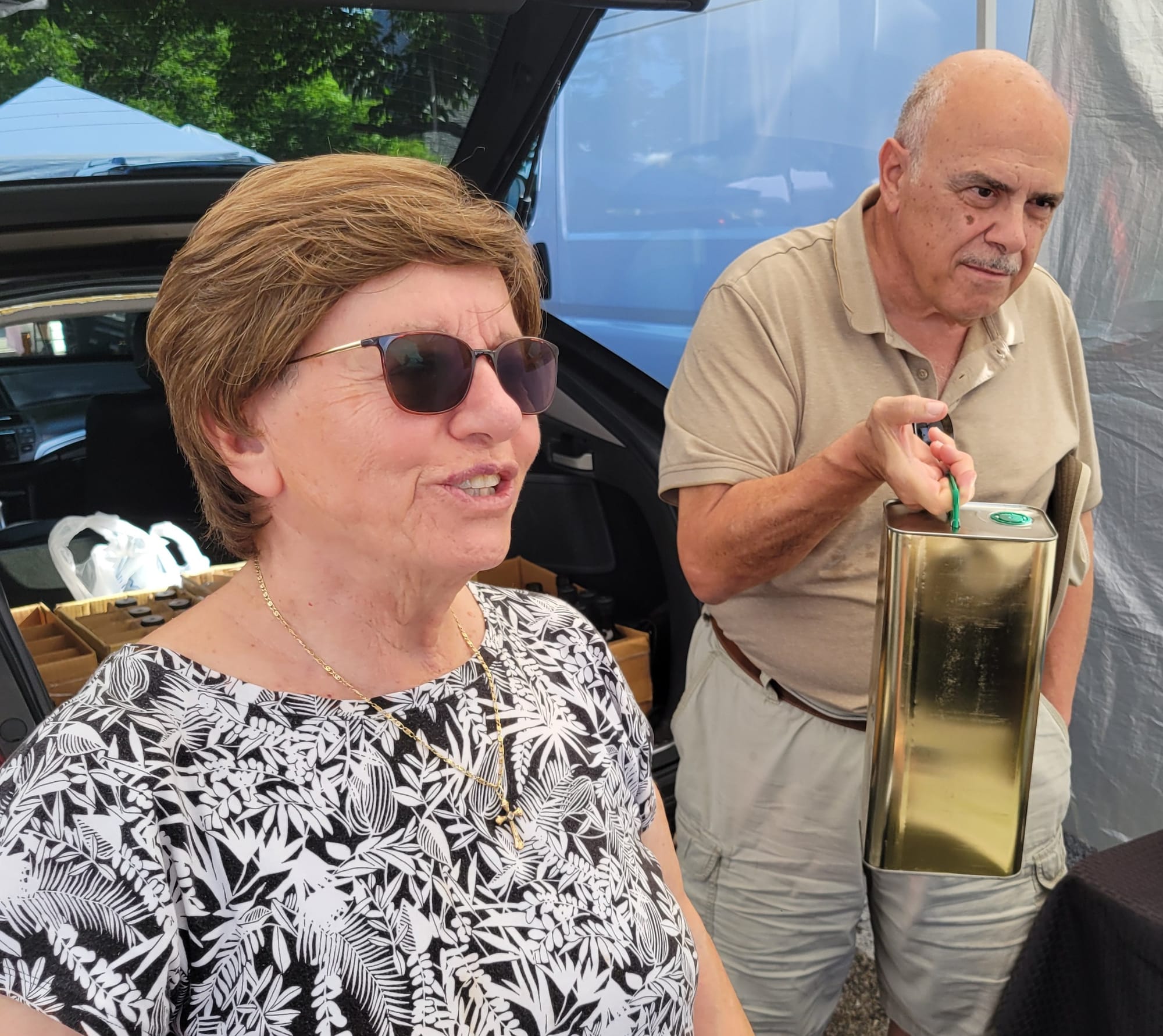
The olives are tiny, and relatively hard to press, but they yield intensely flavored oil. Evie calls the olives Psiloelea, which may be Evie’s family name for a more commonly used term Koroneiki. The olives are harvested by hand at dawn between December and February and cold-pressed within hours at a nearby mill.
Kofinas olive oil is sort-of local, because the pressed oil is placed in containers that are carried across the Atlantic on a ship. Here in Southwest Ohio, Evie decants the oil into small glass bottles that are also imported from Greece. Some of the bottles are infused with herbs and spices, such as basil and garlic, while others are left unflavored. The oil is available in Oxford at the farmers market and at MOON Co-op and in Cincinnati at Findlay Market and the storefront of their kitchen in Montgomery.
The Wells recipe calls for “best-quality red wine vinegar or balsamic vinegar.” The best vinegar available here is Vinea, which Evie recently started to bring to the farmers market. Vinea is produced in Crete by distant relatives of Evie. Evie used to bring another excellent Greek vinegar to the farmers market, called PAN.
James Rubenstein is president of the Board of Directors for the Oxford Free Press and professor emeritus of geography at Miami University.