

On My Plate: Fish
"Nearly all salmon sold in the United States as 'Alaskan' salmon, is actually sent to China for processing before being returned to the United States."
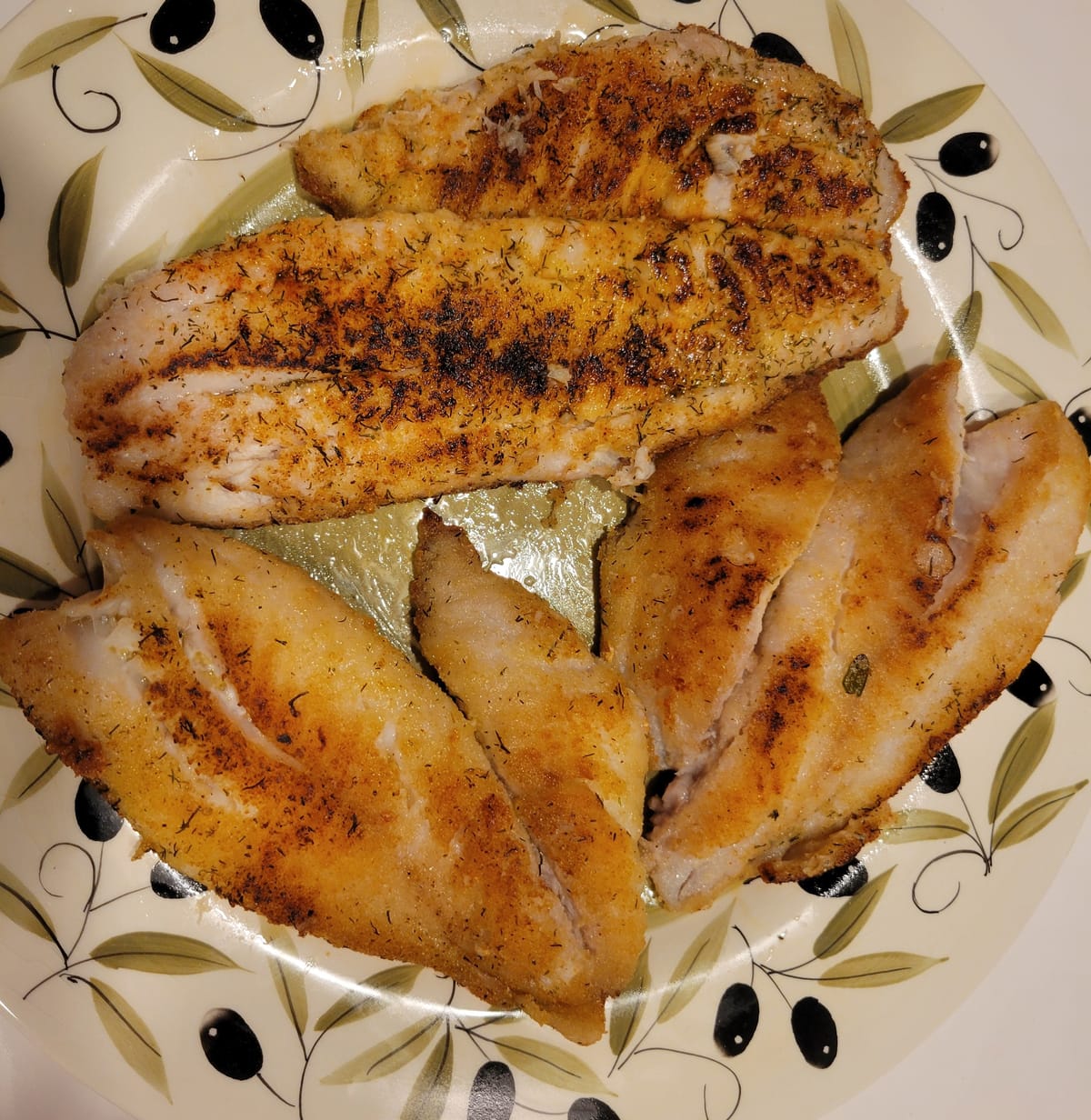
Fish is on the menu for many people during this Lenten season. McDonald’s reports that 25% of its annual Filet-O-Fish sales occur during the 40 days of Lent. Locally, numerous fish fries are advertised this month. This column is normally devoted to locally grown, raised and produced food, but Oxford must bring in fish from elsewhere in the world.
Nearly all salmon sold in the United States as “Alaskan” salmon, is actually sent to China for processing before being returned to the United States. A recent U.S. House of Representative report estimated that 87% of “Alaska” salmon was processed in China, although other researchers have offered somewhat lower estimates. The principal reason for the dominance is the availability of low-cost labor.
An exception is the salmon MOON Co-op Grocery gets directly from Captain Tony. Tony Wood, originally from Carbondale, Illinois, catches salmon in Bristol Bay, Alaska and brings the catch ashore, where a team headed by his wife Heather Huffman fillet, clean and flash freeze the fish, and ship it overnight express to MOON.
More recently, MOON Co-op started receiving salmon from Norway. At first glance, the Norway salmon in the co-op freezer case appears unpromising. The filets are large (around 4 pounds), and without any identifying label. But our household considers it the best salmon we’ve ever eaten, including salmon we’ve had in Scotland.
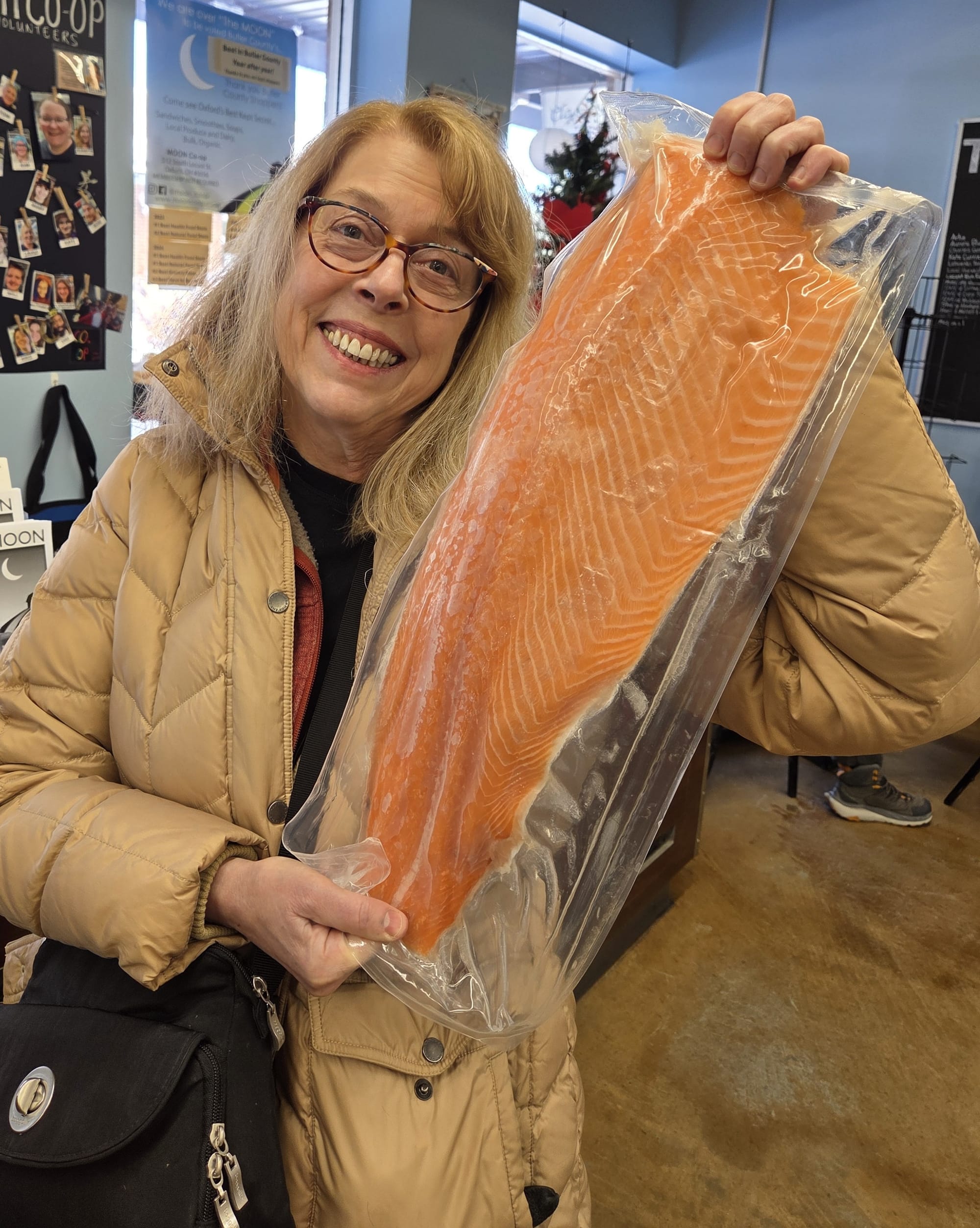
The salmon is fished by a family-owned company called Hofseth out of fjords in northern Norway, using sustainable practices, such as not overfishing individual fjords. That doesn’t make Hofseth unique. It’s what happens next that’s special.
Just as nearly all salmon caught in Alaska is sent to China, where low-wage workers do the fileting, similarly, 80% of salmon caught in Norway is flown to low-wage countries in Africa. In contrast, Hofseth does all of its own processing in small fjord-side villages whose residents have limited employment opportunities otherwise.
Instead of throwing away the head, skin and bones (as in low-wage countries), Hofseth processes some of it into oils that help fight inflammation and other health conditions. The company then uses the remaining sludge for fertilizer and marine food.
The challenge for small households is the large size of using a 4-pound frozen filet. I find that the time between removing the filet from MOON Co-op’s freezer and placing it in my freezer at home is sufficient to permit cutting the 4-pound filet into smaller pieces (with a good knife) and freezing the pieces separately.
During a recent stay in Florida, we cooked 10 different fish for dinner including grouper, lane snapper, red snapper, swordfish, golden tilefish and triple tail. We bought the fish fresh off the dock at a nearby hole-in-the-wall, where the fish filets were stored in two large Igloo coolers.
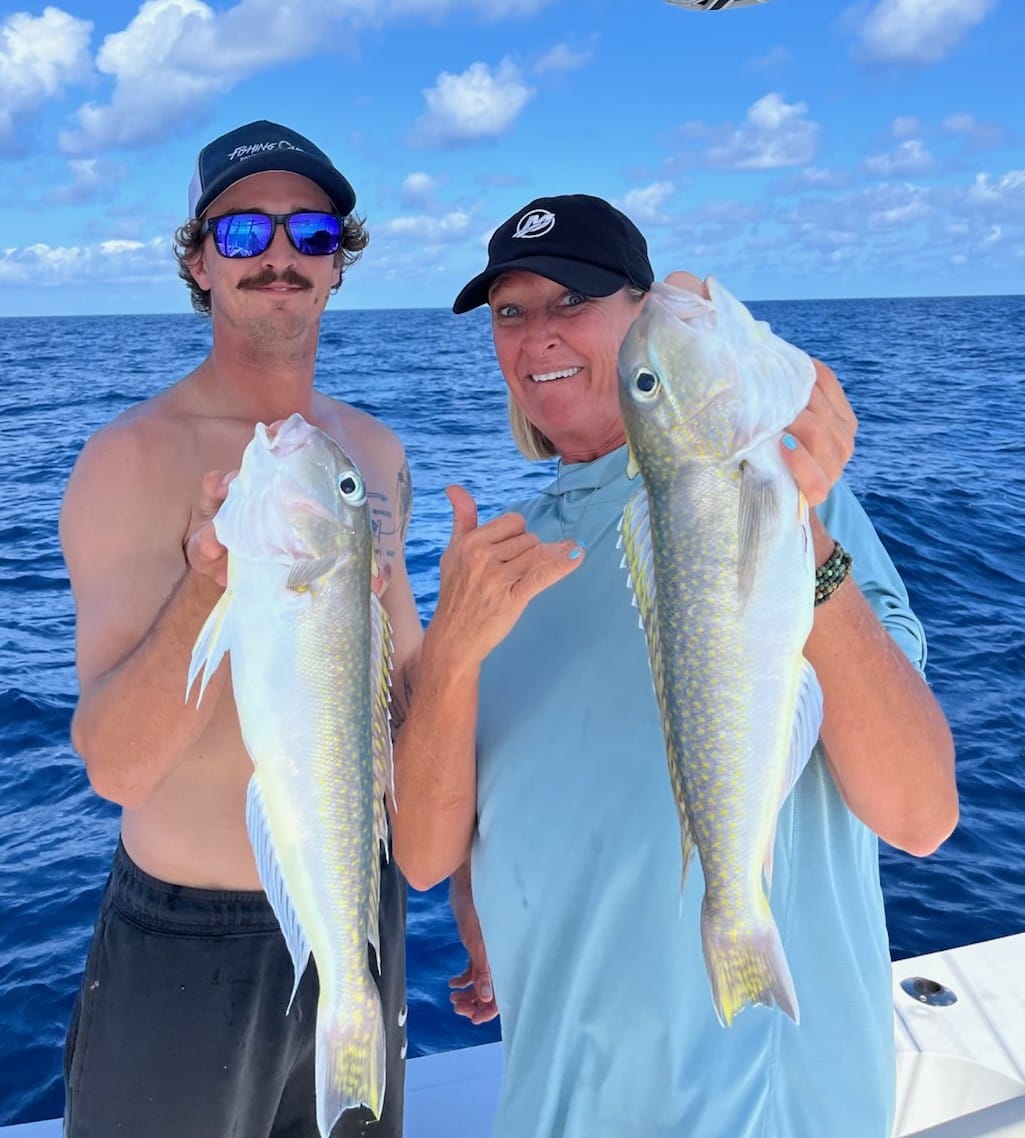
The two people managing the operation – Holly and Mary Beth – were both quite helpful, telling me not only which fish to buy and how to cook them. One time, Mary Beth took me into the back to meet the staff and watch them filet a grouper that had just arrived, which I then took home to cook.
In general, I smear a mix of mayonnaise and Dijon mustard on the filets, sprinkle dill and paprika, and either grill or bake in the oven at 375 degrees. Holly insisted that the lane snapper was too delicate for cooking any way other than gently searing it in a frying pan with a tiny bit of oil after dusting it with a powdery mix she gave me called precooked yellow corn meal (P.A.N.).
James Rubenstein is president of the Board of Directors for the Oxford Free Press and professor emeritus of geography at Miami University.
![[clockwise from top] Tatsoi, Tokyo Bekana and Komatsuma.](/content/images/size/w720/2026/02/01-5.jpg)