
On My Plate: Tempeh
Warning: Soya Maya Tempeh Chips are highly addictive. Once you’ve had them, you will prefer them to potato chips. Tempeh chips are crunchier and more flavorful than potato chips.
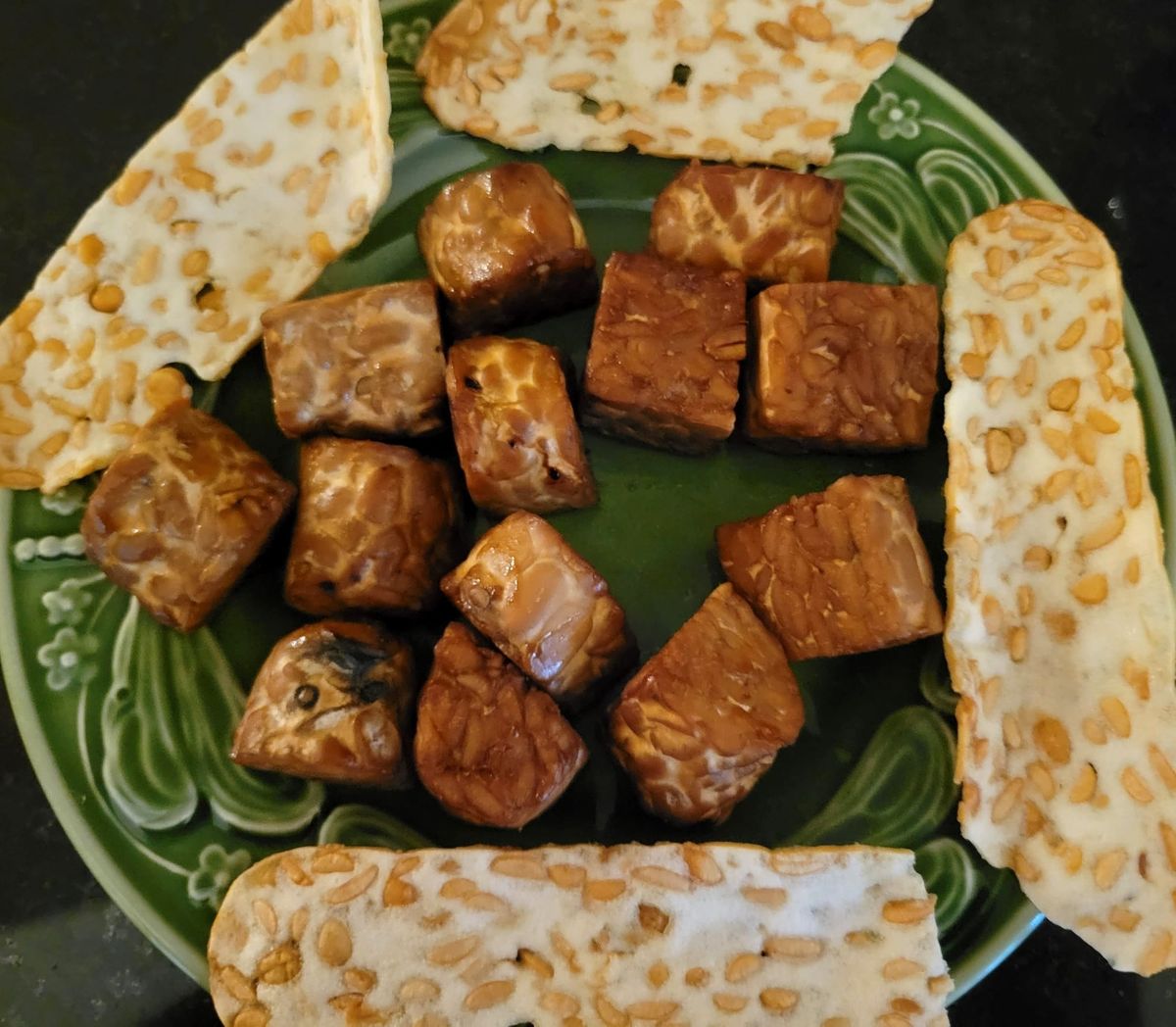
Tempeh, a traditional Indonesian food, unfamiliar to most Americans, would not seem to be a likely candidate to be classified as “local” in our community. In fact, tempeh products are being made 40 miles from Oxford in Greensburg, Indiana, and are available at MOON Co-op Grocery.
Maya Effendi came to our area from Indonesia to attend college and has remained here since graduating. While attending university, Maya missed her favorite food – tempeh – “a beloved ingredient in Indonesian cooking,” wrote The National Geographic in a profile last year. Unable to find tempeh products around here, Maya started baking them herself.
Tempeh, like tofu, is made from soybeans. Both are sold in blocks, but the two are produced differently. Tofu is made by curdling soy milk, whereas tempeh is made from whole fermented soybeans. A block of tofu is soft, smooth and white, whereas a block of tempeh is firm and somewhat irregular in shape, due to it containing bits of soybeans. Grocery stores stock tofu in the dairy section, while tempeh is found with other frozen foods.
The biggest advantage of tempeh over tofu is its adaptability. In addition to frozen tempeh blocks, Maya supplies MOON Co-op with tempeh chips, which are displayed prominently near the checkout area.
Warning: Soya Maya Tempeh Chips are highly addictive. Once you’ve had them, you will prefer them to potato chips. Tempeh chips are crunchier and more flavorful than potato chips.
I compared the nutrition labels on Soya Maya’s Tempeh Chips with America’s best-selling potato chip brand, Lay’s. One ounce of Maya Soya Tempeh Chips contains 25% fewer calories and three times more protein than one ounce of Lay’s. Total fat per ounce amounts to 1.5 grams in Soya Maya and 10 grams in Lay’s.
Maya’s tempeh block is sold frozen and requires different handling than a tofu block, which is simply chopped into preferred shapes before cooking. The frozen tempeh block needs to thaw overnight in the refrigerator because quick thawing, such as in a microwave, is not recommended by tempeh producers.
Once thawed, the tempeh block needs to be cut into bite-sized shapes, typically 1-inch cubes. The cubes then go into a steamer basket placed over a pot with one inch of water and covered. The water is heated at low-to-medium heat for 10 minutes. This helps the tempeh become tender and ready to soak up flavor from a marinade.
The cubes are removed from the steamer, pressed dry and placed in a marinade for at least 30 minutes, preferably longer. The recipes I found all suggested marinating the cubes in a mix of low-sodium tamari or soy sauce and rice or balsamic vinegar. The marinated cubes are transferred to a baking sheet lined with parchment paper and baked at 425 degrees for 10 minutes. The cubes are brushed with more of the marinade and baked for another 10 minutes.
A major challenge for Maya was finding a source of organic soybeans. Production of soybeans is plentiful around here, as anyone driving out of town in the summer can attest, but only between 0.2 percent and 0.4 percent of total U.S. soybean production is organic. However, a handful of tri-state farmers do actually grow organic soybeans.
Maya is a frequent shopper at MOON Co-op Grocery. She told me recently, “small businesses need to help our community’s other small businesses.” With Oxford’s population two-thirds lower this time of year, Maya’s statement is worthy of emulation.
James Rubenstein is president of the Board of Directors for the Oxford Free Press and professor emeritus of geography at Miami University.