
Union faculty, librarians rally for raises amid contract bargaining
“It is really hard to see (my) future at an institution that not only devalues my labor but devalues the labor of my colleagues, and consistently lowballs us on everything. Their idea of meeting in the middle is meeting where they sit. … It's pretty disheartening.”
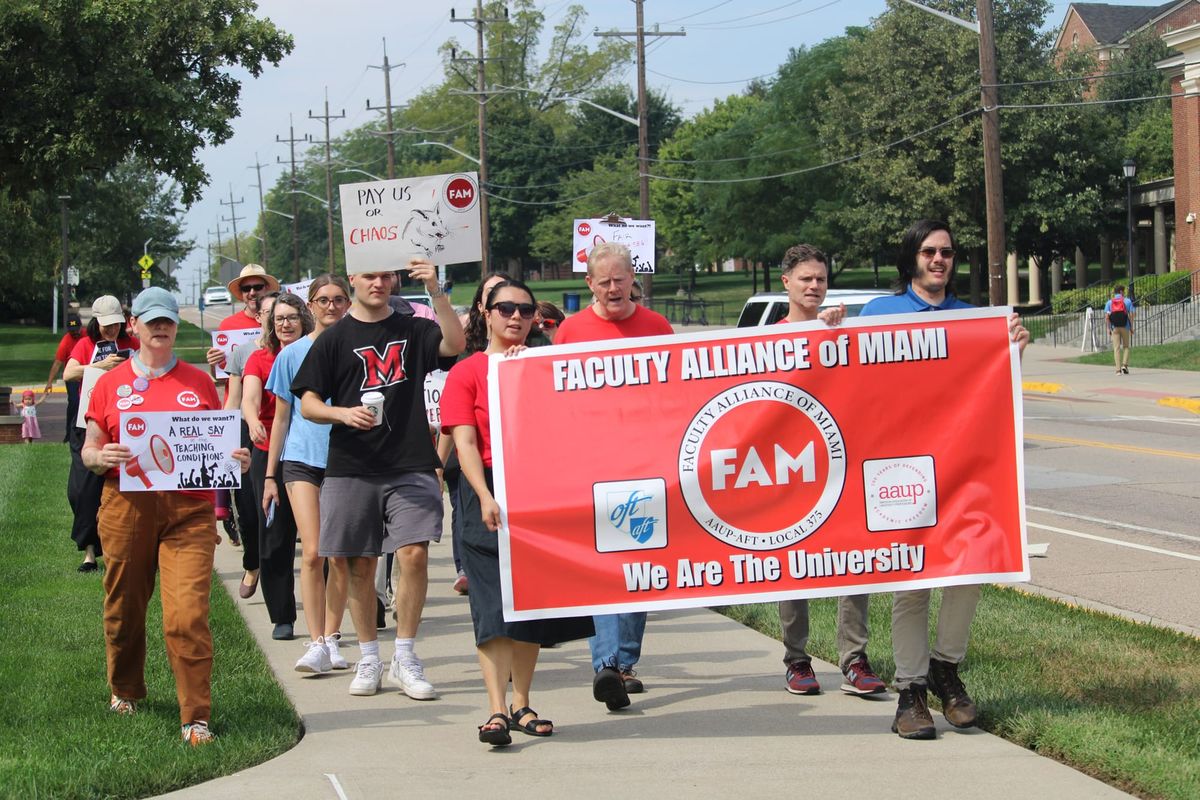
Faculty and librarians who are members of the Faculty Alliance of Miami (FAM) rallied for raises amid contract negotiations on Sept. 16, leading a march from the university seal to the Miami insignia outside the Shriver Center.
FAM represents all full-time continuing faculty and librarians and has been negotiating updated collective bargaining agreements with Miami representatives since March.
Although the Miami Board of Trustees approved a bargaining agreement with union librarians in August, it remains in negotiations over the contract for full-time faculty members.
FAM President Theresa Kulbaga told the Oxford Free Press during the rally on campus Sept. 16, “We are here to tell the university that we are not going to accept a contract with raises that don’t keep up with the cost of living and the inflation that they themselves admit are happening.”
As of FAM’s July update, Miami representatives were proposing raises of 3%, 2.5% and 1.75% over three years, while FAM was proposing raises of 4.75%, 4.5% and 4.25% over three years.
“We invited faculty and students out … to help us make the case that Miami should fund the academic mission, should find its students by paying faculty fairly and not just spend all of its money on arenas and external consulting firms and external law firms,” Kulbaga said.
In February, university trustees approved a $280 million multipurpose arena project, for which around $13 million has already been spent to relocate the recreation fields it’ll be built on top of.
When the Oxford Free Press asked David Creamer, vice president for finance and business services and treasurer at Miami, in February if he had a response to students and faculty asking for higher compensation and more educational programming instead of an arena, he said, “We're making trade-offs across a variety of decisions.”
“We have to do a breadth of things, and so we're always evaluating what particular activities of the university should receive resources,” Creamer said, adding the university “certainly attempts” to pay all employees at market rate.
“Because we have more funds, we don't want to forego some things that we need to do that will enhance the institution and enhance the education that we provide to students in the future,” Creamer said. “All you have to do is look at which institutions are growing today, which ones are financially far better off. Unfortunately, it is partially an academic performance at an institution, but it also is a lot about the success of their athletic programs.”
Additionally, Miami affords legal services through Jazmyn Barrow Legal, who recently sent letters to FAM representatives to shut down an event on Sept. 2 in relation to Labor Day where professors were meant to teach outdoors, citing Ohio Senate Bill 1.
Miami has also worked on several developments lately, including moving to open a new site for its Bachelor of Science in Nursing program in northeast Ohio, renovating Bachelor Hall, constructing the Western Geothermal Solar Field and demolishing several Spring Street properties for future projects.
In Fiscal Year 2025, the Ohio Department of Higher Education’s published data on the health of public institutions ranked Miami as having a composite score of 4.7, where five is the highest. The university scored perfect fives in both the net income and primary reserve categories, indicating the highest degree of fiscal strength. Only one university had a greater score.
At the end of Fiscal Year 2025, a financial audit from the state of Ohio shows Miami landed with a $216 million surplus.
“I think that Miami has the wrong priorities right now, and its priorities seem to be to buy buildings, build sports arenas, do land deals, pay all kinds of ed tech, spend money on AI, and they are not willing to admit that faculty actually are the ones who teach the students – leading them to graduation – and deserve some of the massive wealth that the institution has,” Kulbaga said.
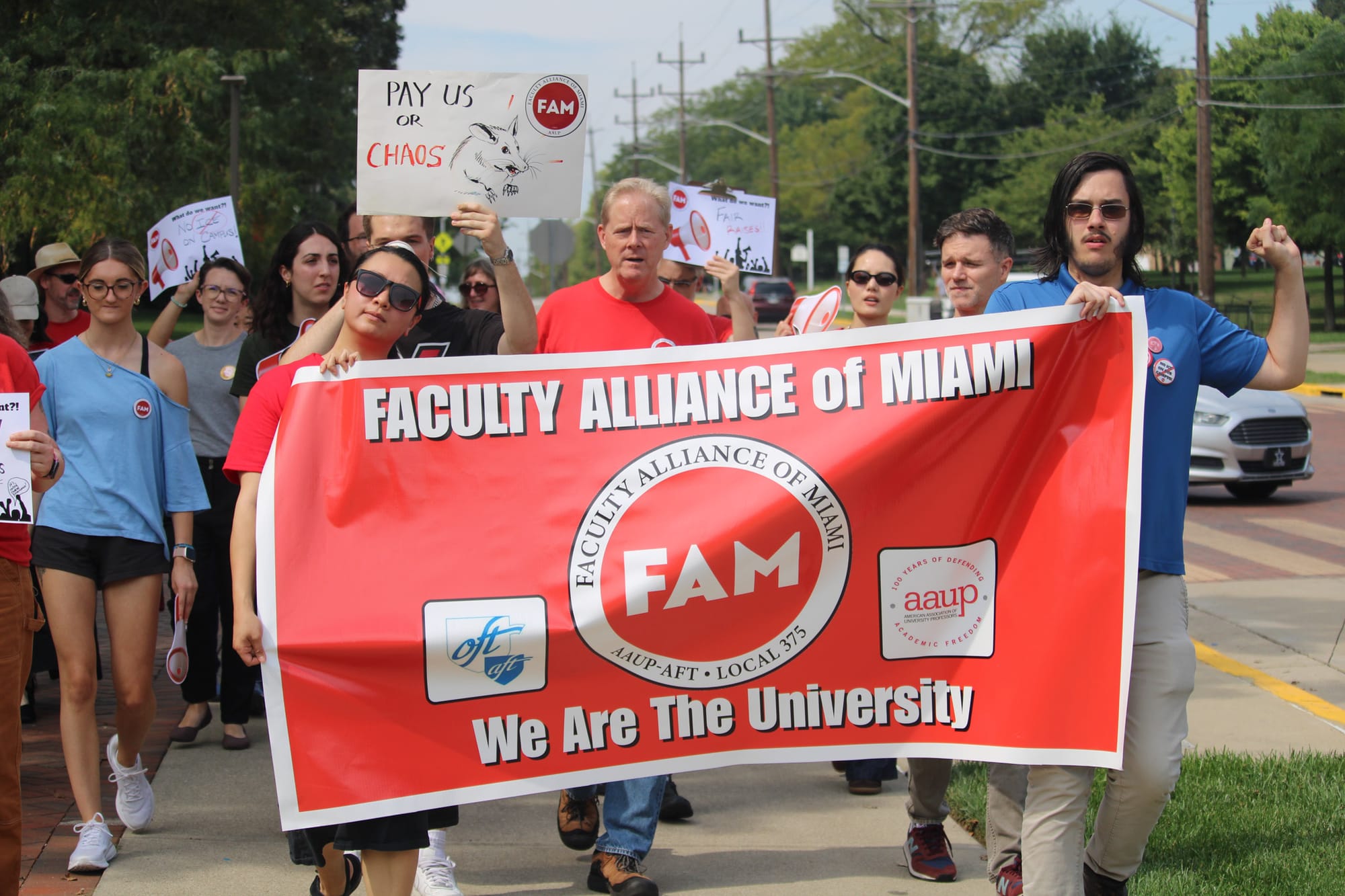
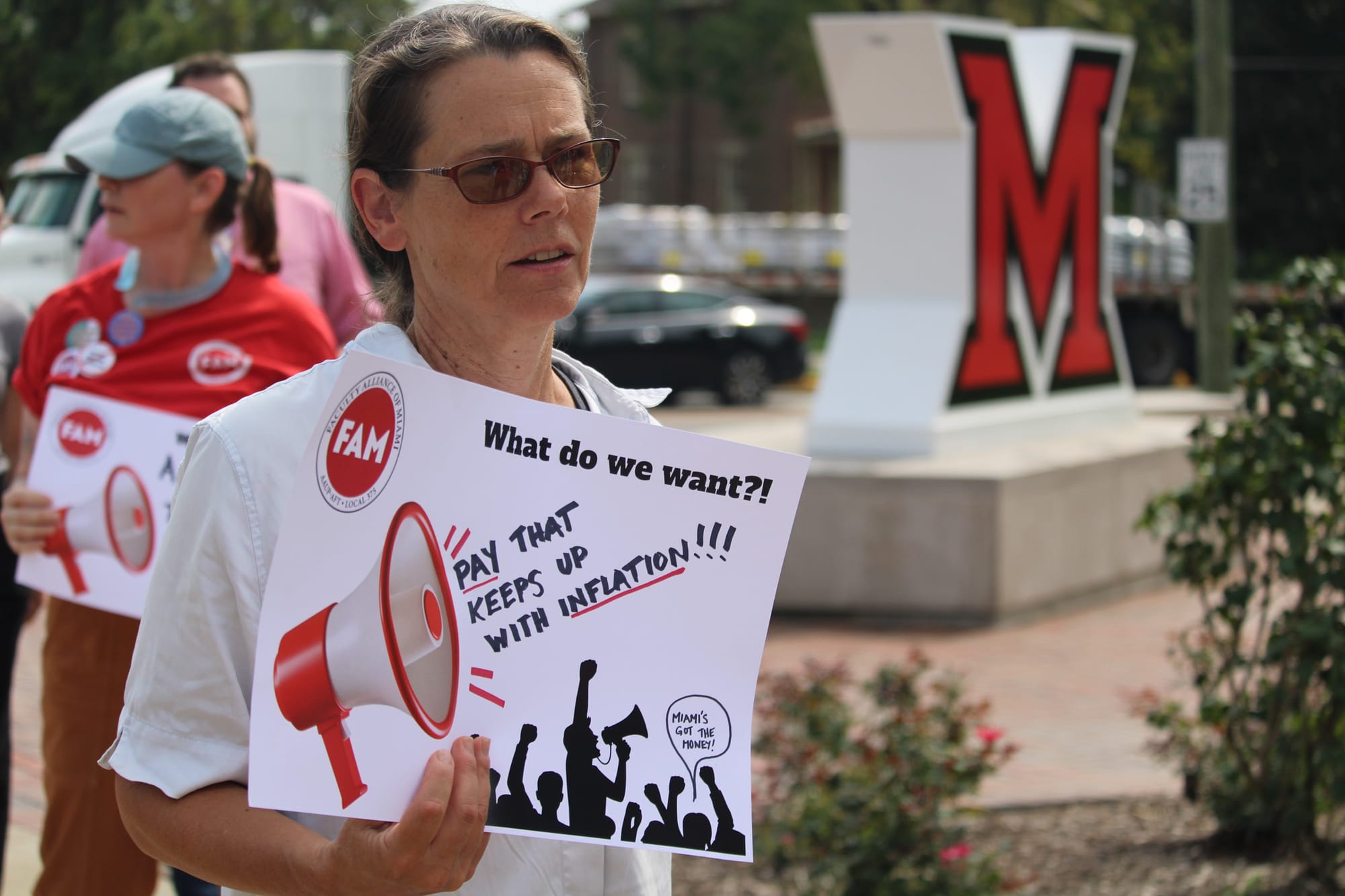
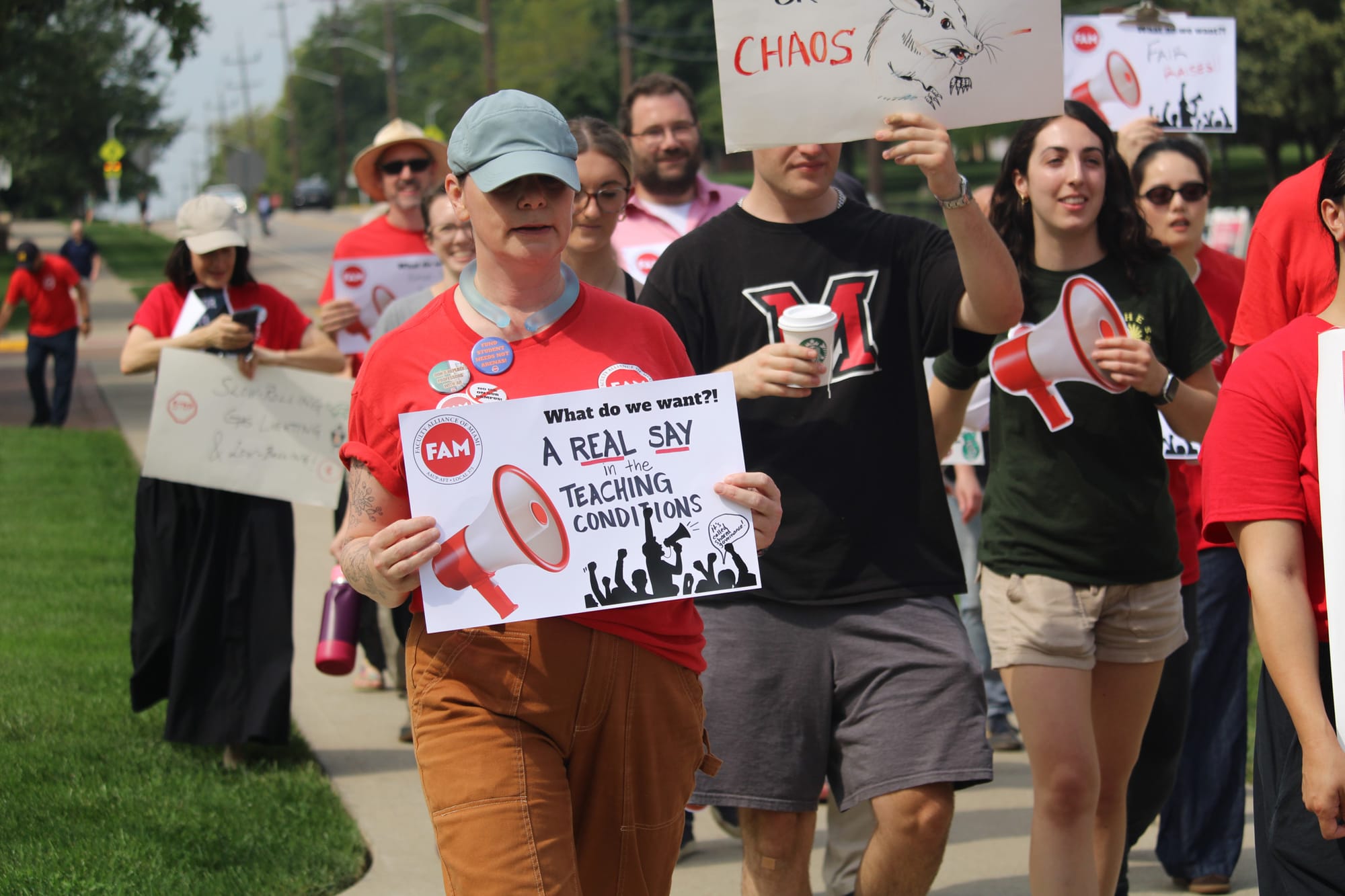
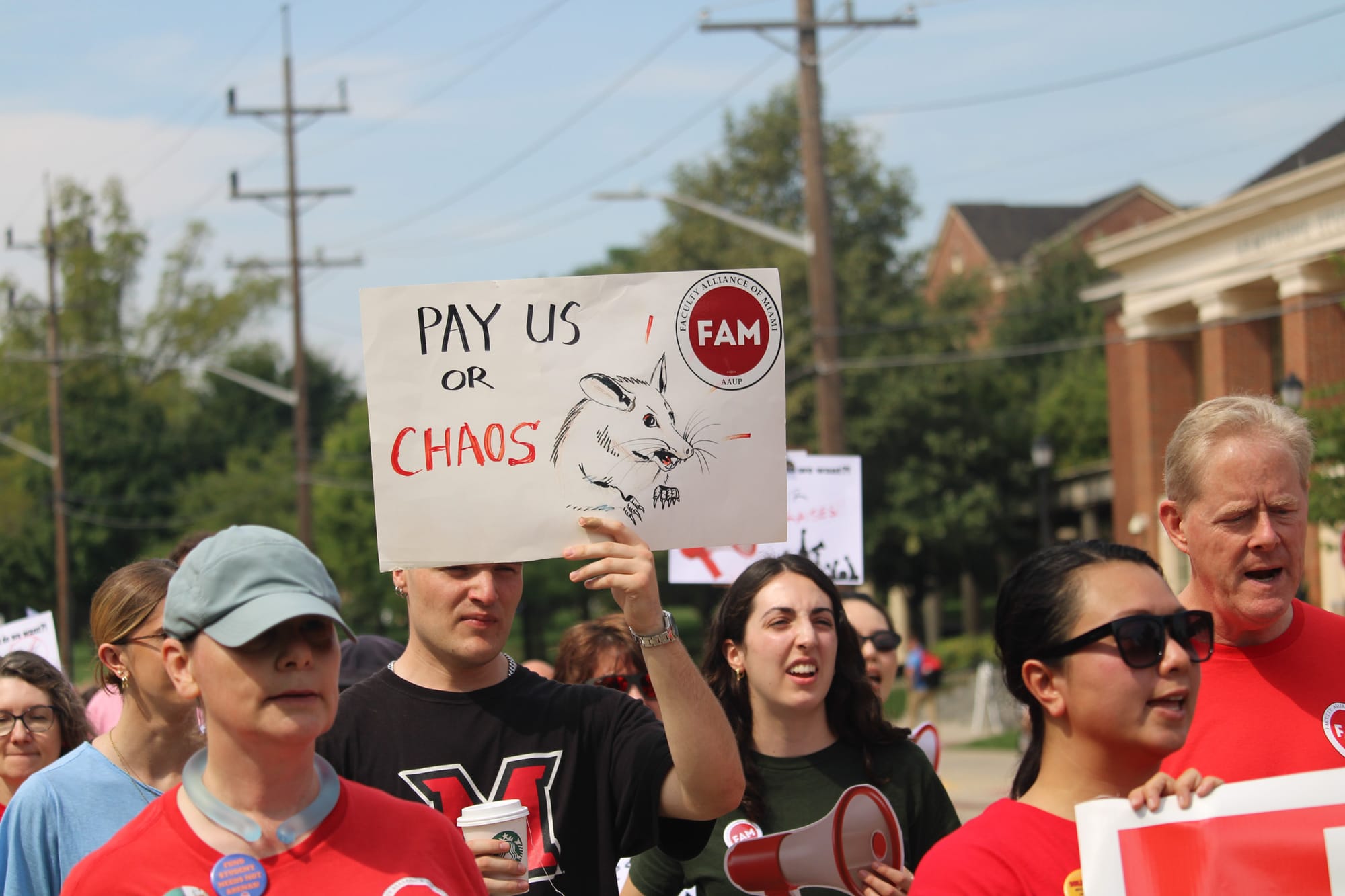
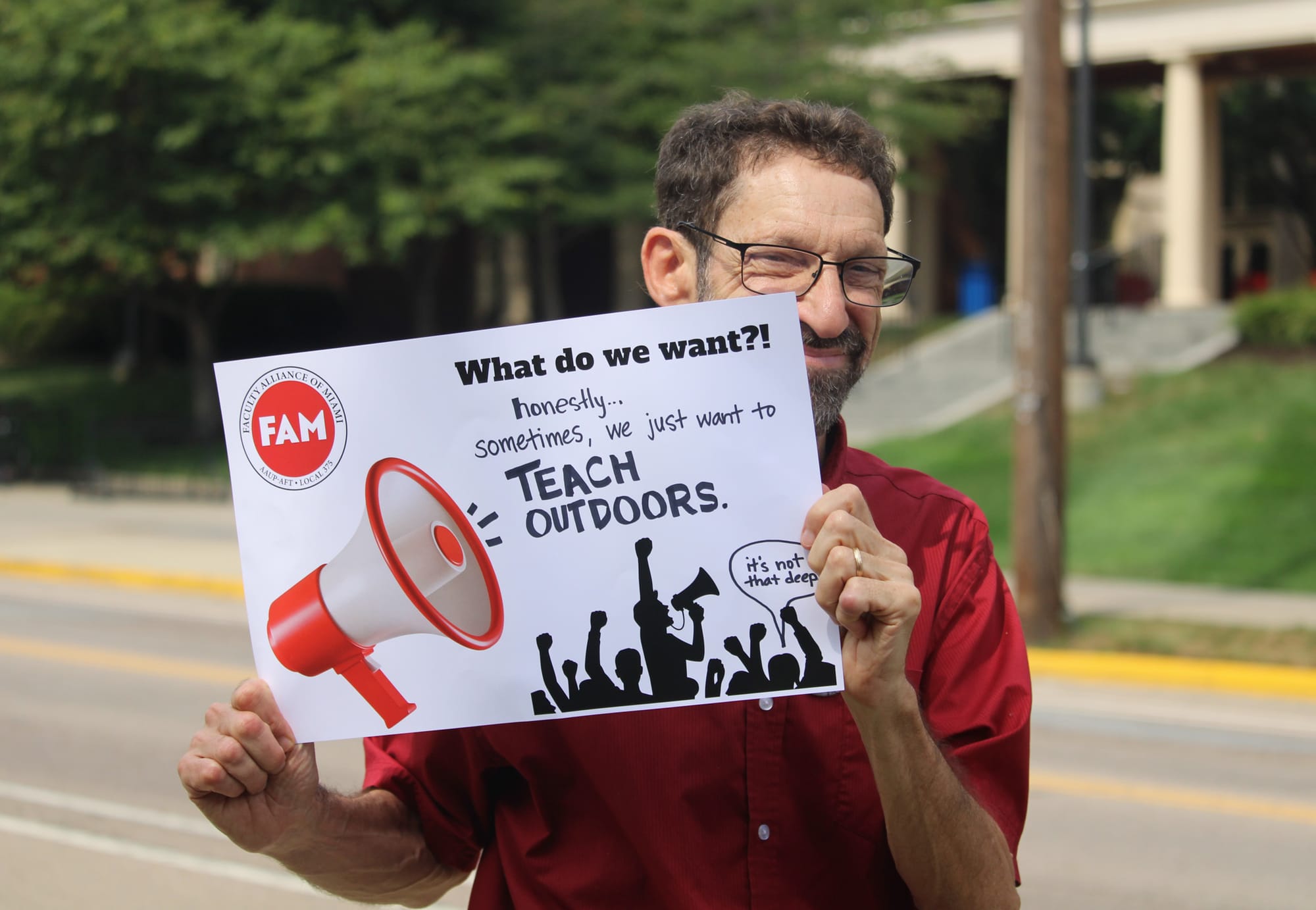
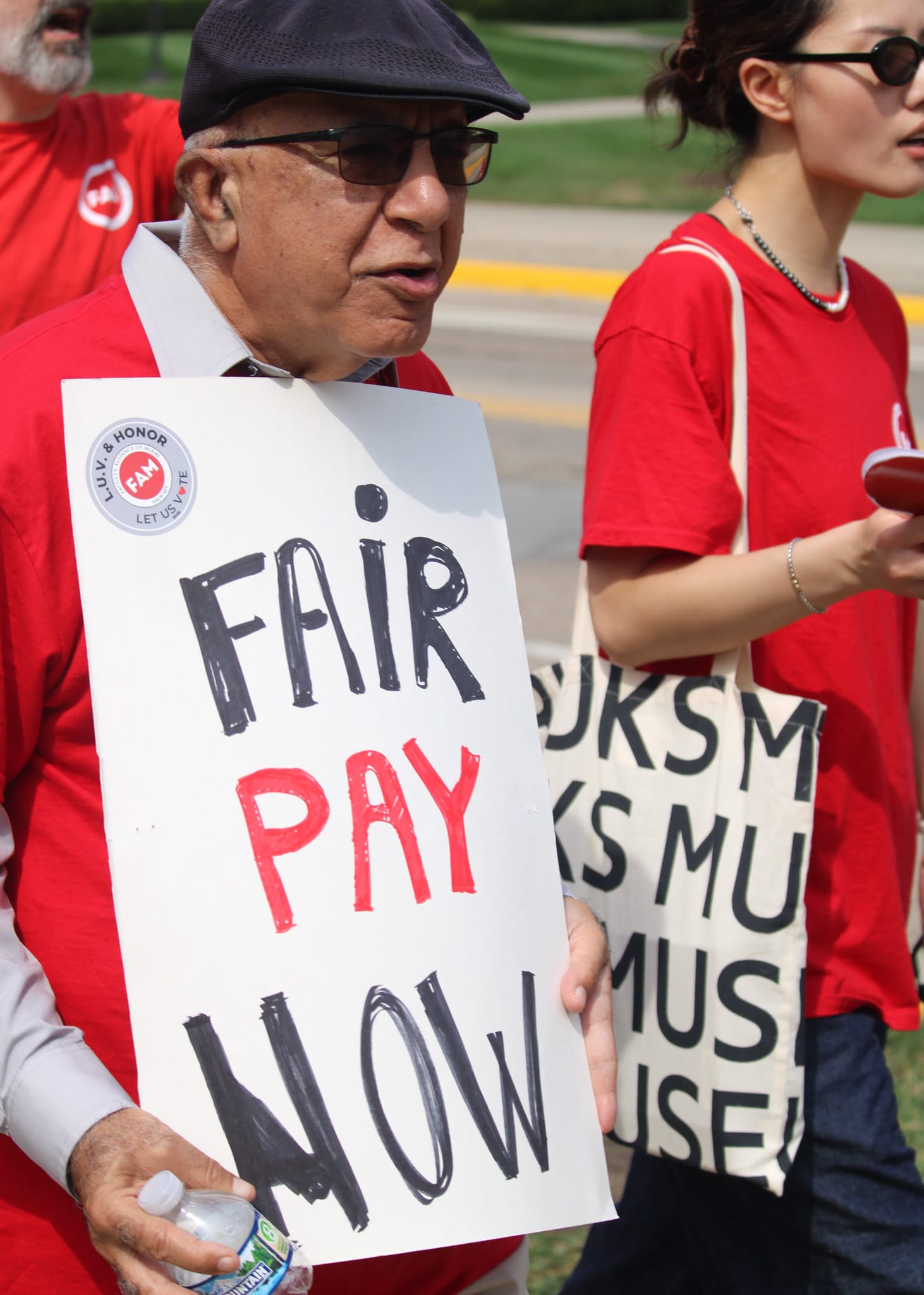
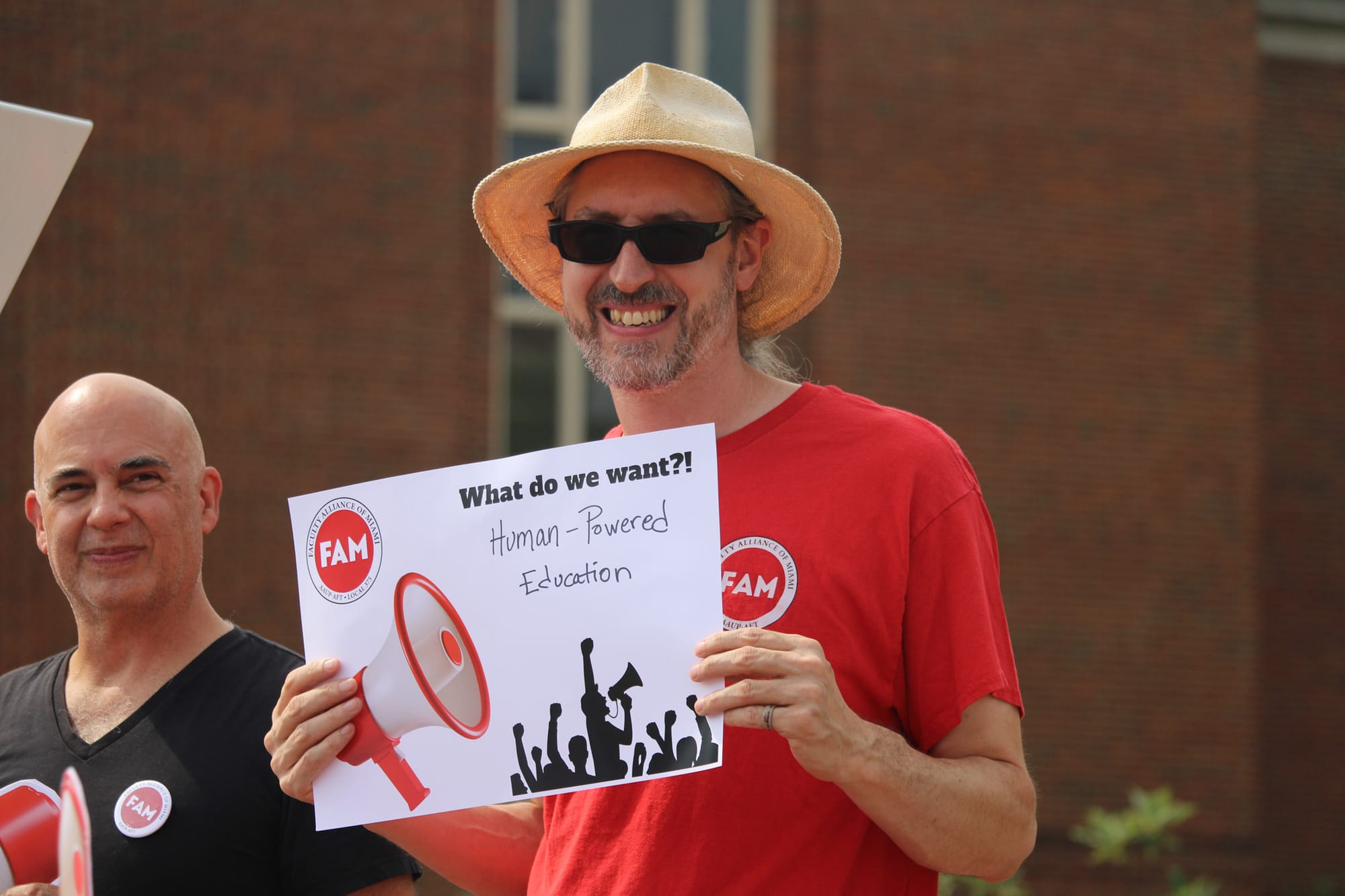

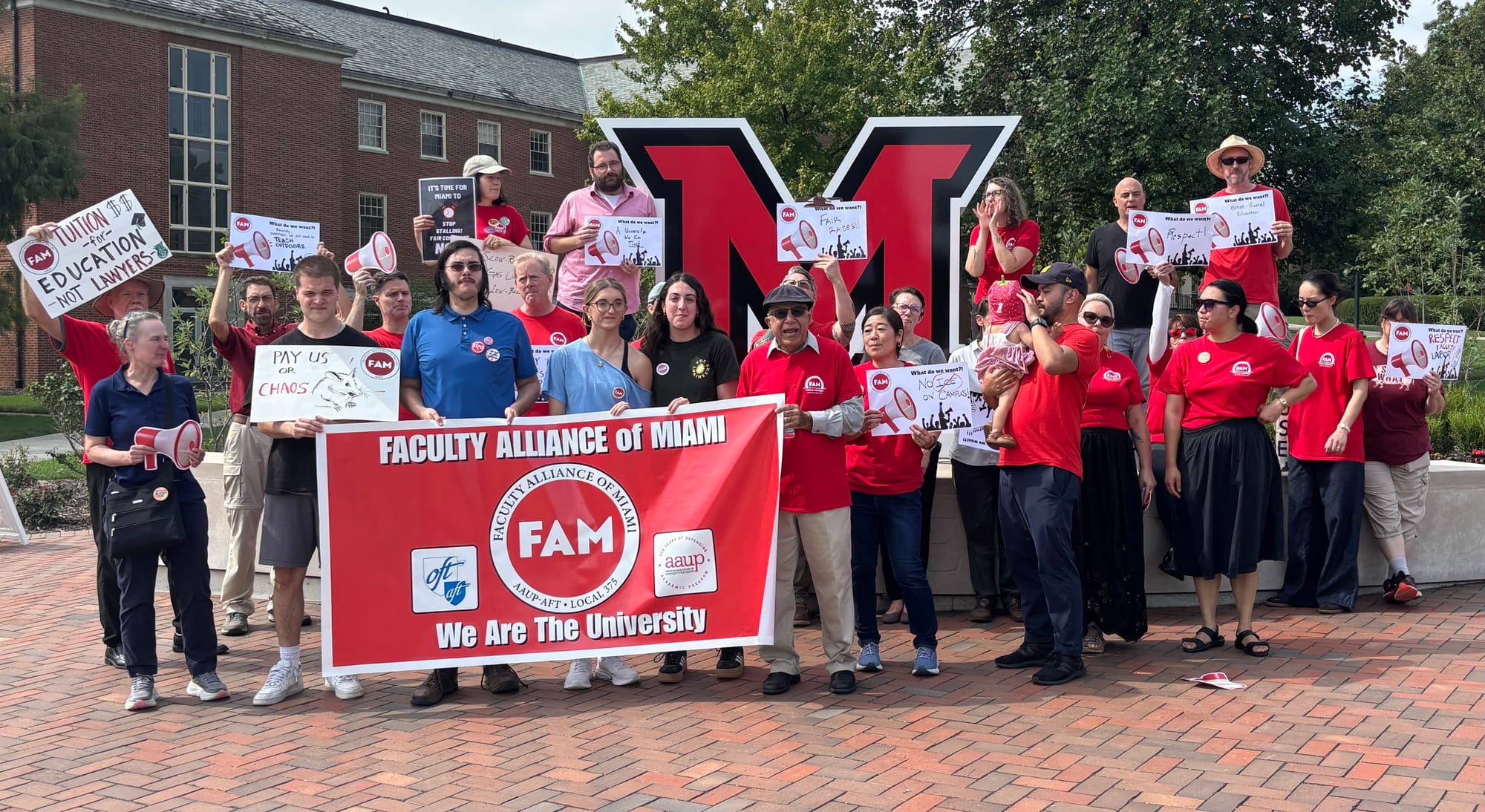
Union faculty, librarians and students at Miami University rally for higher raises amid contract bargaining on Sept. 16, 2026. Photos by Katelyn Aluise.
After nearly seven months of talks and at least one other march related to raises covered by the Oxford Free Press, Kulbaga said FAM and the university are not going to reach an agreement “until we get the raises we deserve.”
Cathy Wagner, an English professor and member of FAM, said she participated in the September rally because Miami must raise compensation to meet the increased cost of living, adding there were several years before the official formation of the union in 2023 when faculty did not receive raises.
“Miami has the money, and it's just holding out,” Wagner said. “I think maybe because for union-busting reasons, to make people feel like, ‘Oh, we can't get this, we can't get what we need,’ … but also maybe to kind of convey to people in the community that there's no point in forming a union.”
Wagner said, as someone who earned tenure earlier in her career, she feels as though she is doing better financially than some other people in the union who have expressed their difficulties.
“But I gotta say that in this environment, it's hard even for me,” Wagner said. “If I have some house repairs, car repairs, etc., I keep on running out of money. I (have) a kid in college. Also, I work hard, and I deserve to have a raise.”
She said the continued need to fight for raises is concerning to her because to continue performing high workloads, teaching and research that meet the status of a “public Ivy,” Miami must convince professors to stay.
Provost Chris Makaroff told the Academic and Student Affairs Committee on May 14 over 19% of faculty are teaching more because of the university’s updated faculty workload model.
“We won't attract any more of the same kind of faculty who care so much about both (teaching and research), which really gives Miami the very special identity that it has,” Wagner said. “I think it's a grave concern that we could be abandoning that very special Miami that we love.”
Ken Irwin, a web services librarian and FAM member, said he’s been involved with both planning for negotiations and engaging members. Although librarians already settled their contract, he said it includes a large “asterisk,” in that librarians’ full benefits will include whatever faculty are given in their contracts.
“We are all in this together, and so we're out here in part today to advocate for that,” Irwin said. “I want them to get as good a deal as they can, even if it's better than what I got, and it sets a precedent.”
Irwin said FAM started negotiations by asking for what they thought they were worth and “the university countered by saying, ‘You aren’t worth very much.’”
“And I feel that every day,” Irwin said. “Miami isn't used to negotiating with a union. They aren't used to the idea of paying fair wages or making fair raises, and they need to get used to that idea. I don't want to overthrow my life to get that.”
He said he began working at Miami after being at another university for 21 years, thinking this was where he would retire. Every day, he thinks about leaving.
“It is really hard to see (my) future at an institution that not only devalues my labor but devalues the labor of my colleagues, and consistently lowballs us on everything,” Irwin said. “Their idea of meeting in the middle is meeting where they sit. … It's pretty disheartening.”