
Miami BOT approves AI Center, funding for new Farmer building
Committee members learn of financial headwinds, won’t affect arena progress
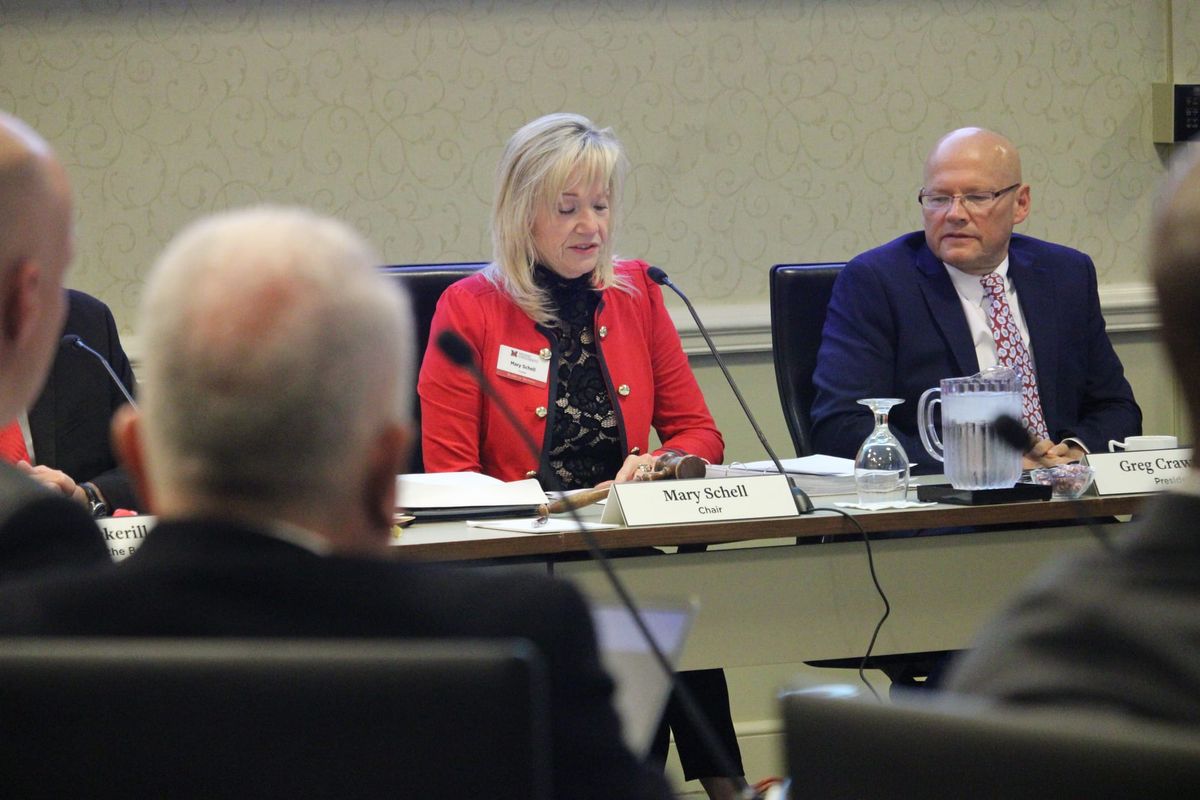
The Miami University Board of Trustees approved the creation of a Miami Center for Artificial Intelligence (MCAI) during a meeting on Sept. 25.
According to the resolution approved by trustees, the MCAI is “an indication of Miami University’s commitment to disruptive technology and preparing graduates for an AI-generated world.”
Dennis Cheatham, current AI Provost Fellow, has already been named Director of MCAI, Provost Trent Gould told the joint Finance and Audit and Academic and Student Affairs committees on Sept. 24.
Gould said the MCAI will not be a “policy producing center,” but rather an advisory center with an internal advisory board having 12 seats filled with representatives from the various colleges on campus, as well as Information Technology Services and University Libraries.
The MCAI will also have a national advisory board with six to eight seats filled by professionals in AI technology, arts and entertainment, business leadership, education, healthcare, public policy, and possibly entrepreneurship or environmentalism.
Some of the objectives of the MCAI, Gould said in his presentation to the committee, will be to strengthen research collaborations and competitiveness for external and endowed funding, create a hub for AI partnerships with stakeholders, advise on policy and technology for responsible and effective AI use, and track AI at Miami in courses, majors, programs, publications and research.
Gould said the MCAI will work overall in curricular development, including the integration of AI teachings into all the majors by the fall 2027 semester, professional development and amplifying the university’s reputation in “ethical” and “transformative” AI.
Gould proposed a six-year budget for the MCAI, which would initially pull funding from MiamiTHRIVE, then secure external funding by Fiscal Year (FY) 2029, and have full sustainability by FY32.
During the first year of operations, FY27, the MCAI would require around $185,500 in funding from MiamiTHRIVE for core staffing, operations and programming. By FY32, Gould predicted this budget would increase to $212,245 to keep up with inflation and raises.
The total commitment from MiamiTHRIVE will be $688,141 between FY27 and FY31.
“AI tools are reshaping teaching, learning, and interaction, and the center will be designed to facilitate transdisciplinary connections to assist Miami students, faculty, and staff,” Gould told the Oxford Free Press in an email.
“With the center, the university wants to bring together perspectives from across campus to collaborate on the center’s activities, find a physical space to support students and support faculty, and provide programming that complements the work already being done on campus by places like the Center for Teaching Excellence and the Howe Writing Center,” Gould said.
A physical location for the center has not yet been identified.
Farmer School of Business development
In other business, trustees also approved a resolution to certify a new development for the Farmer School of Business for local administration.
The new building will be located on Cook Field, although an exact position has not been determined, and the university is still in the process of selecting an architect for the project.
During a trustees committee meeting in July, Miami President Gregory Crawford said the university has chosen to rethink an initial capital request to the State of Ohio that asked for funding for a polytechnic campus in Hamilton. Instead, the request was made for $23.7 million to support the construction of a Farmer School of Business Innovation, Entrepreneurship, and Industry Engagement Facility.
The project is estimated to cost between $75 million and $90 million in total, committee members learned, although a complete budget has not been finalized. Remaining funding is expected to be provided through university investments and philanthropic support.
According to the project request the university submitted to the state, the proposed facility will be approximately 80,000 to 85,000 gross square feet and three stories high. It will include flexible classrooms, capstone and interdisciplinary project environments, AI analytics and investment analytics laboratories and other resources.
Crawford told the committee in July the new building would create a “business hub concept.”
Financial ‘headwinds’
Amid the newly approved developments, Investment Subcommittee members learned of the financial “headwinds” the university will be facing.
Markus Krygier, co-chief investment officer at Strategic Investment Group, told committee members, “The fiscal position is beginning to bite back.”
In part, he said sell-offs in the bond market have continued as concerns about inflation rise and fiscal pressure remains unresolved. Current interest rates, he said, are also on his radar because it impacts project funding costs.
Krygier said, if AI generates productivity increases as predicted, fiscal pressures should go down.
Still, Krygier said the conflict in the Middle East is producing upward pressure on energy prices, which are beginning to feed back into consumption in the U.S., and consumers are beginning to be “stretched,” while savings are low.
David Creamer, senior vice president for finance and business services and treasurer, told the subcommittee the university had a “shock” in February after the board took action on the arena development.
“We took an action on Friday (Feb. 27) – the board did – about the arena, and by Saturday morning (Feb. 28), we were already having trouble with it because we had engaged in the Middle East conflict,” Creamer said.
Committee members also learned from Scott Barrett, vice president of university advancement, that donor populations are down year over year according to various reports, although Miami’s donor count between FY25 and FY26 remained essentially flat.
But Barrett said Miami’s Day of Giving in August was “highly successful,” with 4,329 gifts received in 20 hours totaling $3.9 million.
Overall, Creamer told the Oxford Free Press in an email that the university is not expecting to struggle to pay for the arena and has a “safety net” as a result of its “strong investment portfolio performance.” Creamer even suggested to committee members that the university could think about using more dollars to support scholarships to boost enrollment during a strong investment year.
“While the University is aware that there are more headwinds that could negatively impact today’s economy and investment returns, Miami’s investments are continuing to generate positive investment returns enabling the trustees to consider this and other strategies that are priorities for the university,” Creamer said in the email.