
Miami professors to receive settlement in Anthropic lawsuit
“I think because AI is so new … it's like (the) wild, wild west. There were no rules; they just did it and got caught.”
Some share thoughts on future of AI at university
Editor’s Note: Two of the sources and beneficiaries of the lawsuit who are quoted in this article are members of the board of directors for the Oxford Free Press. The work these individuals have published that is referenced in this story stands alone and is not connected in any way with content published by the Oxford Free Press.
Some Miami University professors are among those receiving compensation from the recent approval of a $1.5 billion class action settlement against Anthropic, PBC, an artificial intelligence (AI) company.
On July 20, Judge Araceli Martínez-Olguín of the U.S. District Court for the Northern District of California granted final approval of the class action settlement, Bartz et al. v. Anthropic, as first reported by The Authors Guild.
The class action complaint was originally filed in August 2024.
According to an order on fair use signed by Judge William Alsup of the U.S. District Court for the Northern District of California in June, the AI firm downloaded millions of copyrighted books for free from pirate websites and purchased copyrighted books, tore the bindings, scanned every page and stored them in searchable files.
“All the foregoing was done to amass a central library of ‘all the books in the world’ to retain ‘forever,’” Alsup wrote in the order.
Anthropic was founded by former OpenAI employees in January 2021, and its core offering is an AI service called Claude. Claude responds to human prompts with text that mimics human writing.
According to the order, this is because Anthropic trains Claude, or the AI chatbot and large language models (LLMS) underlying Anthropic, by using the books and texts copied in Anthropic's database.
The judge wrote in the order that even copies of the texts which were not used to train LLMS were kept in the database as general-purpose resources.
All of this – the downloading, copying and training – was completed without the plaintiffs’ permission, according to the order.
In the order, Alsup granted summary judgement, ruling in Anthropic’s favor that using the texts for training purposes was fair use. Alsup also granted that converting print materials to digital was fair use.
However, Alsup denied summary judgement that the pirated copies must be treated as training copies, pushing the issue to trial. According to the order, the fact that Anthropic later bought copies of books it formerly stole did not absolve it of liability for theft, although it may have affected the extent of statutory damages it needed to repay.
Although only three authors and their works are listed in the original suit and order, many more authors later signed on and will be receiving compensation.
Notice of the suit was sent to 594,945 rights holders associated with 482,374 (99.98%) of the works listed, with notices not returned from most potential class members, according to the settlement.
According to the final approval of the settlement signed by Martínez-Olguín, the estimated per-work compensation is $3,000, or four times the minimum statutory damages typically paid for willful infringement.
The settlement also requires Anthropic to destroy original and copied files of pirated works authored by class action members.

‘It’s like the wild west’
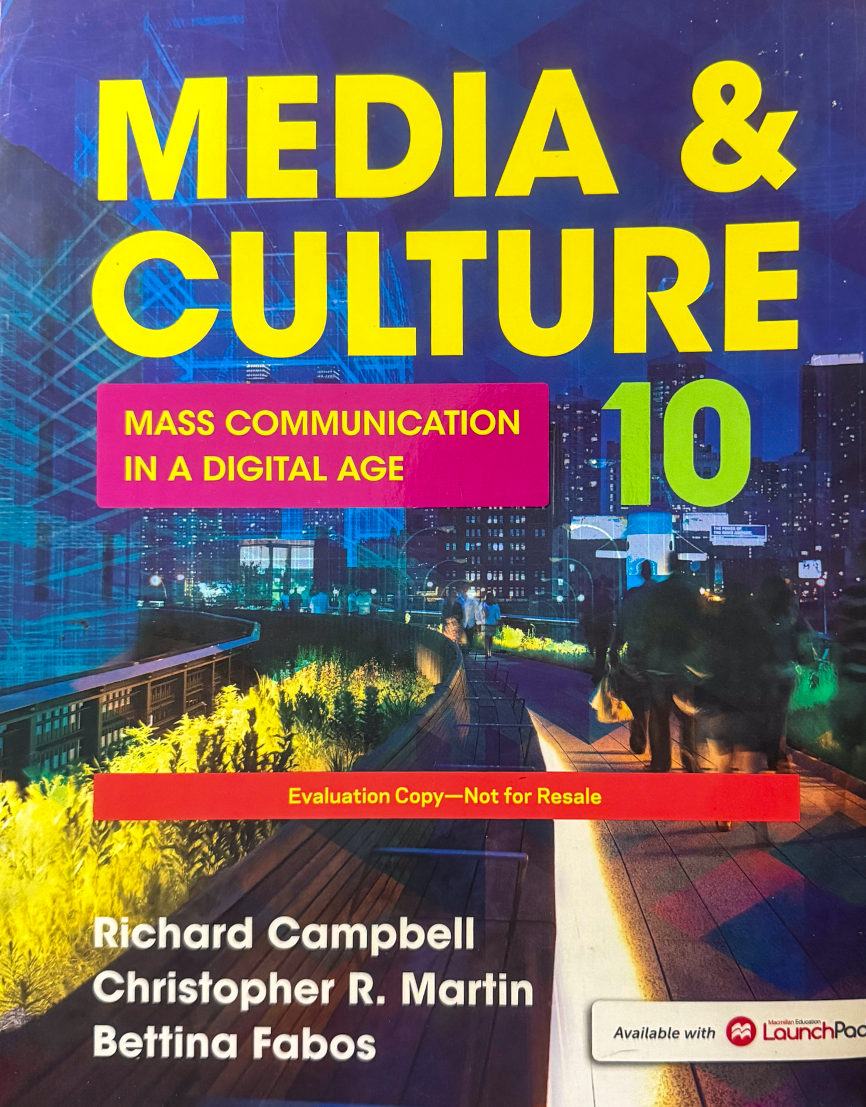
Richard Campbell, a professor emeritus of Miami who was the founding chair of the Department of Media, Journalism and Film and a co-founder and board member of the Oxford Free Press, was notified by the co-authors of his textbook that their work was one of the texts copied by Anthropic.
Four editions of the textbook written by Campbell, Christopher R. Martin and Bettina Fabos and published by Macmillan Publishers, “Media and Culture: Mass Communication in a Digital Age,” were “scraped,” Campbell said.
Scraping refers to the way a computer program can extract data from a digital source.
Two other books Campbell has co-authored were also scraped.
Campbell said when he’s previously seen his work listed as an answer in responses from Gemini, Google’s family of AI models and primary AI assistant, he’s always noticed the original source was hyperlinked, or his name was cited. As a former professor, he said he’s even told students AI is a “nice place to start” for research, but only when it can direct the searcher to the original sources.
But when asked, Campbell said he didn’t know if citing him, Martin and Fabos, or anything else would’ve made Anthropic’s copying and use of the text, according to the order, right.
“I think because AI is so new … it's like (the) wild, wild west. There were no rules; they just did it and got caught,” Campbell said, adding the case is like a “backwards glance” as to how it could’ve been done differently.
“I'm not sure how that would have been handled, but they certainly had the tools to do all this scraping, and didn't tell anybody they were doing it until writers found out that their works were being used to answer AI questions,” Campbell said.
Campbell said, as AI becomes more prominent as a tool, he’s “glad” he’s retired. But he worries not only about its ability to answer questions uncited while using copied work, but also about its ability to write students’ papers for them.
“I suspect students are doing this a lot now because this is such a new thing,” Campbell said. “As this case shows, there aren't the rules in place yet to figure out how to use AI in a safe way and in a legitimate way.”
AI at Miami
Beginning in the fall, 13 departments at Miami will begin integrating teachings about AI into their curricula. By the fall 2027 semester, all departments will have done so.
Miami students already have access to generative AI tutor bots like Gemini “Gems,” or custom AI assistants built by users to complete tasks, and custom generative pretrained transformers (GPTs) that use computer networks to process and generate human-like text. They also have access to Gemini Chat, Zoom AI Companion and Webex AI assistant through their Miami credentials.
Miami also has an AI major “designed to meet the increasing demand for AI professionals across various industries,” according to the university’s website.
The university has also appointed two AI provost fellows – professors Dennis Cheatham and Heidi McKee – to research how students and faculty are engaging with AI, as well as their challenges and concerns, as Miami begins integrating teachings about AI into its majors.
Miami’s IT department has even installed a data center on a lower level of Hoyt Hall that’s connected to the university’s geothermal grid to work toward more efficient AI use on campus.

Susan Spellman, a professor of history at Miami, said her book, “Cornering the Market: Independent Grocers and Innovation in American Small Business,” was one of the works copied by Anthropic. She said she received an email that her work was on a “master list” of affected works and applied to be part of the settlement before the deadline in March.
As Miami makes strides toward preparing students for a future that includes AI, Spellman said she has already included assignments in some of her online classes that require the use of AI, “because ultimately I think it's important for students to recognize that … what AI spits back out at you is not always accurate.”
“I'm for students recognizing how to use AI because I think it will have a role,” Spellman said. “I don't think it's going to be the dominant role, but I think it will have a role in the future because it is a role right now in the present.”
Still, Spellman said AI is moving at “lightning pace,” and she isn’t sure how responsive an AI major or AI path of study could be.
She said she doesn’t believe learning how to use AI is an “essential” skill overall, although a student in a professional field who cannot recognize the limitations of AI is “going to struggle.”
“I think part of our task is to help students recognize that it is a skill they need, but they also need to recognize how (AI) works, and they need to be able to use it effectively and not just be blindly reliant upon it to generate information or answers that are fully complete and answering the task at hand,” Spellman said.
Allan Winkler, a university distinguished professor of history emeritus at Miami and another board member for the Oxford Free Press, said of his 13 published works, three of them were listed as having been scraped by Anthropic.
Winkler said he has been personally “horrified” by Miami’s moves toward integrating teachings about AI into its majors and is “uncomfortable” with seeing decisions revolving around AI. He said he feels students’ use of AI in their education is “short-circuiting” their ability to learn to speak articulately, read, write and think.
“I have people tell me that they can't assign papers any longer because they don't know who's doing the work, that exams have to be in class, handwritten, so that you know what is going on,” Winkler said. “I find it difficult to accept. And I realize that I'm old school in that, but I'm troubled.”
Just as students in previous generations had to learn how to use computers, newer students will be learning how to use AI assistance. Winkler said while students should be learning how to use AI productively, they also need to recognize its limits.

AI in the future
When thinking about the role of AI in media professions, Campbell said he imagines AI being used to write press releases, although he argues journalists are inherently more “skeptical.”
“I worry more about the field of public relations and communication media in general … how stories are being generated by AI, and how do we monitor that,” Campbell said. “Is it OK to have AI write a press release? I guess it's not okay with me, but it might be OK with(in) the profession.”
Spellman said she believes there is still a clear difference with what historians do, as AI can’t scrape non-digitized information.
“As a historian, I go to the archives, and I sniff the dusty papers and look through all of the handwritten notes and the ledgers and the things that have not been digitized (that) AI can't get to,” Spellman said. “Of course, the problem becomes that once somebody like me takes that information that is non-digitized, contextualizes it, puts it into a written format and publishes it, then that's when AI obviously is just kind of able to take over at that point.
“So there's still a bit of a barrier if you're a historian, but how long is that gonna last? I don't know.”
‘It doesn’t follow the pattern’
In reference to the suit, Spellman said she believes the settlement was “good news” because it seems to place some guardrails on what AI companies can do in gathering information moving forward.
Winkler said there needs to be more provisions for training LLMs in the same way someone must pay royalties for using copyrighted works in general.
“I think simply going in without any oversight or control is simply wrong. I mean, it doesn't follow the pattern that we've been working with for years and decades with copyright,” Winkler said. “As an author, I'm delighted to have people use my work, but I want acknowledgement, and I want some kind of fair compensation when that (lack of acknowledgement) is an issue or a possibility.”
Winkler said he further feels there needs to be a “public awareness” of the suit and how LLMs might be trained and how the information is used, adding, “I think we’re going down a route that is reprehensible.”
He said, just as he signed onto the suit, he’s willing to be part of continuing efforts in enforcing some measures of control over what AI companies are doing.
“I've been on the fringes of this,” Winkler said. “I'm watching what's going on, and I'm concerned, as most other people are, I think.”