
Miami sees dip in enrollment, reflects on statewide competition
BOT approves new salary for Crawford
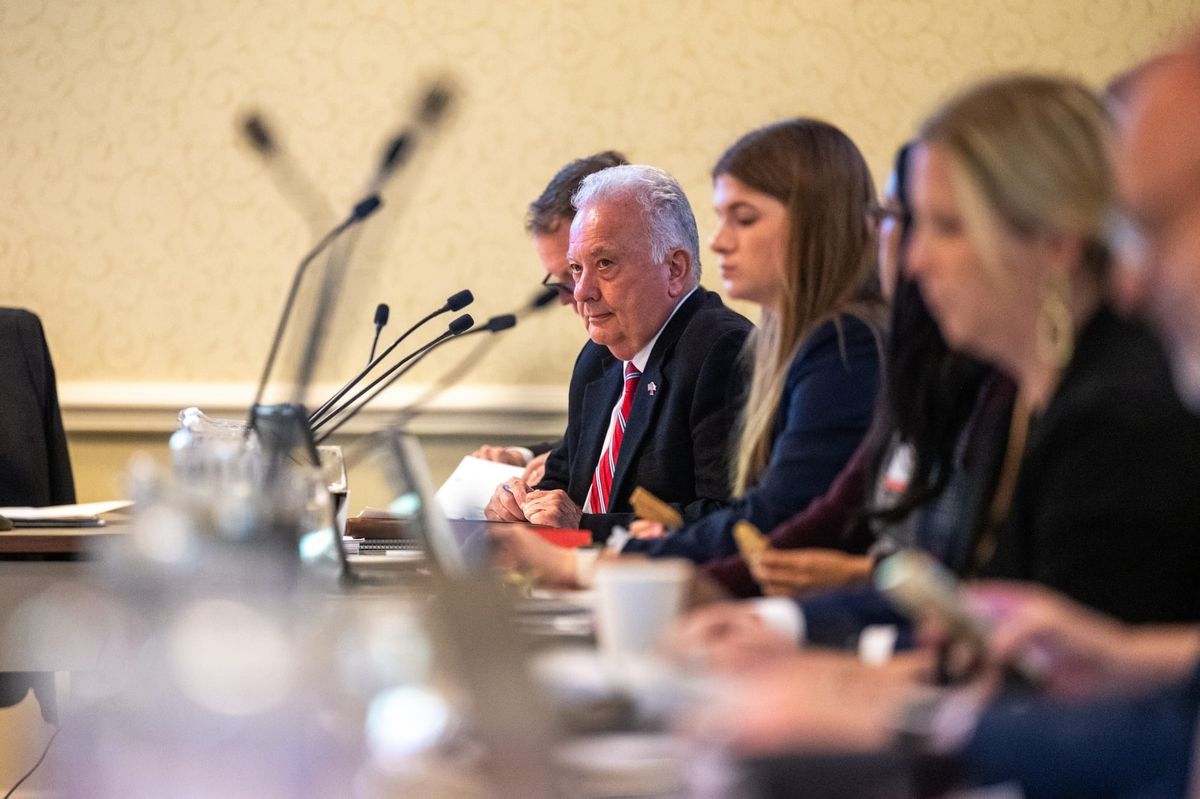
Miami University is seeing a decrease in student enrollment for the fall 2026 semester, joint Finance and Audit and Academic and Student Affairs committee members learned during a meeting on Sept. 24.
According to data provided by Rachel Beech, vice president for enrollment management and student success, fall 2026 applications were down overall between the fall 2025 and fall 2026 semesters, from 42,822 to 41,013, or a loss of 4.2%.
The largest decrease, Beech shared, was in international students – a fall greater than 30%. The university also saw a dip of more than 9% in non-resident applications, although there was a slight increase in resident applications of nearly 2%.
Miami saw an overall increase in student confirmations between fall 2025 and fall 2026 for the Oxford campus of 1.5%, with an increase of 8.8% in non-resident students, although there was a decrease in Ohio resident student confirmations of more than 2%.
Miami saw a decrease of nearly 23% in confirmed graduate students between fall 2025 and fall 2026, with decreases in all non-resident, international and Ohio resident student categories.
Transfer student confirmations to the Oxford campus were also down from 259 in fall 2025 to 247 in fall 2026, and although more students were registered at the regional campuses in fall 2026 compared to last year, less students applied.
Despite the dip in applications, David Creamer, senior vice president for finance and business services and treasurer, suggested the university “benefited” from “all of the international advertising from our basketball program,” which he said elevated non-resident undergraduate student enrollment.
Miami is also part of a reciprocity agreement which allows residents of 29 eligible Indiana counties to qualify for in-state tuition.
Still, Creamer said higher education in Ohio is going to be “much more competitive” moving forward.
“We know that the number of high school graduates are going to decline,” Creamer said. “The economics tell us that’s going to put pressure on price. We have to have a way of offsetting that.”
Creamer suggested the university increase scholarships as a way to offset cost and remain competitive, possibly through gifts or investment income.
“When we have a very strong investment year, do we commit more dollars to helping our enrollment efforts through greater scholarships, both for need and academic quality in the students that we're attracting?” Creamer said.
“I just cannot imagine that as we look at this play now, what is now going to be over the next 15 years at a minimum, that this won't be one of the most important issues to maintaining the quality and reputation of the university,” Creamer said. “We have to be able to recruit high-ability students, and that is going to be expensive. Rather than what played out through much of the last several decades, where families were willing to bear that cost, we're going to have to find a way to bear more of it in order to maintain the quality.”
Creamer told the joint committee there’s going to be a “lot of change” coming to the makeup of institutions in Ohio, with discounted rates rising and enrollments declining.
“Ohio, depending on how you look at it, is probably the second or third most competitive state for recruiting students,” Creamer said.
He said the state remains “significant” in terms of private institution options and is “somewhat overbuilt” in public higher education.
“We have to understand the adjustments we need to make to be competitive in our building to all those talented students,” Creamer said.
Meanwhile, Miami has eliminated at least 76 degree programs since 2020 while adding around 15 to 20, decreased faculty, increased workloads and persisted with unpopular construction projects.
New salary
The Miami Board of Trustees (BOT) also voted to approve an increase in President Gregory Crawford’s salary of 3%, with a 30% bonus for Fiscal Year 2026.
Crawford’s new salary is $607,190 per year, with a bonus of $176,851 for FY26.
Crawford’s wife, Renate Crawford, university ambassador and adjunct professor of physics, was also given a 3% raise, for a FY27 salary of $62,593.
Ohio University, which has similar enrollment numbers to Miami, pays its president a salary of $624,240, according to the OU Salary Database. Ohio State University, which has a significantly higher enrollment, pays its president more than $1.1 million per year, according to the OSU Human Resources webpage.
Miami BOT members passed a 3% raise for all non-bargaining employees at a meeting in June, as well as a raise for union librarians of 3%, 2.5% and 2.5% over three years.
The Faculty Alliance of Miami (FAM) union, which represents all full-time continuing faculty and librarians, has still not reached an agreement with the university over its requested raises. According to FAM’s Oct. 5 update, management was still offering less than the requested 3.75% raise per year.