

On My Plate: Exotic Asian greens
"These Asian greens can be cooked together, but I recommend separating the leaves from the stems and cooking them separately. The stems take a lot longer to cook than the leaves."
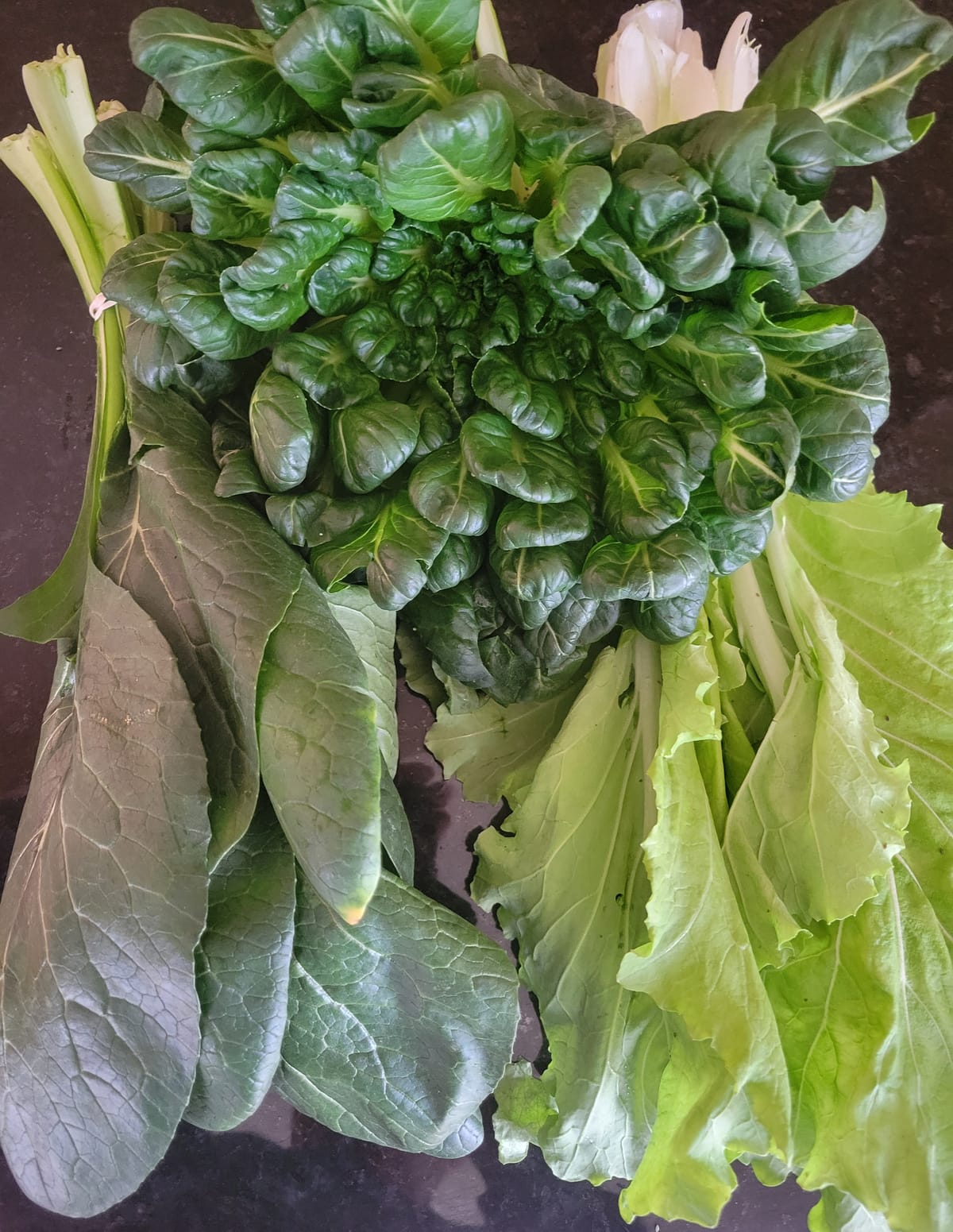
Several leafy greens have been available this winter at Jennifer Bayne’s 7 Wonders Farm as well as her stand at Oxford’s Farmers Market. In addition to familiar lettuce and spinach, she has several exotic Asian greens, three of which are described here.
Komatsuna has large dark green leaves and long, thin but sturdy stems. Botanically, it is a variety of Brassica rapa, as is turnip and napa cabbage. The name means “greens of Komatsu,” referring to a village near Tokyo where the green was grown during the seventeenth century.
Tatsoi is also a Brassica rapa, but it is quite different in appearance than Komatsuna. Tatsoi has a much tighter shape, described on the internet as a thick rosette. The leaves are dark green, shaped like a spade. It has been grown in China, primarily the Yangtze River valley, for at least 1,500 years, according to Chinese history sources. The name means “drooping vegetable” in Cantonese.
Tokyo Bekana has light green frilly leaves and crunchy stems that are much wider than the Komatsuna’s. According to the internet, Tokyo Bekana originated as a variety of Chinese cabbage brought to Japan by soldiers returning from the 1904-1905 Russo-Japanese War, which was fought primarily in China.
These Asian greens can be cooked together, but I recommend separating the leaves from the stems and cooking them separately. The stems take a lot longer to cook than the leaves.
For the leaves, boil a small amount of water in a very large frying pan, tear the leaves into small pieces, toss them in the boiling water, and stir frequently with tongs for one or two minutes, until they start to wilt. Turn off the heat, remove the water from the pan, and keep the leaves in the hot pan until ready to serve. The stems can be chopped into bite-sized pieces and sauteed in oil until soft.
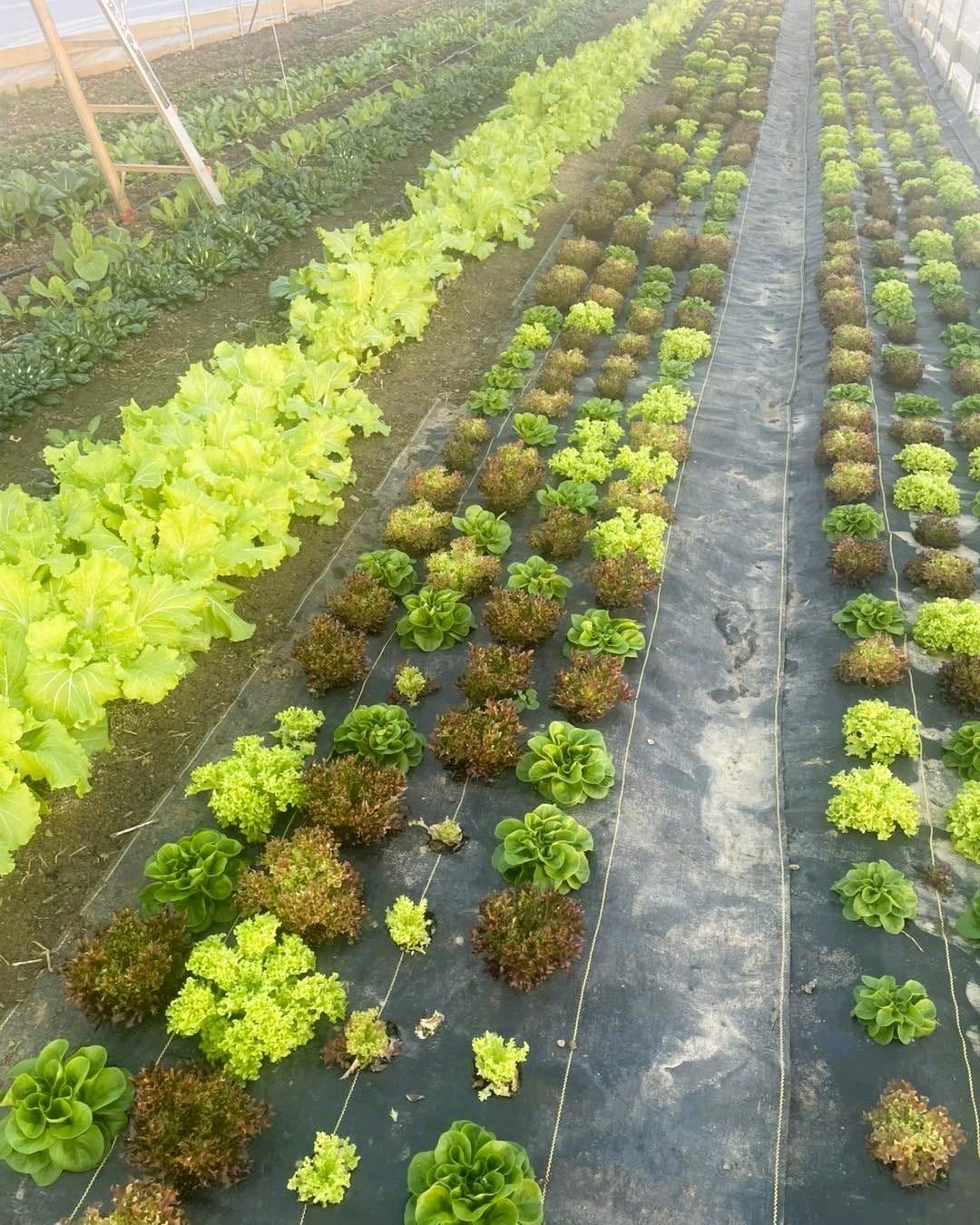
Why is Jennifer Bayne growing these unfamiliar vegetables? The next three paragraphs were written by her.
“When most people think of winter on the farm, they picture empty fields and a pause in fresh harvests. For us, winter is anything but quiet. It’s the season when Asian greens truly shine—thriving in cold weather, offering exceptional nutrition, and bringing fresh flavor to the table when it’s needed most.
“Asian greens have been grown for centuries in cool climates, and they are uniquely suited to winter production. Many varieties don’t just tolerate frost; they improve with it. Cold temperatures slow growth, concentrate sugars, and mellow flavors, resulting in greens that are sweeter, more tender and less bitter than their summer-grown counterparts. From a farmer’s perspective, they are reliable, resilient, and efficient. From an eater’s perspective, they’re a winter gift.
“Beyond flavor and nutrition, growing winter Asian greens is about resilience—both for the farm and the community. They allow us to provide fresh, local produce year-round, reduce dependence on long-distance food systems and keep the land working even in the cold months.
“Winter doesn’t have to mean a lack of fresh food. With Asian greens, it’s a season of abundance, color, and quiet strength—grown in the cold, harvested with care, and shared at the table when it matters most.”
In short, leafy greens convert starch into sugar in colder temperatures as a way to survive by lowering their freezing point, resulting in a sweeter, less bitter flavor. In conversation, Jennifer has been more succinct. “Leafy greens are worth eating (and growing) only in the winter.”
James Rubenstein is president of the Board of Directors for the Oxford Free Press and professor emeritus of geography at Miami University.