

On My Plate: Romano (Italian) beans
“Romano beans are jam-packed with sweetness . . . incomparable to the taste of any other green bean.”
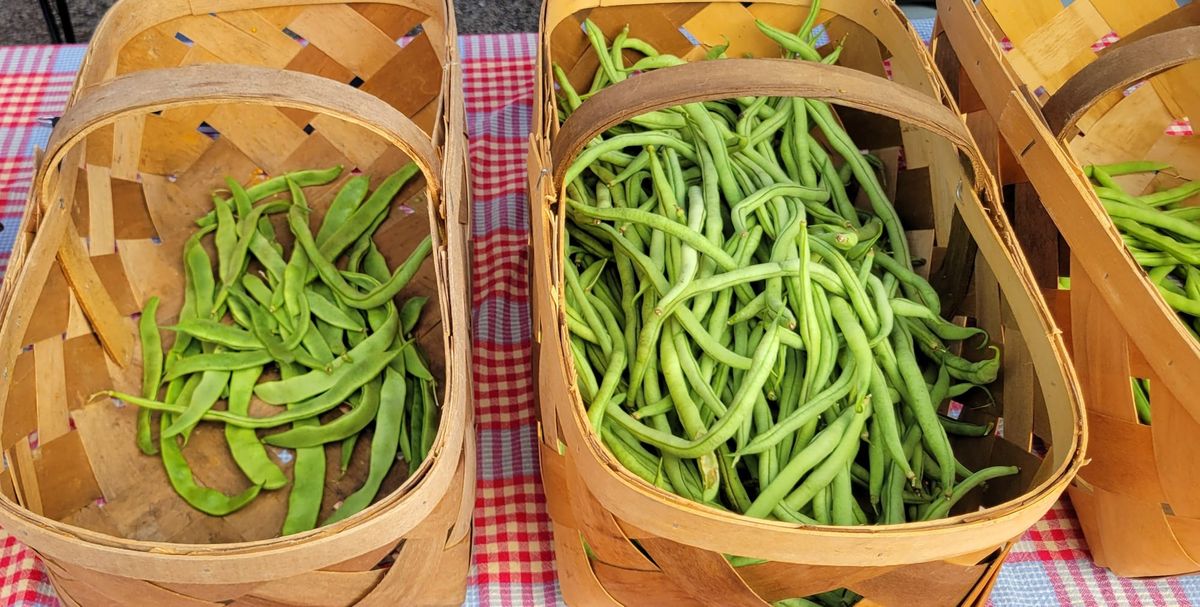
When Francesco Romano emigrated from Italy to Canada in 1897, he brought green beans with him on the ship. These were not the 5-inch long, quarter-inch diameter green beans that are familiar to us. Romano brought with him from Italy 7-inch long, half-inch wide flat beans previously unknown in North America.
Romano’s great granddaughter Michele Romano is a cookbook author, food blogger and culinary consultant who focuses on Italian recipes in Creston, British Columbia – the same community where her great grandparents settled. She asserts that the Romano bean is named for her family. Michele has written a detailed family history related to the bean on her website.
“One of the prize possessions he brought with him was indeed these precious Italian pole beans.” Romano beans, she has posted, are “jam packed with “sweetness . . . incomparable to the taste of any other green bean.”
In reality, “much of the history of Romano beans is unknown,” reports specialtyproduce.com. They may have been first cultivated in Latin America in the fifteenth and sixteenth centuries and brought to Europe by Spanish and Portuguese explorers. By the eighteenth century, they were common in Italy, where they were used “in everyday meals among rural populations,” according to specialtyproduce.com.
Bon Appetit magazine raves about Romano beans as “wide, flat Italian green beans known for their sweet flavor, crunchy snap, and meaty texture.” Bon Appetit Senior Editor Christina Chaey proclaims Romano beans “the Queen of Snap Beans. . . . These beans should have their own TV show and (dating herself) it should be called ‘Everybody Loves Romanos.’”
Romano beans are extremely rare around here, but they have made their first appearance at Oxford Farmers Market this year, courtesy of Jim Gieringer. While taking nothing away from his more familiar green beans, Jim has urged his regular customers to try these unfamiliar wide flat beans. Jim first enjoyed them when a friend served them many years ago, but he had a difficult time finding seeds until this year. He will plant more of them next year.
Romano beans can be cooked in a variety of ways. Unlike regular green beans, I have successfully grilled them with a thin coating of olive oil. Michele Romano offers several recipes on her website, including a bean salad. Steam the beans but keep them “a bit crunchy,” she writes. Rinse them in cold water. Toss well with olive oil. Add lemon juice, oregano, minced garlic, crumbled feta cheese and Kalamata olives. Chill in the fridge until ready to serve.
Rather than more recipes, I want to share Michele’s story of how her great grandmother Carmella Romano reached Creston six years after her husband Francesco. As the westbound Canadian Pacific train carried her across Canada on April 29, 1903, it was forced to halt a few miles east of the town of Frank, Alberta, because 120 million tons of limestone rock broke off from Turtle Mountain, slid down the mountainside in 100 seconds and buried the town of Frank, killing at least 90 of the town’s 600 residents. It remains the deadliest landslide in Canadian history.
The rail line took several weeks to be repaired, so the passengers on the halted train, including Carmella and her son, were transported around the landslide by horse and buggy. Carmella and Francesca named their second son Frank.
Michele writes that her great grandmother died one day before her 100th birthday. “She could not speak a word of English, but like a typical Italian Grandmother, she would say ‘mangia, mangia.’”
James Rubenstein is president of the Board of Directors for the Oxford Free Press and professor emeritus of geography at Miami University.